Sports / Soccer
How sports bring local communities together and strengthen social life
05 Dec 2025 at 18:47hrs |
1071 Views
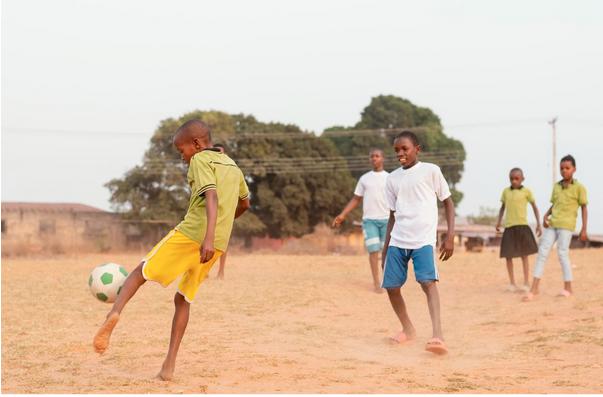
On a Saturday afternoon in Bulawayo, a dusty community pitch can feel as important as any national monument. Children chase a ball made from plastic bags, parents lean on the fence, and everyone has an opinion about Highlanders F.C. or the Warriors’ last World Cup qualifier. In a city where formal meeting spaces are often scarce and incomes are stretched, sport becomes a simple, reliable way for people to find one another.
On the same phones that capture these matches for Facebook or WhatsApp, many fans are also quietly plugged into a wider digital world. They scroll local news, live scores, and betting apps in ghana as they track the English Premier League, the UEFA Champions League, or the Castle Lager Premier Soccer League, comparing those distant stadiums with the noise just a few metres away. The line between the local field and the global game has never been thinner.
Sport as the Weekly Meeting Place
At the community level, sport is one of the few events that cuts across age, income, and language. A Highlanders F.C. home game at Barbourfields Stadium, which can hold around 40,000 supporters, turns a league fixture into a city-wide gathering as fans pour in from western suburbs, rural Matabeleland, and the city centre. The songs, the food stalls, and the simple act of walking to the stadium together all help build a sense of shared belonging that is hard to reproduce in any other setting.
Even when professional teams are not involved, local tournaments perform the same work. Church leagues, company teams, and informal Sunday “socials” offer residents a reason to leave their homes and greet neighbours they might otherwise only nod to at the shops. In places where politics and economics can feel heavy, ninety minutes of football or netball gives people permission to shout, laugh, and briefly forget the rest.
Local Clubs as Symbols of Identity
In many cities, one club holds meaning beyond its league position. Highlanders F.C., founded in 1926 by grandsons of Ndebele king Lobengula, has long been associated with the culture and pride of Matabeleland. To wear the black-and-white jersey is, for some supporters, to make a statement about history and identity as much as about football. Match days at Barbourfields can feel like a civic ritual, with songs in isiNdebele and banners that blur the line between sport and social commentary.
Elsewhere in Zimbabwe and the wider region, similar stories repeat. When a neighbourhood team reaches a cup final, the whole suburb can turn out in their colours. Children who watch from the touchline often grow up wanting not only to play, but to carry that identity forward. In this way, community clubs become informal archives of local memory, passing down stories far beyond the careers of individual players.
From Township Grounds to Global Events
Community sport also links towns to wider regional and international movements. The decision to bring the Street Child Cricket World Cup 2027 to Bulawayo, with support from the city and Mayor David Coltart, will see mixed-gender teams of street-connected young people from around the world gather in the city for ten days of cricket and advocacy. For local residents, the event will be both a spectacle and a reminder that their own city can host a global conversation about children’s rights.
National ministries and local authorities are increasingly aware of this potential. Zimbabwe’s Ministry of Sports, Arts and Recreation is tasked with creating conditions that support youth sport, recreation, and cultural expression, and with funding programmes that help communities organise themselves. When this works, a simple municipal decision to upgrade a field or host a tournament can ripple outward into higher school attendance, safer after-school hours, and even small-business growth around venues.
Gaming, Emotion, and the Drama of the Result
Part of what binds communities to sport is the emotional pattern of a match. Whether the setting is Barbourfields, a township basketball court, or a village netball tournament, the rhythm is the same: uncertainty, hope, tension, release. Online betting platforms and casino games promise constant access to that same edge-of-the-seat feeling. In Ghana and several other African countries, mobile-first operators have built businesses around micro-stakes tailored to local economies, and betpawa is a licensed and promoted way to “bet small, win big” from a phone screen. The technology is new, but the emotional script is old: wait for the outcome, feel your heart climb, and share the story afterwards.
Why Community Sport Still Matters
In a time when many interactions have moved online, community sport remains stubbornly physical. You have to show up. You feel the dust in your lungs and the noise in your chest. You recognise neighbours you had only seen as names in a chat, and children discover adults who know them beyond exam results or church clothes.
For cities like Bulawayo, where economic pressures can easily push people into private worry, local sport offers a different rhythm: collective, hopeful, noisy. Whether fans are following Highlanders on a live score app, watching their child play at a school tournament, or debating the merits of the latest digital gaming promotion, they are participating in a shared culture shaped by the bounce of a ball. That is why, despite all the screens and algorithms, a simple match on a community pitch can still hold a neighbourhood together.
On the same phones that capture these matches for Facebook or WhatsApp, many fans are also quietly plugged into a wider digital world. They scroll local news, live scores, and betting apps in ghana as they track the English Premier League, the UEFA Champions League, or the Castle Lager Premier Soccer League, comparing those distant stadiums with the noise just a few metres away. The line between the local field and the global game has never been thinner.
Sport as the Weekly Meeting Place
At the community level, sport is one of the few events that cuts across age, income, and language. A Highlanders F.C. home game at Barbourfields Stadium, which can hold around 40,000 supporters, turns a league fixture into a city-wide gathering as fans pour in from western suburbs, rural Matabeleland, and the city centre. The songs, the food stalls, and the simple act of walking to the stadium together all help build a sense of shared belonging that is hard to reproduce in any other setting.
Even when professional teams are not involved, local tournaments perform the same work. Church leagues, company teams, and informal Sunday “socials” offer residents a reason to leave their homes and greet neighbours they might otherwise only nod to at the shops. In places where politics and economics can feel heavy, ninety minutes of football or netball gives people permission to shout, laugh, and briefly forget the rest.
Local Clubs as Symbols of Identity
In many cities, one club holds meaning beyond its league position. Highlanders F.C., founded in 1926 by grandsons of Ndebele king Lobengula, has long been associated with the culture and pride of Matabeleland. To wear the black-and-white jersey is, for some supporters, to make a statement about history and identity as much as about football. Match days at Barbourfields can feel like a civic ritual, with songs in isiNdebele and banners that blur the line between sport and social commentary.
Elsewhere in Zimbabwe and the wider region, similar stories repeat. When a neighbourhood team reaches a cup final, the whole suburb can turn out in their colours. Children who watch from the touchline often grow up wanting not only to play, but to carry that identity forward. In this way, community clubs become informal archives of local memory, passing down stories far beyond the careers of individual players.
From Township Grounds to Global Events
Community sport also links towns to wider regional and international movements. The decision to bring the Street Child Cricket World Cup 2027 to Bulawayo, with support from the city and Mayor David Coltart, will see mixed-gender teams of street-connected young people from around the world gather in the city for ten days of cricket and advocacy. For local residents, the event will be both a spectacle and a reminder that their own city can host a global conversation about children’s rights.
National ministries and local authorities are increasingly aware of this potential. Zimbabwe’s Ministry of Sports, Arts and Recreation is tasked with creating conditions that support youth sport, recreation, and cultural expression, and with funding programmes that help communities organise themselves. When this works, a simple municipal decision to upgrade a field or host a tournament can ripple outward into higher school attendance, safer after-school hours, and even small-business growth around venues.
Gaming, Emotion, and the Drama of the Result
Part of what binds communities to sport is the emotional pattern of a match. Whether the setting is Barbourfields, a township basketball court, or a village netball tournament, the rhythm is the same: uncertainty, hope, tension, release. Online betting platforms and casino games promise constant access to that same edge-of-the-seat feeling. In Ghana and several other African countries, mobile-first operators have built businesses around micro-stakes tailored to local economies, and betpawa is a licensed and promoted way to “bet small, win big” from a phone screen. The technology is new, but the emotional script is old: wait for the outcome, feel your heart climb, and share the story afterwards.
Why Community Sport Still Matters
In a time when many interactions have moved online, community sport remains stubbornly physical. You have to show up. You feel the dust in your lungs and the noise in your chest. You recognise neighbours you had only seen as names in a chat, and children discover adults who know them beyond exam results or church clothes.
For cities like Bulawayo, where economic pressures can easily push people into private worry, local sport offers a different rhythm: collective, hopeful, noisy. Whether fans are following Highlanders on a live score app, watching their child play at a school tournament, or debating the merits of the latest digital gaming promotion, they are participating in a shared culture shaped by the bounce of a ball. That is why, despite all the screens and algorithms, a simple match on a community pitch can still hold a neighbourhood together.
Source - Byo24News
Join the discussion
Loading comments…





