Opinion / Columnist
Why Zimbabwe's Retired Generals are drawing a line at 2028
18 Mar 2026 at 06:20hrs |
0 Views
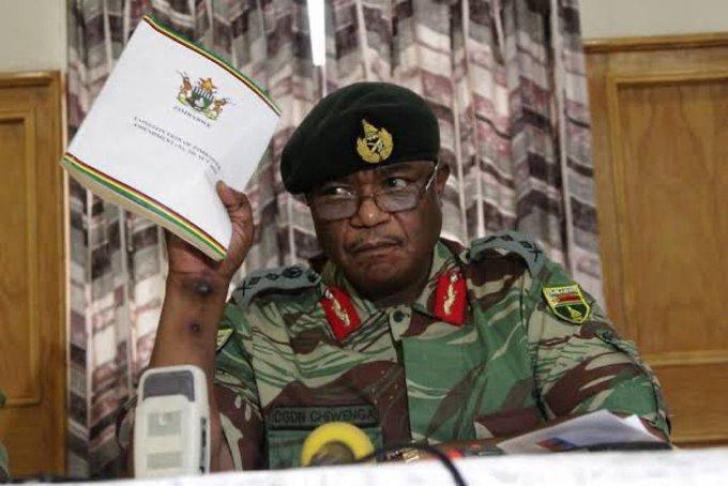
In the high-stakes theatre of Zimbabwean politics, silence is rarely empty; it is usually heavy with the scent of gunpowder and historical memory.
For months, a quiet but perceptible tremor has been radiating from the senior ranks of the liberation war veterans and retired military commanders. Their sudden re-entry into the open political debate regarding the "2030 agenda" is not a coincidence of civic engagement. It is a calculated signal.
As President Emmerson Mnangagwa's supporters beat the drums for a third term or a constitutional extension of his mandate, the guardians of the barracks are reminding the nation that in Zimbabwe, power does not merely flow from the ballot box, it circulates through the security-liberation establishment that has underpinned ZANU PF since 1980.
This moment feels hauntingly familiar. It echoes the atmospheric tension of late 2017, just before the fall of Robert Mugabe.
To understand why the "ED 2030" slogan has hit a wall of olive-drab resistance, one must look at the three deeper dynamics currently fracturing the ruling elite.
Zimbabwe's political architecture remains a house built by the Rhodesian Bush War of 1964 to 1979.
The men who participated in the guerrilla struggle - Emmerson Mnangagwa, Constantino Chiwenga, and a cadre of retired generals - did not merely win a war; they inherited a state.
This group formed the iron-clad coalition that executed "Operation Restore Legacy" in 2017 to remove Mugabe.
Today, that same network is remobilising, but the target has shifted.
When retired commanders begin publicly demanding constitutional adherence and the holding of a referendum, they are not suddenly becoming champions of liberal democracy. Instead, they are signalling that the "stockholders" of the state are unhappy.
The liberation network that installed Mnangagwa is fracturing because the current push for 2030 threatens the delicate internal consensus that governs their power-sharing arrangement.
Under the 2013 Constitution, a hard ceiling exists: a two-term presidential limit.
For President Mnangagwa, the clock runs out in 2028.
To stay until 2030 requires more than just a party slogan; it requires a constitutional amendment that would likely necessitate a national referendum.
For the internal opposition within ZANU PF, the Constitution has become the ultimate weapon of denial.
By insisting on "constitutionalism," these retired generals and war veterans avoid the appearance of a naked power struggle or a mutiny.
It is a sophisticated manoeuver: they are using the law to block a person, framing their resistance as a defense of the republic's foundational documents rather than a factional feud.
This slows the momentum of the 2030 movement, forcing the president's loyalists to fight a legal and public battle they may not be able to win without shattering the party's remaining credibility.
The parallels between today and the final years of the Mugabe era are striking.
Then, as now, the war veterans turned their backs on the incumbent.
Then, as now, the military began to step into the political light.
The primary difference is that this friction is occurring much earlier in the succession cycle.
The ghost of the Mugabe succession crisis looms large over the current administration.
The military-liberation establishment views itself as the ultimate arbiter of ZANU PF leadership.
When senior figures begin to express "concerns" about the political timeline, it is an implicit warning that the 2017 playbook has not been lost. If the 2028 timeline is ignored, the risk of a deep, destabilising fracture within the ruling coalition becomes a mathematical certainty rather than a political possibility.
In this volatile environment, the most significant sound is the silence of Vice President Constantino Chiwenga.
For months, a quiet but perceptible tremor has been radiating from the senior ranks of the liberation war veterans and retired military commanders. Their sudden re-entry into the open political debate regarding the "2030 agenda" is not a coincidence of civic engagement. It is a calculated signal.
As President Emmerson Mnangagwa's supporters beat the drums for a third term or a constitutional extension of his mandate, the guardians of the barracks are reminding the nation that in Zimbabwe, power does not merely flow from the ballot box, it circulates through the security-liberation establishment that has underpinned ZANU PF since 1980.
This moment feels hauntingly familiar. It echoes the atmospheric tension of late 2017, just before the fall of Robert Mugabe.
To understand why the "ED 2030" slogan has hit a wall of olive-drab resistance, one must look at the three deeper dynamics currently fracturing the ruling elite.
Zimbabwe's political architecture remains a house built by the Rhodesian Bush War of 1964 to 1979.
The men who participated in the guerrilla struggle - Emmerson Mnangagwa, Constantino Chiwenga, and a cadre of retired generals - did not merely win a war; they inherited a state.
This group formed the iron-clad coalition that executed "Operation Restore Legacy" in 2017 to remove Mugabe.
Today, that same network is remobilising, but the target has shifted.
When retired commanders begin publicly demanding constitutional adherence and the holding of a referendum, they are not suddenly becoming champions of liberal democracy. Instead, they are signalling that the "stockholders" of the state are unhappy.
The liberation network that installed Mnangagwa is fracturing because the current push for 2030 threatens the delicate internal consensus that governs their power-sharing arrangement.
Under the 2013 Constitution, a hard ceiling exists: a two-term presidential limit.
For President Mnangagwa, the clock runs out in 2028.
To stay until 2030 requires more than just a party slogan; it requires a constitutional amendment that would likely necessitate a national referendum.
For the internal opposition within ZANU PF, the Constitution has become the ultimate weapon of denial.
By insisting on "constitutionalism," these retired generals and war veterans avoid the appearance of a naked power struggle or a mutiny.
It is a sophisticated manoeuver: they are using the law to block a person, framing their resistance as a defense of the republic's foundational documents rather than a factional feud.
This slows the momentum of the 2030 movement, forcing the president's loyalists to fight a legal and public battle they may not be able to win without shattering the party's remaining credibility.
The parallels between today and the final years of the Mugabe era are striking.
Then, as now, the war veterans turned their backs on the incumbent.
Then, as now, the military began to step into the political light.
The primary difference is that this friction is occurring much earlier in the succession cycle.
The ghost of the Mugabe succession crisis looms large over the current administration.
The military-liberation establishment views itself as the ultimate arbiter of ZANU PF leadership.
When senior figures begin to express "concerns" about the political timeline, it is an implicit warning that the 2017 playbook has not been lost. If the 2028 timeline is ignored, the risk of a deep, destabilising fracture within the ruling coalition becomes a mathematical certainty rather than a political possibility.
In this volatile environment, the most significant sound is the silence of Vice President Constantino Chiwenga.
Source - Gabriel Manyati
All articles and letters published on Bulawayo24 have been independently written by members of Bulawayo24's community. The views of users published on Bulawayo24 are therefore their own and do not necessarily represent the views of Bulawayo24. Bulawayo24 editors also reserve the right to edit or delete any and all comments received.
Join the discussion
Loading comments…





