News / National
Zera urges motorists to verify fuel pump accuracy
28 May 2026 at 18:01hrs |
0 Views
THE Zimbabwe Energy Regulatory Authority (Zera) has urged motorists to protect themselves against possible fuel fraud by demanding proof that fuel pumps at service stations have been properly certified.
Authorities say violations involving measuring instruments often include manipulation of fuel pumps, scales and other volume-measuring devices, practices that contravene the Trade Measures Act and the Consumer Protection Act.
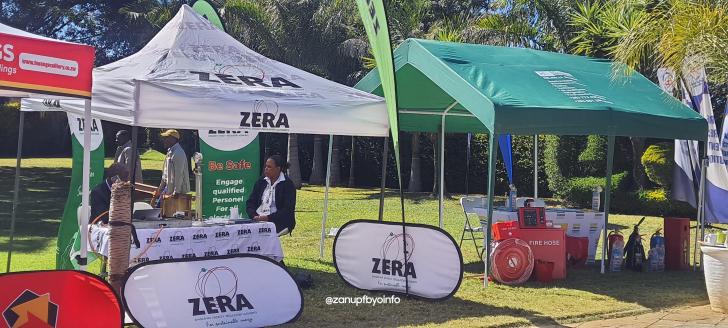
Speaking during World Metrology Day commemorations in Bulawayo recently, Zera regional compliance officer Engineer Hugh Mlawuzi said the energy regulator works closely with the Department of Trade Measures to curb fuel-related fraud and protect consumers.
He, however, acknowledged that regulators cannot monitor every service station at all times and called on consumers to actively report suspicious practices.
"If a service station bought 10 000 litres but sold 12 000 litres, where did the extra 2 000 come from? That's when we call in Trade Measures," said Eng Mlawuzi.
"If they confirm a pump is under-delivering, we close the station. A second offence leads to suspension. A third, and we cancel the licence after prosecution by the National Prosecuting Authority.
"You suspect something, you ask. Service stations should have a certificate to say Trade Measures has verified the equipment."
Eng Mlawuzi said compliance levels had improved since 2023 following earlier challenges involving widespread fuel dilution with paraffin.
He said Government responded by aligning paraffin prices with diesel and introducing cheaper liquefied petroleum gas (LPG) alternatives.
Zera conducts quarterly inspections and fuel quality testing under Statutory Instrument 23, covering diesel, fuel blends and LPG across the country.
The regulator also checks fuel pumps and metering systems to ensure they meet legal accuracy standards.
Eng Mlawuzi clarified that although private contractors may conduct equipment testing, only the Department of Trade Measures has the legal authority to certify and seal measuring instruments.
"They are not competing. They are complementing each other," he said.
"We've worked together since 1993. No arguments. Just co-operation."
He said the partnership between the two institutions helps prevent market misconduct and protects both consumers and compliant businesses.
According to Eng Mlawuzi, even a two percent under-calibration on 50 000 litres of fuel can result in major financial losses over time.
He also revealed that Zera is moving towards a volume-based licensing framework in which service station licences will reflect actual import volumes, making accurate measurement data increasingly important for tax and revenue collection.
"When we enforce standards and our powers are limited, we transfer cases to the relevant authority for prosecution," he said.
Eng Mlawuzi praised the Department of Trade Measures for maintaining decades of cooperation with Zera, saying the working relationship should serve as an example to younger professionals in public service.
"You can be friends for more than 35 years as long as both of you know what you are doing and you do it properly," he added.
This year's World Metrology Day theme, "Metrology: Building Trust in Policy Making," focused on the importance of accurate measurement systems in governance, economic stability and industrial development.
Speaking at the same event, Department of Trade Measures board member Mr Cyprain Muchechemera stressed the importance of reliable measurements in daily life and commerce.
"We followed an unbroken chain of traceability down to the inspector's hand. We watched the mobile verification lab bring that legal out to where trade actually happens. And at the cost of inaccuracy, we heard what is at stake when that chain breaks," he said.
Mr Muchechemera added that behind every fair price, safe journey and accurate transaction lies a measurement that citizens can trust.
Authorities say violations involving measuring instruments often include manipulation of fuel pumps, scales and other volume-measuring devices, practices that contravene the Trade Measures Act and the Consumer Protection Act.
Speaking during World Metrology Day commemorations in Bulawayo recently, Zera regional compliance officer Engineer Hugh Mlawuzi said the energy regulator works closely with the Department of Trade Measures to curb fuel-related fraud and protect consumers.
He, however, acknowledged that regulators cannot monitor every service station at all times and called on consumers to actively report suspicious practices.
"If a service station bought 10 000 litres but sold 12 000 litres, where did the extra 2 000 come from? That's when we call in Trade Measures," said Eng Mlawuzi.
"If they confirm a pump is under-delivering, we close the station. A second offence leads to suspension. A third, and we cancel the licence after prosecution by the National Prosecuting Authority.
"You suspect something, you ask. Service stations should have a certificate to say Trade Measures has verified the equipment."
Eng Mlawuzi said compliance levels had improved since 2023 following earlier challenges involving widespread fuel dilution with paraffin.
He said Government responded by aligning paraffin prices with diesel and introducing cheaper liquefied petroleum gas (LPG) alternatives.
Zera conducts quarterly inspections and fuel quality testing under Statutory Instrument 23, covering diesel, fuel blends and LPG across the country.
The regulator also checks fuel pumps and metering systems to ensure they meet legal accuracy standards.
Eng Mlawuzi clarified that although private contractors may conduct equipment testing, only the Department of Trade Measures has the legal authority to certify and seal measuring instruments.
"We've worked together since 1993. No arguments. Just co-operation."
He said the partnership between the two institutions helps prevent market misconduct and protects both consumers and compliant businesses.
According to Eng Mlawuzi, even a two percent under-calibration on 50 000 litres of fuel can result in major financial losses over time.
He also revealed that Zera is moving towards a volume-based licensing framework in which service station licences will reflect actual import volumes, making accurate measurement data increasingly important for tax and revenue collection.
"When we enforce standards and our powers are limited, we transfer cases to the relevant authority for prosecution," he said.
Eng Mlawuzi praised the Department of Trade Measures for maintaining decades of cooperation with Zera, saying the working relationship should serve as an example to younger professionals in public service.
"You can be friends for more than 35 years as long as both of you know what you are doing and you do it properly," he added.
This year's World Metrology Day theme, "Metrology: Building Trust in Policy Making," focused on the importance of accurate measurement systems in governance, economic stability and industrial development.
Speaking at the same event, Department of Trade Measures board member Mr Cyprain Muchechemera stressed the importance of reliable measurements in daily life and commerce.
"We followed an unbroken chain of traceability down to the inspector's hand. We watched the mobile verification lab bring that legal out to where trade actually happens. And at the cost of inaccuracy, we heard what is at stake when that chain breaks," he said.
Mr Muchechemera added that behind every fair price, safe journey and accurate transaction lies a measurement that citizens can trust.
Source - The Chronicle
Join the discussion
Loading comments…


