News / National
Teacher fired over protect placard takes battle to labour court
28 May 2026 at 18:08hrs |
0 Views
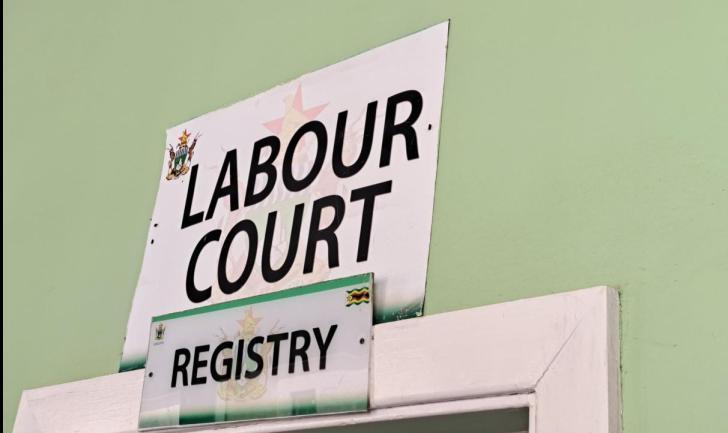
A Tsholotsho teacher dismissed from the Public Service for allegedly participating in trade union activism has approached the Labour Court challenging her discharge, in a case labour activists say highlights growing tensions between workers' rights and state disciplinary authority in Zimbabwe.
Court documents filed at the Labour Court in Bulawayo show that Bridget Dhliwayo is appealing against her dismissal by the Public Service Commission (PSC), arguing that her constitutional rights were violated after she allegedly protested over poor salaries and deteriorating classroom conditions.
In a disciplinary determination dated April 10, 2026, the Ministry of Primary and Secondary Education found Dhliwayo guilty of misconduct under the Public Service Regulations.
Authorities accused her of holding a placard reading "we demand a fair wage; we say no more to slave wages" while inside a classroom at Zibungululu Secondary School in Tsholotsho District.
The ministry further alleged that the placard photograph carried the caption: "Enough is enough guys. Look at the condition of the classrooms."
According to the disciplinary findings, Dhliwayo also allegedly posted the image in an Amalgamated Rural Teachers Union of Zimbabwe (ARTUZ) WhatsApp group and failed to conduct lessons between May 13 and May 20, 2025.
"Please be advised that acting in terms of Section 46 (1) (b) of the Public Service Regulations, 2000, as amended, I found you guilty of misconduct," read part of the determination.
The ministry added that this was not the first time she had been found guilty of misconduct and described her as "unrepentant" despite previous warnings.
Dhliwayo was subsequently discharged from service with effect from May 14, 2026.
However, in court papers filed under case number LCB94/26, Dhliwayo disputes the findings and argues that the disciplinary authority "grossly erred and fell into error at law" by concluding that she had abandoned her duties.
She maintains that she continued conducting lessons in accordance with her responsibilities, but some pupils were absent while others allegedly refused to cooperate.
Her appeal also argues that authorities criminalised constitutionally protected trade union activity.
"The disciplinary authority erred by making a finding that the Applicant was guilty of unbecoming behavior due to her picketing while it is her constitutional right to do so especially regard being had to the fact that she took a picture after work hours which did not impact on the discharge of her official duties," reads part of the appeal.
Dhliwayo also challenged the ministry's reliance on the disputed social media caption.
"The Disciplinary Authority erred in making a finding that the picture had a caption which reads ‘Enough is enough guys, look at the condition of the classrooms' while no such evidence was ever led and proved," the court papers state.
The case has since become a rallying point for ARTUZ, which says Dhliwayo's dismissal reflects broader victimisation of teachers demanding living wages amid worsening economic conditions.
In a solidarity report released on Africa Day under the banner Operation Dhiginiti, ARTUZ leader Obert Masaraure described the case as "a heart-wrenching indictment of the employer's brutality."
"Her offense was straightforward and entirely peaceful: she raised a placard demanding a living wage," Masaraure said.
"This act constitutes legitimate, core trade union work explicitly protected by both domestic and international law."
Masaraure argued that the dismissal violated both Zimbabwean law and international labour conventions, including International Labour Organization Convention 87 on Freedom of Association.
He also cited Section 65 of Zimbabwe's Constitution, which guarantees fair labour practices, reasonable wages and lawful trade union participation.
"The state's actions also directly contravene Section 65 of the Constitution of Zimbabwe," he said.
Masaraure accused authorities of using disciplinary procedures to suppress labour activism within the education sector.
"Statutory instruments cannot supersede constitutional guarantees," he added.
The dispute has also highlighted worsening conditions facing teachers, many of whom say their salaries no longer cover transport, food and other basic living expenses.
ARTUZ says Operation Dhiginiti was launched to provide legal assistance, material support and economic solidarity for dismissed teachers facing what it describes as systematic repression.
The union also announced plans to establish cooperative income-generating projects for teachers across districts and provinces.
"As part of Operation Dhiginiti's direct-action framework, the Union continues to encourage members to report for duty only two days per week," Masaraure said, arguing that full attendance had become economically unsustainable.
"Teachers cannot continue subsidizing a broken system at the expense of their own survival and the welfare of their families," he added.
Masaraure further linked the labour dispute to ongoing debate surrounding Constitutional Amendment Bill No. 3 (CAB3), warning that expanded executive powers could intensify repression against workers.
"The fight against CAB3 is therefore not merely political, it is fundamentally a struggle for workplace survival, democratic accountability, and the protection of workers' rights," he said.
Despite losing her job, ARTUZ says Dhliwayo remains determined to continue advocating for improved wages and working conditions.
"Her spirit remains unbroken," Masaraure said. "She stands ready to continue the fight for a fair wage and a better Zimbabwe."
Court documents filed at the Labour Court in Bulawayo show that Bridget Dhliwayo is appealing against her dismissal by the Public Service Commission (PSC), arguing that her constitutional rights were violated after she allegedly protested over poor salaries and deteriorating classroom conditions.
In a disciplinary determination dated April 10, 2026, the Ministry of Primary and Secondary Education found Dhliwayo guilty of misconduct under the Public Service Regulations.
Authorities accused her of holding a placard reading "we demand a fair wage; we say no more to slave wages" while inside a classroom at Zibungululu Secondary School in Tsholotsho District.
The ministry further alleged that the placard photograph carried the caption: "Enough is enough guys. Look at the condition of the classrooms."
According to the disciplinary findings, Dhliwayo also allegedly posted the image in an Amalgamated Rural Teachers Union of Zimbabwe (ARTUZ) WhatsApp group and failed to conduct lessons between May 13 and May 20, 2025.
"Please be advised that acting in terms of Section 46 (1) (b) of the Public Service Regulations, 2000, as amended, I found you guilty of misconduct," read part of the determination.
The ministry added that this was not the first time she had been found guilty of misconduct and described her as "unrepentant" despite previous warnings.
Dhliwayo was subsequently discharged from service with effect from May 14, 2026.
However, in court papers filed under case number LCB94/26, Dhliwayo disputes the findings and argues that the disciplinary authority "grossly erred and fell into error at law" by concluding that she had abandoned her duties.
She maintains that she continued conducting lessons in accordance with her responsibilities, but some pupils were absent while others allegedly refused to cooperate.
Her appeal also argues that authorities criminalised constitutionally protected trade union activity.
"The disciplinary authority erred by making a finding that the Applicant was guilty of unbecoming behavior due to her picketing while it is her constitutional right to do so especially regard being had to the fact that she took a picture after work hours which did not impact on the discharge of her official duties," reads part of the appeal.
Dhliwayo also challenged the ministry's reliance on the disputed social media caption.
"The Disciplinary Authority erred in making a finding that the picture had a caption which reads ‘Enough is enough guys, look at the condition of the classrooms' while no such evidence was ever led and proved," the court papers state.
The case has since become a rallying point for ARTUZ, which says Dhliwayo's dismissal reflects broader victimisation of teachers demanding living wages amid worsening economic conditions.
"Her offense was straightforward and entirely peaceful: she raised a placard demanding a living wage," Masaraure said.
"This act constitutes legitimate, core trade union work explicitly protected by both domestic and international law."
Masaraure argued that the dismissal violated both Zimbabwean law and international labour conventions, including International Labour Organization Convention 87 on Freedom of Association.
He also cited Section 65 of Zimbabwe's Constitution, which guarantees fair labour practices, reasonable wages and lawful trade union participation.
"The state's actions also directly contravene Section 65 of the Constitution of Zimbabwe," he said.
Masaraure accused authorities of using disciplinary procedures to suppress labour activism within the education sector.
"Statutory instruments cannot supersede constitutional guarantees," he added.
The dispute has also highlighted worsening conditions facing teachers, many of whom say their salaries no longer cover transport, food and other basic living expenses.
ARTUZ says Operation Dhiginiti was launched to provide legal assistance, material support and economic solidarity for dismissed teachers facing what it describes as systematic repression.
The union also announced plans to establish cooperative income-generating projects for teachers across districts and provinces.
"As part of Operation Dhiginiti's direct-action framework, the Union continues to encourage members to report for duty only two days per week," Masaraure said, arguing that full attendance had become economically unsustainable.
"Teachers cannot continue subsidizing a broken system at the expense of their own survival and the welfare of their families," he added.
Masaraure further linked the labour dispute to ongoing debate surrounding Constitutional Amendment Bill No. 3 (CAB3), warning that expanded executive powers could intensify repression against workers.
"The fight against CAB3 is therefore not merely political, it is fundamentally a struggle for workplace survival, democratic accountability, and the protection of workers' rights," he said.
Despite losing her job, ARTUZ says Dhliwayo remains determined to continue advocating for improved wages and working conditions.
"Her spirit remains unbroken," Masaraure said. "She stands ready to continue the fight for a fair wage and a better Zimbabwe."
Source - newsday
Join the discussion
Loading comments…


