News / National
Zimbabwe's stock market faces crisis of confidence
15 Jun 2026 at 18:35hrs |
251 Views
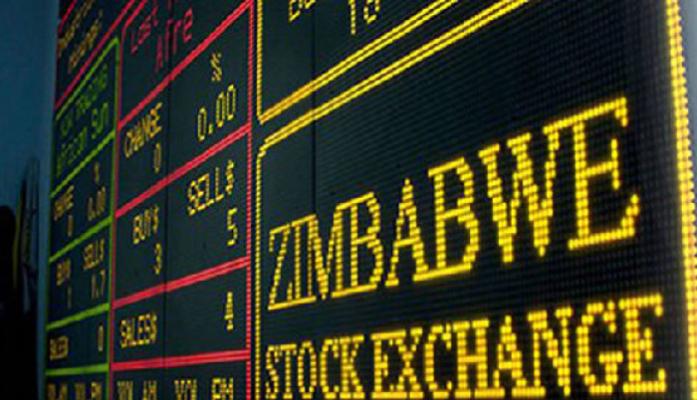
Zimbabwe's capital markets are facing a deepening crisis of confidence as a growing number of companies abandon public listings, billions of dollars in market value are erased and investors increasingly question the ability of local exchanges to preserve wealth and raise capital.
The warning comes at a critical time for Zimbabwe, which is seeking to attract substantial private sector investment to support industrialisation, expand manufacturing capacity and achieve its Vision 2030 goal of becoming an upper-middle-income economy.
According to a new report by economic think-tank Africa Economic Development Strategies (AEDS), more than 10 companies have delisted or initiated processes to leave the Zimbabwe Stock Exchange (ZSE) and the Victoria Falls Stock Exchange (VFEX) since 2020.
The departures span key sectors including telecommunications, manufacturing, retail and hospitality, raising concerns about the long-term viability of Zimbabwe's public equity markets.
"These are not isolated corporate events," AEDS said in its latest Market Watch publication.
"They reflect a reassessment of whether the domestic equity market still performs its core economic function: preserving and compounding capital in hard currency terms."
The report warns that the consequences extend far beyond the stock market itself. Capital markets play a vital role in mobilising savings, funding business expansion and directing capital towards productive sectors of the economy.
At the end of 2021, the ZSE had a market capitalisation of approximately US$12.19 billion. However, following the suspension of trading in 2022 and the rapid depreciation of the local currency, the exchange's value plunged to US$2.92 billion within a year.
More than US$9 billion in shareholder value was wiped out during the period.
"The collapse was not a conventional equity bear market," AEDS said.
"It was driven primarily by the June 2022 ZSE trading suspension and the rapid depreciation of the local currency against the US dollar, which eroded USD-equivalent valuations across the board."
Although the market staged a recovery in 2023, posting a US dollar return of 18.8 percent, the gains proved unsustainable.
In 2024, the exchange recorded a negative US dollar return of 75.55 percent, meaning that a US$100 investment made at the beginning of the year would have been worth approximately US$24 by year-end.
By December 2025, market capitalisation had recovered modestly to around US$3.49 billion but remained more than 70 percent below its 2021 peak.
AEDS argues that the prolonged destruction of shareholder value has fundamentally altered the calculations of listed companies.
Many firms have concluded that remaining on the exchange no longer serves their strategic interests, while others have found that depressed valuations make it difficult to raise meaningful capital through equity markets.
"Most companies that exited ZSE cited persistent undervaluation," the report noted.
"The undervaluation reflected structural constraints, thin liquidity, unusable USD valuations and limited participation rather than operational weakness."
The report also highlights the growing cost burden associated with maintaining a public listing.
Companies are required to absorb annual listing fees, regulatory charges, audit costs, sponsor fees and various compliance obligations, expenses that can become difficult to justify when market valuations remain depressed.
"When the company's own market capitalisation may only be a few million dollars, listing costs as a percentage of market value become unreasonable," AEDS said.
The think-tank further noted that Zimbabwe's implied equity risk premium increased from 13.82 percent in 2025 to 15.89 percent in 2026, reflecting investor concerns around sovereign debt, exchange-rate instability and policy uncertainty.
Using standard valuation models, the report estimates that a Zimbabwean company with identical earnings and growth prospects to a South African counterpart could trade at a discount of approximately 34 percent purely because of country-specific risk factors.
"The entire gap is attributable to country risk," the report said.
"As discount rates rise, valuation capacity contracts non-linearly and the incentive to remain listed on a Zimbabwean exchange diminishes accordingly."
AEDS warned that the continued weakening of Zimbabwe's stock market could undermine one of the country's most important channels for financing economic growth.
"In view of the fact that the ZSE cannot retain its listed companies, the country's ability to mobilise domestic savings into productive investment is fundamentally impaired," the report said.
"That cost is borne not by the exchange or the departing companies, but by the economy as a whole."
The findings are likely to intensify debate over reforms needed to restore investor confidence, improve market liquidity and strengthen Zimbabwe's capital markets as a platform for long-term economic development.
The warning comes at a critical time for Zimbabwe, which is seeking to attract substantial private sector investment to support industrialisation, expand manufacturing capacity and achieve its Vision 2030 goal of becoming an upper-middle-income economy.
According to a new report by economic think-tank Africa Economic Development Strategies (AEDS), more than 10 companies have delisted or initiated processes to leave the Zimbabwe Stock Exchange (ZSE) and the Victoria Falls Stock Exchange (VFEX) since 2020.
The departures span key sectors including telecommunications, manufacturing, retail and hospitality, raising concerns about the long-term viability of Zimbabwe's public equity markets.
"These are not isolated corporate events," AEDS said in its latest Market Watch publication.
"They reflect a reassessment of whether the domestic equity market still performs its core economic function: preserving and compounding capital in hard currency terms."
The report warns that the consequences extend far beyond the stock market itself. Capital markets play a vital role in mobilising savings, funding business expansion and directing capital towards productive sectors of the economy.
At the end of 2021, the ZSE had a market capitalisation of approximately US$12.19 billion. However, following the suspension of trading in 2022 and the rapid depreciation of the local currency, the exchange's value plunged to US$2.92 billion within a year.
More than US$9 billion in shareholder value was wiped out during the period.
"The collapse was not a conventional equity bear market," AEDS said.
"It was driven primarily by the June 2022 ZSE trading suspension and the rapid depreciation of the local currency against the US dollar, which eroded USD-equivalent valuations across the board."
Although the market staged a recovery in 2023, posting a US dollar return of 18.8 percent, the gains proved unsustainable.
In 2024, the exchange recorded a negative US dollar return of 75.55 percent, meaning that a US$100 investment made at the beginning of the year would have been worth approximately US$24 by year-end.
By December 2025, market capitalisation had recovered modestly to around US$3.49 billion but remained more than 70 percent below its 2021 peak.
AEDS argues that the prolonged destruction of shareholder value has fundamentally altered the calculations of listed companies.
Many firms have concluded that remaining on the exchange no longer serves their strategic interests, while others have found that depressed valuations make it difficult to raise meaningful capital through equity markets.
"Most companies that exited ZSE cited persistent undervaluation," the report noted.
"The undervaluation reflected structural constraints, thin liquidity, unusable USD valuations and limited participation rather than operational weakness."
The report also highlights the growing cost burden associated with maintaining a public listing.
Companies are required to absorb annual listing fees, regulatory charges, audit costs, sponsor fees and various compliance obligations, expenses that can become difficult to justify when market valuations remain depressed.
"When the company's own market capitalisation may only be a few million dollars, listing costs as a percentage of market value become unreasonable," AEDS said.
The think-tank further noted that Zimbabwe's implied equity risk premium increased from 13.82 percent in 2025 to 15.89 percent in 2026, reflecting investor concerns around sovereign debt, exchange-rate instability and policy uncertainty.
Using standard valuation models, the report estimates that a Zimbabwean company with identical earnings and growth prospects to a South African counterpart could trade at a discount of approximately 34 percent purely because of country-specific risk factors.
"The entire gap is attributable to country risk," the report said.
"As discount rates rise, valuation capacity contracts non-linearly and the incentive to remain listed on a Zimbabwean exchange diminishes accordingly."
AEDS warned that the continued weakening of Zimbabwe's stock market could undermine one of the country's most important channels for financing economic growth.
"In view of the fact that the ZSE cannot retain its listed companies, the country's ability to mobilise domestic savings into productive investment is fundamentally impaired," the report said.
"That cost is borne not by the exchange or the departing companies, but by the economy as a whole."
The findings are likely to intensify debate over reforms needed to restore investor confidence, improve market liquidity and strengthen Zimbabwe's capital markets as a platform for long-term economic development.
Source - NewsDay
Join the discussion
Loading comments…





