News / National
AfDB says Zimbabwe well placed to withstand Middle East shocks
31 Jul 2026 at 15:07hrs |
917 Views
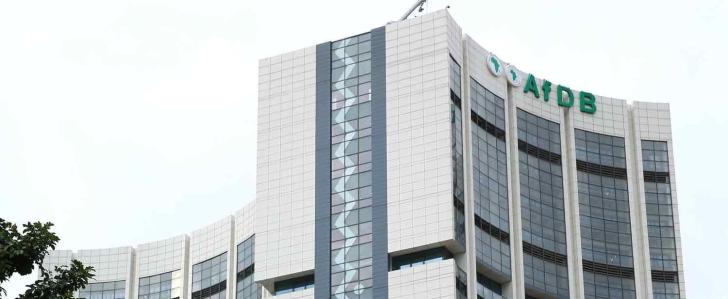
Zimbabwe's strong gold sector and diversified mineral resource base are expected to cushion the economy against the global economic fallout from the escalating conflict in the Middle East, the African Development Bank (AfDB) has said.
In its Southern Africa Economic Outlook 2026, released on Tuesday, the AfDB identified Zimbabwe among Southern Africa's resource-rich economies that stand to benefit from higher commodity prices despite growing global uncertainty linked to the conflict involving the United States and Iran.
Zimbabwe produced 21.39 tonnes of gold during the first half of the year, generating approximately US$3.1 billion in export earnings over the same period.
The continental development finance institution said while the conflict is expected to drive up global oil prices, disrupt international shipping routes and tighten global financial conditions, Zimbabwe's robust gold industry would help offset some of the resulting economic pressures.
"Oil-exporting economies such as Angola as well as other resource-rich countries like South Africa and Zimbabwe (gold) and Zambia (copper) are poised to benefit from increased commodity prices leading to improved fiscal and external balances, although these gains could be partly offset by imported inflation and tighter financing conditions," the report said.
The AfDB warned that the conflict is likely to create adverse macroeconomic spillovers across Southern Africa through rising fuel prices, disruptions to key maritime trade routes and more restrictive global financial conditions.
Given the region's heavy reliance on imported petroleum products, the bank said higher oil prices are expected to fuel inflation, increase import costs, weaken external balances and raise borrowing costs.
According to the report, Southern Africa's real GDP growth rose from 2 percent in 2024 to 2.3 percent in 2025, before slowing slightly to 2.1 percent in 2026 and recovering to 2.7 percent in 2027.
Zimbabwe and Zambia were identified as the region's fastest-growing economies in 2025, recording growth rates of 7.6 percent and 5.2 percent, respectively.
The AfDB attributed Zimbabwe's strong performance primarily to robust household consumption, while Zambia's growth was driven by both consumer spending and investment.
The bank also projected a sharp decline in Zimbabwe's inflation, forecasting it to fall from 736.1 percent in 2024 to 89 percent in 2025, before easing further to 10.1 percent by 2027.
Earlier this year, the World Bank projected Zimbabwe's economy would grow by 5 percent in 2026, while the International Monetary Fund forecast growth of 4.6 percent.
Despite the positive outlook for gold-exporting countries, the AfDB cautioned that imported inflation and tighter international financial conditions remain significant risks to Zimbabwe's economic prospects.
The bank said the current geopolitical tensions highlight the importance of strengthening economic resilience by mobilising domestic and regional sources of development finance while reducing dependence on external funding.
"The challenge is not simply a shortage of money. It is mobilising, intermediating, and deploying the capital that already exists, effectively and at scale, in an increasingly fragmented global economy," the report said.
According to the AfDB, resource-rich economies such as Zimbabwe have an opportunity to use higher commodity revenues to strengthen fiscal and external balances while investing in long-term economic transformation and resilience against future global shocks.
The report also identified significant untapped financing opportunities across Southern Africa, including diaspora remittances, institutional investors, capital markets and natural resource wealth.
It noted that remittances continue to play an especially important role in Zimbabwe and Lesotho, providing a vital source of foreign currency and household income while supporting broader economic activity.
In its Southern Africa Economic Outlook 2026, released on Tuesday, the AfDB identified Zimbabwe among Southern Africa's resource-rich economies that stand to benefit from higher commodity prices despite growing global uncertainty linked to the conflict involving the United States and Iran.
Zimbabwe produced 21.39 tonnes of gold during the first half of the year, generating approximately US$3.1 billion in export earnings over the same period.
The continental development finance institution said while the conflict is expected to drive up global oil prices, disrupt international shipping routes and tighten global financial conditions, Zimbabwe's robust gold industry would help offset some of the resulting economic pressures.
"Oil-exporting economies such as Angola as well as other resource-rich countries like South Africa and Zimbabwe (gold) and Zambia (copper) are poised to benefit from increased commodity prices leading to improved fiscal and external balances, although these gains could be partly offset by imported inflation and tighter financing conditions," the report said.
The AfDB warned that the conflict is likely to create adverse macroeconomic spillovers across Southern Africa through rising fuel prices, disruptions to key maritime trade routes and more restrictive global financial conditions.
Given the region's heavy reliance on imported petroleum products, the bank said higher oil prices are expected to fuel inflation, increase import costs, weaken external balances and raise borrowing costs.
According to the report, Southern Africa's real GDP growth rose from 2 percent in 2024 to 2.3 percent in 2025, before slowing slightly to 2.1 percent in 2026 and recovering to 2.7 percent in 2027.
Zimbabwe and Zambia were identified as the region's fastest-growing economies in 2025, recording growth rates of 7.6 percent and 5.2 percent, respectively.
The AfDB attributed Zimbabwe's strong performance primarily to robust household consumption, while Zambia's growth was driven by both consumer spending and investment.
The bank also projected a sharp decline in Zimbabwe's inflation, forecasting it to fall from 736.1 percent in 2024 to 89 percent in 2025, before easing further to 10.1 percent by 2027.
Earlier this year, the World Bank projected Zimbabwe's economy would grow by 5 percent in 2026, while the International Monetary Fund forecast growth of 4.6 percent.
Despite the positive outlook for gold-exporting countries, the AfDB cautioned that imported inflation and tighter international financial conditions remain significant risks to Zimbabwe's economic prospects.
The bank said the current geopolitical tensions highlight the importance of strengthening economic resilience by mobilising domestic and regional sources of development finance while reducing dependence on external funding.
"The challenge is not simply a shortage of money. It is mobilising, intermediating, and deploying the capital that already exists, effectively and at scale, in an increasingly fragmented global economy," the report said.
According to the AfDB, resource-rich economies such as Zimbabwe have an opportunity to use higher commodity revenues to strengthen fiscal and external balances while investing in long-term economic transformation and resilience against future global shocks.
The report also identified significant untapped financing opportunities across Southern Africa, including diaspora remittances, institutional investors, capital markets and natural resource wealth.
It noted that remittances continue to play an especially important role in Zimbabwe and Lesotho, providing a vital source of foreign currency and household income while supporting broader economic activity.
Source - the herald
Join the discussion
Loading comments…





