News / National
Zanu PF probes MPs who skipped CAB3 vote
20 Jun 2026 at 18:43hrs |
1721 Views

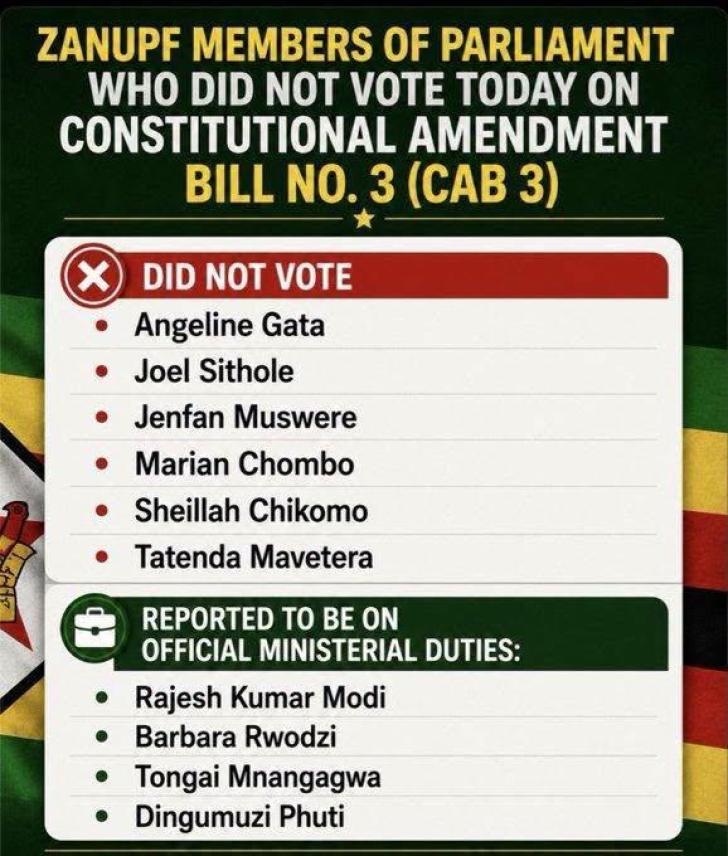
Zanu PF is reportedly investigating 14 of its legislators, including former Information, Publicity and Broadcasting Services Minister Jenfan Muswere and ICT Minister Tatenda Mavetera, after they allegedly failed to participate in the crucial vote on Constitution Amendment No. 3 (CAB3) in the National Assembly.
The development comes after the controversial Bill passed with 216 votes, exceeding the 187 votes required to secure the two-thirds majority needed to amend the Constitution.
The vote exposed significant divisions within both the ruling party and the opposition, with support from legislators aligned to CCC faction leader Sengezo Tshabangu proving decisive in securing the Bill's passage.
Zanu PF entered the vote with 181 legislators, six short of the threshold required to pass constitutional amendments without opposition support. As a result, votes from opposition MPs became critical to the Bill's success.
According to parliamentary voting records, 38 opposition legislators voted in favour of the amendments alongside Zanu PF, prompting criticism from opposition figures, constitutional lawyers and civil society organisations, who accused the lawmakers of betraying the electorate.
The support from Tshabangu-aligned legislators effectively ensured the Bill's passage, overcoming resistance from MPs aligned to CCC interim leader Jameson Timba.
A bloc of 42 opposition legislators voted against the Bill and has since pledged to continue opposing the proposed constitutional changes through political mobilisation and legal challenges.
Critics argue that had all opposition MPs voted against the Bill, the amendments would likely have failed to secure the required two-thirds majority.
The Bill now moves to the Senate, where it must again secure a two-thirds majority before it can be transmitted to President Emmerson Mnangagwa for assent.
The proposed amendments remain highly contentious, with opponents arguing that they could alter key constitutional safeguards and potentially extend the tenure of elected officials without direct electoral endorsement.
The reported absence of 14 Zanu PF legislators from such a critical vote has also raised questions within the ruling party, particularly given the strategic importance attached to CAB3 by senior party leaders.
As the Bill heads to the Senate, both supporters and opponents are preparing for what is expected to be another fiercely contested phase of the constitutional amendment process, with legal, political and public debates likely to intensify in the coming weeks.
The development comes after the controversial Bill passed with 216 votes, exceeding the 187 votes required to secure the two-thirds majority needed to amend the Constitution.
The vote exposed significant divisions within both the ruling party and the opposition, with support from legislators aligned to CCC faction leader Sengezo Tshabangu proving decisive in securing the Bill's passage.
Zanu PF entered the vote with 181 legislators, six short of the threshold required to pass constitutional amendments without opposition support. As a result, votes from opposition MPs became critical to the Bill's success.
According to parliamentary voting records, 38 opposition legislators voted in favour of the amendments alongside Zanu PF, prompting criticism from opposition figures, constitutional lawyers and civil society organisations, who accused the lawmakers of betraying the electorate.
The support from Tshabangu-aligned legislators effectively ensured the Bill's passage, overcoming resistance from MPs aligned to CCC interim leader Jameson Timba.
A bloc of 42 opposition legislators voted against the Bill and has since pledged to continue opposing the proposed constitutional changes through political mobilisation and legal challenges.
Critics argue that had all opposition MPs voted against the Bill, the amendments would likely have failed to secure the required two-thirds majority.
The Bill now moves to the Senate, where it must again secure a two-thirds majority before it can be transmitted to President Emmerson Mnangagwa for assent.
The proposed amendments remain highly contentious, with opponents arguing that they could alter key constitutional safeguards and potentially extend the tenure of elected officials without direct electoral endorsement.
The reported absence of 14 Zanu PF legislators from such a critical vote has also raised questions within the ruling party, particularly given the strategic importance attached to CAB3 by senior party leaders.
As the Bill heads to the Senate, both supporters and opponents are preparing for what is expected to be another fiercely contested phase of the constitutional amendment process, with legal, political and public debates likely to intensify in the coming weeks.
Source - businessdaily.co.zw
Join the discussion
Loading comments…


