News / National
Import hit AVM capacity utilisation
02 Jul 2026 at 12:54hrs |
0 Views
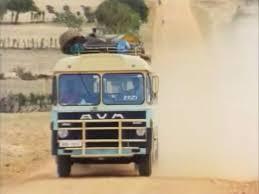
Zimbabwe's oldest bus manufacturer, AVM Africa, says it is operating at between five and 10 percent of its production capacity as low-cost imported buses continue to undermine demand for locally manufactured vehicles.
Managing director Jacob Kupa said the company's factory has the capacity to produce 25 commuter buses per month but is struggling to secure sufficient orders amid an influx of duty-free imports.
The challenges come ahead of the inaugural Zimbabwe Industrialisation Conference and Expo (ZICE 2026), scheduled for 23–24 July at the Harare International Conference Centre, where industrial policy and manufacturing competitiveness are expected to dominate discussions.
The conference is being organised by the Ministry of Industry and Commerce in partnership with Africa Economic Development Strategies (AEDS) and ZimTrade.
Kupa said a recently introduced statutory instrument exempting passenger buses from import duty had increased the availability of imported vehicles and boosted competition but had significantly weakened the position of domestic manufacturers.
"A special instrument that came out about three months ago says buses for transporting people are now duty-free," Kupa said.
"Once they remove duty, it basically means that we remain very vulnerable. It makes it very difficult for us to compete."
He said private transport operators were increasingly opting for imported buses instead of locally assembled units, with plans to bring in about 700 buses, including an initial shipment of 200 already on its way to Zimbabwe.
Because bus manufacturing requires significant capital investment, AVM Africa only builds vehicles against confirmed orders.
"We are still looking for an off-taker; we are still looking for orders. The capacity hasn't changed that much. We still need orders to utilise our production capacity. We don't have enough work there," Kupa said.
He warned that declining local production has far-reaching consequences beyond the bus manufacturing industry.
According to Kupa, each AVM bus contains about 65 percent locally sourced components, with only the engine, gearbox and twin axles imported.
He said production supports a network of 91 Zimbabwean companies supplying inputs such as steel, glass, paint, seats and electrical wiring.
"We think commuter buses should be locally manufactured or assembled," he said.
"Because apart from AVM, we've got 91 companies that feed into bus manufacturing. You can imagine the amount of job losses that we are creating as a country. The number of jobs that we are losing or exporting."
Kupa added that reduced production also affects the training and employment of skilled artisans, weakening Zimbabwe's broader industrial ecosystem.
Established in 1961 before relocating to its current 13-acre plant in Msasa during the late 1960s, AVM Africa remains one of Africa's largest operational bus manufacturing facilities. The company specialises in heavy-duty buses designed for Zimbabwean road conditions and urban commuter services.
Despite current challenges, AVM is expanding its product range and pursuing strategic partnerships. The company is finalising a joint venture with Belarusian manufacturer Minsk Automobile Plant (MAZ) while continuing procurement arrangements with Chinese suppliers and Dutch truck manufacturer DAF Trucks.
Kupa said government support would be critical to sustaining local manufacturing, noting that the State remains the country's largest purchaser of buses and other public service vehicles.
"Government is the biggest buyer of any vehicle, including buses. We expect the Government to give us that support," he said, while acknowledging a recent government order for 10 buses.
"As far as I am concerned, there is no need to buy commuter buses outside the country. Those buses must be local buses."
While he accepted that long-distance cross-border coaches could continue to be imported, Kupa argued that buses serving urban and peri-urban commuter routes should be manufactured or assembled locally.
The company recently completed a three-month trial of a newly designed 120-passenger city bus with the Public Service Commission and is nearing completion of another redesigned commuter bus model.
"We are not looking back," Kupa said. "We think we are a big player in public transport provision... We have never stopped."
He added that AVM's long-term prospects could improve with the full commercial operation of the Dinson Iron and Steel Company plant in Manhize, which is expected to provide locally produced structural steel and increase the local content of Zimbabwean-built buses to more than 80 percent.
Managing director Jacob Kupa said the company's factory has the capacity to produce 25 commuter buses per month but is struggling to secure sufficient orders amid an influx of duty-free imports.
The challenges come ahead of the inaugural Zimbabwe Industrialisation Conference and Expo (ZICE 2026), scheduled for 23–24 July at the Harare International Conference Centre, where industrial policy and manufacturing competitiveness are expected to dominate discussions.
The conference is being organised by the Ministry of Industry and Commerce in partnership with Africa Economic Development Strategies (AEDS) and ZimTrade.
Kupa said a recently introduced statutory instrument exempting passenger buses from import duty had increased the availability of imported vehicles and boosted competition but had significantly weakened the position of domestic manufacturers.
"A special instrument that came out about three months ago says buses for transporting people are now duty-free," Kupa said.
"Once they remove duty, it basically means that we remain very vulnerable. It makes it very difficult for us to compete."
He said private transport operators were increasingly opting for imported buses instead of locally assembled units, with plans to bring in about 700 buses, including an initial shipment of 200 already on its way to Zimbabwe.
Because bus manufacturing requires significant capital investment, AVM Africa only builds vehicles against confirmed orders.
"We are still looking for an off-taker; we are still looking for orders. The capacity hasn't changed that much. We still need orders to utilise our production capacity. We don't have enough work there," Kupa said.
He warned that declining local production has far-reaching consequences beyond the bus manufacturing industry.
According to Kupa, each AVM bus contains about 65 percent locally sourced components, with only the engine, gearbox and twin axles imported.
He said production supports a network of 91 Zimbabwean companies supplying inputs such as steel, glass, paint, seats and electrical wiring.
"We think commuter buses should be locally manufactured or assembled," he said.
"Because apart from AVM, we've got 91 companies that feed into bus manufacturing. You can imagine the amount of job losses that we are creating as a country. The number of jobs that we are losing or exporting."
Kupa added that reduced production also affects the training and employment of skilled artisans, weakening Zimbabwe's broader industrial ecosystem.
Established in 1961 before relocating to its current 13-acre plant in Msasa during the late 1960s, AVM Africa remains one of Africa's largest operational bus manufacturing facilities. The company specialises in heavy-duty buses designed for Zimbabwean road conditions and urban commuter services.
Despite current challenges, AVM is expanding its product range and pursuing strategic partnerships. The company is finalising a joint venture with Belarusian manufacturer Minsk Automobile Plant (MAZ) while continuing procurement arrangements with Chinese suppliers and Dutch truck manufacturer DAF Trucks.
Kupa said government support would be critical to sustaining local manufacturing, noting that the State remains the country's largest purchaser of buses and other public service vehicles.
"Government is the biggest buyer of any vehicle, including buses. We expect the Government to give us that support," he said, while acknowledging a recent government order for 10 buses.
"As far as I am concerned, there is no need to buy commuter buses outside the country. Those buses must be local buses."
While he accepted that long-distance cross-border coaches could continue to be imported, Kupa argued that buses serving urban and peri-urban commuter routes should be manufactured or assembled locally.
The company recently completed a three-month trial of a newly designed 120-passenger city bus with the Public Service Commission and is nearing completion of another redesigned commuter bus model.
"We are not looking back," Kupa said. "We think we are a big player in public transport provision... We have never stopped."
He added that AVM's long-term prospects could improve with the full commercial operation of the Dinson Iron and Steel Company plant in Manhize, which is expected to provide locally produced structural steel and increase the local content of Zimbabwean-built buses to more than 80 percent.
Source - The Herald
Join the discussion
Loading comments…





