News / National
CAB 3 faces fresh court battles
04 Jul 2026 at 09:14hrs |
644 Views
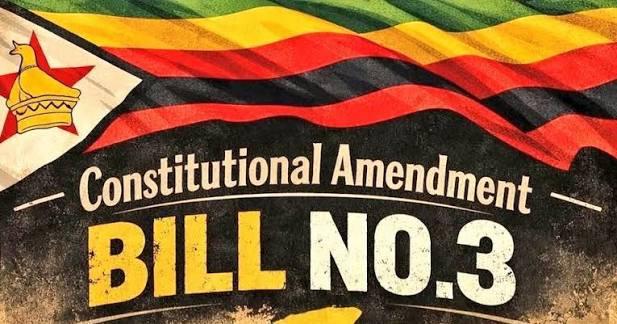
The passage of Constitution Amendment No. 3 Bill (CAB 3) through Parliament has paved the way for a series of legal challenges from opponents who argue the legislation is unconstitutional and should not become law without a national referendum.
The Bill completed its parliamentary journey on Tuesday after the National Assembly, sitting in an extraordinary session convened by President Emmerson Mnangagwa, approved Senate amendments by 226 votes to 41. Opposition legislators from the Citizens Coalition for Change (CCC) voted against the measure.
The legislation now awaits President Mnangagwa's assent before it can become law.
However, legal action has already begun.
War veteran Reuben Zulu filed an urgent application at the High Court seeking to halt the processing of CAB 3, arguing that Parliament's approval of the Bill was tainted by allegations that Members of Parliament were improperly influenced through cash and vehicle donations reportedly made by businessman Wicknell Chivayo.
Zulu contends that the legislative process was "contaminated" by alleged corruption and unlawful inducements.
The application, filed on the same day the National Assembly passed the Bill, seeks an interim interdict preventing the Speaker of Parliament, the Clerk of Parliament and other parliamentary officials from certifying or presenting the Bill to the President pending the outcome of the case.
Zulu is represented by constitutional lawyer Lovemore Madhuku, who had earlier represented him and five other applicants in a Constitutional Court challenge seeking to invalidate the process that led to the introduction of CAB 3.
Madhuku has also lodged two additional constitutional applications challenging the Senate amendments, one on behalf of war veterans and another for CCC legislator Prince Dubeko Sibanda.
Political analyst Blessing Vava said the completion of Parliament's work was likely to trigger a new wave of constitutional litigation.
He argued that there were credible legal grounds to challenge the legislation, particularly over whether Parliament complied with constitutional requirements relating to public participation and other procedural safeguards.
According to Vava, several legal challenges had effectively been waiting for Parliament to conclude its deliberations before proceeding.
He also maintained that the proposed amendment to Section 328(7), which safeguards presidential term limits, should be subjected to a national referendum before it can lawfully take effect.
"In my view, the provisions dealing with the extension of term limits ought to be subjected to a national referendum, as required by the Constitution," Vava said.
He criticised the interpretation advanced by National Assembly Speaker Jacob Mudenda and Justice Minister Ziyambi Ziyambi that a referendum is unnecessary, arguing that such a position undermines both the spirit and intent of the Constitution by denying citizens the opportunity to vote on a fundamental constitutional issue.
Vava urged opponents of the Bill to pursue lawful democratic means, including peaceful civic action and public advocacy, to defend constitutionalism.
He also called on churches to engage President Mnangagwa and urge him either to withhold assent or refer the matter to a national referendum, while encouraging civil society organisations to engage the Southern African Development Community (Sadc) and the diplomatic community.
Meanwhile, opposition politician Jameson Timba warned that one of the Senate amendments could significantly alter succession dynamics within the Executive.
The amendment provides that the Vice-President most recently designated to act under Section 100 of the Constitution would automatically become Acting President if a vacancy arises, pending Parliament's election of a new President within 30 days.
Timba argued that the provision could intensify competition among senior government officials, as routine appointments of Acting Presidents may increasingly be viewed as indicators of future presidential succession.
Under the 2013 Constitution, the First Vice-President automatically succeeded a sitting President for the remainder of the term. However, Constitution Amendment No. 2 replaced that system by allowing the governing party to nominate a successor.
CAB 3 proposes a further change by transferring the power to elect a replacement President to Parliament, while allowing the Vice-President who last acted as President to temporarily assume executive authority until the election is held.
The Bill has generated widespread political and legal controversy, with critics arguing that its provisions, including the proposed extension of the terms of the President, Parliament and local authorities by two years until 2030, fundamentally alter Zimbabwe's constitutional framework without sufficient public consultation.
The Bill completed its parliamentary journey on Tuesday after the National Assembly, sitting in an extraordinary session convened by President Emmerson Mnangagwa, approved Senate amendments by 226 votes to 41. Opposition legislators from the Citizens Coalition for Change (CCC) voted against the measure.
The legislation now awaits President Mnangagwa's assent before it can become law.
However, legal action has already begun.
War veteran Reuben Zulu filed an urgent application at the High Court seeking to halt the processing of CAB 3, arguing that Parliament's approval of the Bill was tainted by allegations that Members of Parliament were improperly influenced through cash and vehicle donations reportedly made by businessman Wicknell Chivayo.
Zulu contends that the legislative process was "contaminated" by alleged corruption and unlawful inducements.
The application, filed on the same day the National Assembly passed the Bill, seeks an interim interdict preventing the Speaker of Parliament, the Clerk of Parliament and other parliamentary officials from certifying or presenting the Bill to the President pending the outcome of the case.
Zulu is represented by constitutional lawyer Lovemore Madhuku, who had earlier represented him and five other applicants in a Constitutional Court challenge seeking to invalidate the process that led to the introduction of CAB 3.
Madhuku has also lodged two additional constitutional applications challenging the Senate amendments, one on behalf of war veterans and another for CCC legislator Prince Dubeko Sibanda.
Political analyst Blessing Vava said the completion of Parliament's work was likely to trigger a new wave of constitutional litigation.
He argued that there were credible legal grounds to challenge the legislation, particularly over whether Parliament complied with constitutional requirements relating to public participation and other procedural safeguards.
According to Vava, several legal challenges had effectively been waiting for Parliament to conclude its deliberations before proceeding.
He also maintained that the proposed amendment to Section 328(7), which safeguards presidential term limits, should be subjected to a national referendum before it can lawfully take effect.
"In my view, the provisions dealing with the extension of term limits ought to be subjected to a national referendum, as required by the Constitution," Vava said.
He criticised the interpretation advanced by National Assembly Speaker Jacob Mudenda and Justice Minister Ziyambi Ziyambi that a referendum is unnecessary, arguing that such a position undermines both the spirit and intent of the Constitution by denying citizens the opportunity to vote on a fundamental constitutional issue.
Vava urged opponents of the Bill to pursue lawful democratic means, including peaceful civic action and public advocacy, to defend constitutionalism.
He also called on churches to engage President Mnangagwa and urge him either to withhold assent or refer the matter to a national referendum, while encouraging civil society organisations to engage the Southern African Development Community (Sadc) and the diplomatic community.
Meanwhile, opposition politician Jameson Timba warned that one of the Senate amendments could significantly alter succession dynamics within the Executive.
The amendment provides that the Vice-President most recently designated to act under Section 100 of the Constitution would automatically become Acting President if a vacancy arises, pending Parliament's election of a new President within 30 days.
Timba argued that the provision could intensify competition among senior government officials, as routine appointments of Acting Presidents may increasingly be viewed as indicators of future presidential succession.
Under the 2013 Constitution, the First Vice-President automatically succeeded a sitting President for the remainder of the term. However, Constitution Amendment No. 2 replaced that system by allowing the governing party to nominate a successor.
CAB 3 proposes a further change by transferring the power to elect a replacement President to Parliament, while allowing the Vice-President who last acted as President to temporarily assume executive authority until the election is held.
The Bill has generated widespread political and legal controversy, with critics arguing that its provisions, including the proposed extension of the terms of the President, Parliament and local authorities by two years until 2030, fundamentally alter Zimbabwe's constitutional framework without sufficient public consultation.
Source - newsday
Join the discussion
Loading comments…


