News / National
Mnangagwa signs Constitutional Amendment Bill into law
07 Jul 2026 at 19:14hrs |
1349 Views
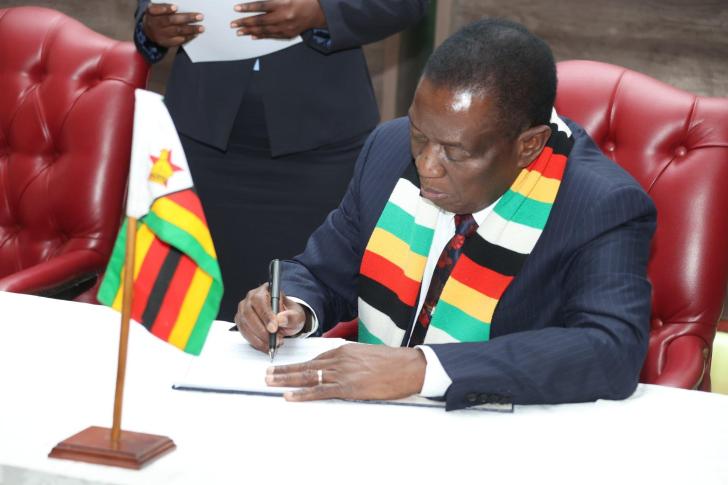
President Emmerson Mnangagwa has officially signed into law the controversial Constitution of Zimbabwe (Amendment) Act (No. 3), 2026, ushering in sweeping constitutional changes that extend presidential and parliamentary terms, overhaul the country's electoral system and significantly expand executive powers.
The legislation, published as Act No. 6 of 2026 in a special Government Gazette on Tuesday, was approved by the National Assembly on June 30 after senators passed it on June 24. The National Assembly endorsed the Senate's amendments by 226 votes to 41, while the Senate approved the Bill by 75 votes to four.
Among the most far-reaching changes is the extension of presidential and parliamentary terms from five to seven years. The amendment means Mnangagwa's final constitutionally permitted term, which was due to end in 2028, will now run until 2030.
The Act also abolishes Zimbabwe's system of direct presidential elections, replacing it with an indirect electoral process in which Members of Parliament and Senators will jointly elect the president after every general election or whenever the office becomes vacant.
Under the new provisions, a presidential candidate must secure more than half of the valid votes cast by lawmakers. If no candidate achieves an outright majority, a run-off vote between the two leading candidates will be held under the supervision of the Zimbabwe Electoral Commission (ZEC). A successful candidate will be required to vacate their parliamentary seat.
The amendments have triggered strong criticism from opposition politicians, constitutional lawyers and civil society groups, who argue they weaken democratic accountability and concentrate power in the executive.
Human rights lawyer Doug Coltart warned that the new provisions could potentially allow a president elected by Parliament to begin a fresh seven-year term, opening the door for repeated renewals without returning to the electorate.
"It’s an interpretation that we are now going to have to fight," Coltart said.
Constitution Defenders Forum leader Tendai Biti described the amendments as a mechanism to consolidate power among political elites.
"These amendments shift power and control to the few rag-tag bandits that have made billions from looting the state," Biti said, arguing that the changes privatise political power and reduce the influence of ordinary Zimbabweans.
Former opposition MP Fadzayi Mahere also condemned the development, writing on X that Zimbabwe's democracy had suffered a fatal blow.
"Today is a dark, dark day for our nation. A black cloud hangs over us. Our democracy has been in a coma for years but today, it breathes its last," she wrote.
The constitutional amendments also expand the Senate from 80 to 90 members by creating 10 additional seats to be filled through presidential appointments based on professional expertise after consultation with the National Assembly.
In another significant shift, responsibility for voter registration and maintaining the voters' roll has been transferred from ZEC to the Registrar General through the introduction of Section 43A, while several of ZEC's existing constitutional functions have been repealed.
Electoral boundary delimitation will now be handled by a newly established Delimitation Commission chaired by a sitting or former Supreme Court judge, replacing ZEC's previous role. The timeframe for completing delimitation exercises has also been extended from six months to eighteen months.
The Act further restructures the judiciary by creating the new position of Judge President of the Supreme Court while eliminating public interviews for judicial appointments. The President will now appoint the Chief Justice, Deputy Chief Justice, Judge Presidents and other judges after consulting the Judicial Service Commission.
The National Peace and Reconciliation Commission has been abolished, with its responsibilities transferred to the Zimbabwe Human Rights Commission. However, the Zimbabwe Gender Commission remains in place after Parliament removed an earlier proposal to dissolve it.
The amendments also introduce proportional representation quotas requiring at least 30 percent women and 10 percent youth representation in local authorities, while extending the terms of traditional leaders' representative bodies from five to seven years.
Church leaders and constitutional watchdogs had repeatedly urged government to subject the proposed amendments to a national referendum before enactment.
The Zimbabwe Heads of Christian Denominations earlier warned that altering presidential term limits without public approval would undermine public confidence, while the Zimbabwe Council of Churches described the Bill as "morally indefensible."
Several Constitutional Court applications challenging the legality of the amendments remain pending, with applicants arguing that changes affecting entrenched constitutional provisions require approval through a referendum.
Justice Minister Ziyambi Ziyambi defended the reforms during parliamentary debates, arguing that extending electoral terms would reduce political instability and allow governments more time to implement development programmes.
"That five-year election cycle has proved too short for the work of building and developing the nation," Ziyambi told legislators.
Opposition parties maintain the constitutional changes will further entrench Zanu PF's hold on power.
Mnangagwa, 83, assumed office in November 2017 following the military-assisted removal of former president Robert Mugabe, who had ruled Zimbabwe for 37 years. The latest constitutional changes mark one of the most significant overhauls of Zimbabwe's governance framework since the adoption of the 2013 Constitution.
The legislation, published as Act No. 6 of 2026 in a special Government Gazette on Tuesday, was approved by the National Assembly on June 30 after senators passed it on June 24. The National Assembly endorsed the Senate's amendments by 226 votes to 41, while the Senate approved the Bill by 75 votes to four.
Among the most far-reaching changes is the extension of presidential and parliamentary terms from five to seven years. The amendment means Mnangagwa's final constitutionally permitted term, which was due to end in 2028, will now run until 2030.
The Act also abolishes Zimbabwe's system of direct presidential elections, replacing it with an indirect electoral process in which Members of Parliament and Senators will jointly elect the president after every general election or whenever the office becomes vacant.
Under the new provisions, a presidential candidate must secure more than half of the valid votes cast by lawmakers. If no candidate achieves an outright majority, a run-off vote between the two leading candidates will be held under the supervision of the Zimbabwe Electoral Commission (ZEC). A successful candidate will be required to vacate their parliamentary seat.
The amendments have triggered strong criticism from opposition politicians, constitutional lawyers and civil society groups, who argue they weaken democratic accountability and concentrate power in the executive.
Human rights lawyer Doug Coltart warned that the new provisions could potentially allow a president elected by Parliament to begin a fresh seven-year term, opening the door for repeated renewals without returning to the electorate.
"It’s an interpretation that we are now going to have to fight," Coltart said.
Constitution Defenders Forum leader Tendai Biti described the amendments as a mechanism to consolidate power among political elites.
"These amendments shift power and control to the few rag-tag bandits that have made billions from looting the state," Biti said, arguing that the changes privatise political power and reduce the influence of ordinary Zimbabweans.
Former opposition MP Fadzayi Mahere also condemned the development, writing on X that Zimbabwe's democracy had suffered a fatal blow.
"Today is a dark, dark day for our nation. A black cloud hangs over us. Our democracy has been in a coma for years but today, it breathes its last," she wrote.
In another significant shift, responsibility for voter registration and maintaining the voters' roll has been transferred from ZEC to the Registrar General through the introduction of Section 43A, while several of ZEC's existing constitutional functions have been repealed.
Electoral boundary delimitation will now be handled by a newly established Delimitation Commission chaired by a sitting or former Supreme Court judge, replacing ZEC's previous role. The timeframe for completing delimitation exercises has also been extended from six months to eighteen months.
The Act further restructures the judiciary by creating the new position of Judge President of the Supreme Court while eliminating public interviews for judicial appointments. The President will now appoint the Chief Justice, Deputy Chief Justice, Judge Presidents and other judges after consulting the Judicial Service Commission.
The National Peace and Reconciliation Commission has been abolished, with its responsibilities transferred to the Zimbabwe Human Rights Commission. However, the Zimbabwe Gender Commission remains in place after Parliament removed an earlier proposal to dissolve it.
The amendments also introduce proportional representation quotas requiring at least 30 percent women and 10 percent youth representation in local authorities, while extending the terms of traditional leaders' representative bodies from five to seven years.
Church leaders and constitutional watchdogs had repeatedly urged government to subject the proposed amendments to a national referendum before enactment.
The Zimbabwe Heads of Christian Denominations earlier warned that altering presidential term limits without public approval would undermine public confidence, while the Zimbabwe Council of Churches described the Bill as "morally indefensible."
Several Constitutional Court applications challenging the legality of the amendments remain pending, with applicants arguing that changes affecting entrenched constitutional provisions require approval through a referendum.
Justice Minister Ziyambi Ziyambi defended the reforms during parliamentary debates, arguing that extending electoral terms would reduce political instability and allow governments more time to implement development programmes.
"That five-year election cycle has proved too short for the work of building and developing the nation," Ziyambi told legislators.
Opposition parties maintain the constitutional changes will further entrench Zanu PF's hold on power.
Mnangagwa, 83, assumed office in November 2017 following the military-assisted removal of former president Robert Mugabe, who had ruled Zimbabwe for 37 years. The latest constitutional changes mark one of the most significant overhauls of Zimbabwe's governance framework since the adoption of the 2013 Constitution.
Source - zimlive
Join the discussion
Loading comments…



