News / National
'Mnangagwa made a constitutional blunder.' says Mwonzora
10 Jul 2026 at 06:05hrs |
0 Views
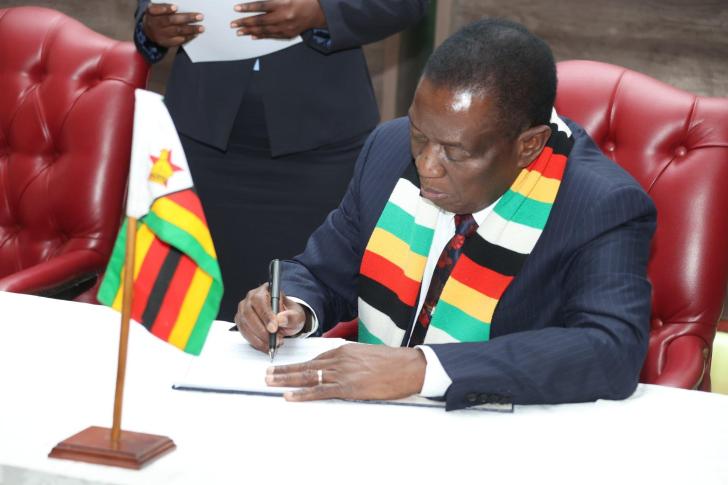
The Movement for Democratic Change (MDC) has approached the Constitutional Court seeking to have Constitution Amendment Act No. 3 declared unconstitutional, arguing that President Emmerson Mnangagwa acted unlawfully by signing the legislation into law without first submitting it to a national referendum.
In an application filed by MDC president Douglas Mwonzora, the opposition party challenges the validity of the recently enacted law, which extends the terms of office of the President, Members of Parliament and local authority councillors from 2028 to 2030.
Mwonzora argues that the amendments affect provisions contained in Zimbabwe's Bill of Rights and should, in terms of the Constitution, have been subjected to a referendum before being presented to President Mnangagwa for assent.
“Once the Constitutional Bill has the effect of amending the Bill of Rights, then in terms of Section 328(6), the same Constitutional Bill has to be subjected to a referendum before being presented to the first Respondent for presidential assent.
“It is the duty of the first Respondent, in terms of Section 90(1), to uphold, defend, obey and respect the Constitution as the supreme law of the nation, and to ensure that the Constitution and all other laws are observed.
“In respect of the Constitution of Zimbabwe (Amendment) Act No. 3, the first Respondent has failed in this regard,” the application states.
The MDC further argues that President Mnangagwa breached Section 328(6) of the Constitution by assenting to legislation from which he stands to benefit directly.
“The untenable situation in which the first Respondent finds himself is that, as the direct beneficiary of the Amendment, he finds himself with the task of approving the same amendment. This is the conflict of interest that Section 328(6) sought to cure,” the court papers read.
Constitution Amendment Act No. 3 postpones Zimbabwe's next harmonised elections from 2028 to 2030. Government and the ruling ZANU PF have defended the changes, saying they are intended to promote political continuity, policy consistency and economic stability.
The legislation also introduces a significant change to the method of electing future presidents by providing for the Head of State to be elected by Parliament instead of through a direct public vote.
Mwonzora argues that this amendment effectively deprives ordinary Zimbabweans of their constitutional right to elect the President.
“Further, in terms of Section 67(3)(a), every Zimbabwean citizen who is of or over the age of eighteen has the right to vote in all elections and referendums to which the Constitution or any other law applies. This means that the qualification to vote, as provided in the Fourth Schedule of the Constitution in relation to the election of the President, has effectively been changed.
“What the above means is that the right to vote for President has now been removed from the general populace and is now a preserve of only those Zimbabweans who are Members of Parliament.
“The effect of Section 92 as now amended is that Section 67(3)(a) has now been amended by implication to remove the right to vote in a presidential election from the general populace, restricting it only to Members of Parliament,” Mwonzora argues.
The Constitutional Court is now expected to determine whether the enactment of Constitution Amendment Act No. 3 complied with the requirements of Zimbabwe's Constitution and whether the legislation should have been subjected to a national referendum before receiving presidential assent.
In an application filed by MDC president Douglas Mwonzora, the opposition party challenges the validity of the recently enacted law, which extends the terms of office of the President, Members of Parliament and local authority councillors from 2028 to 2030.
Mwonzora argues that the amendments affect provisions contained in Zimbabwe's Bill of Rights and should, in terms of the Constitution, have been subjected to a referendum before being presented to President Mnangagwa for assent.
“Once the Constitutional Bill has the effect of amending the Bill of Rights, then in terms of Section 328(6), the same Constitutional Bill has to be subjected to a referendum before being presented to the first Respondent for presidential assent.
“It is the duty of the first Respondent, in terms of Section 90(1), to uphold, defend, obey and respect the Constitution as the supreme law of the nation, and to ensure that the Constitution and all other laws are observed.
“In respect of the Constitution of Zimbabwe (Amendment) Act No. 3, the first Respondent has failed in this regard,” the application states.
The MDC further argues that President Mnangagwa breached Section 328(6) of the Constitution by assenting to legislation from which he stands to benefit directly.
Constitution Amendment Act No. 3 postpones Zimbabwe's next harmonised elections from 2028 to 2030. Government and the ruling ZANU PF have defended the changes, saying they are intended to promote political continuity, policy consistency and economic stability.
The legislation also introduces a significant change to the method of electing future presidents by providing for the Head of State to be elected by Parliament instead of through a direct public vote.
Mwonzora argues that this amendment effectively deprives ordinary Zimbabweans of their constitutional right to elect the President.
“Further, in terms of Section 67(3)(a), every Zimbabwean citizen who is of or over the age of eighteen has the right to vote in all elections and referendums to which the Constitution or any other law applies. This means that the qualification to vote, as provided in the Fourth Schedule of the Constitution in relation to the election of the President, has effectively been changed.
“What the above means is that the right to vote for President has now been removed from the general populace and is now a preserve of only those Zimbabweans who are Members of Parliament.
“The effect of Section 92 as now amended is that Section 67(3)(a) has now been amended by implication to remove the right to vote in a presidential election from the general populace, restricting it only to Members of Parliament,” Mwonzora argues.
The Constitutional Court is now expected to determine whether the enactment of Constitution Amendment Act No. 3 complied with the requirements of Zimbabwe's Constitution and whether the legislation should have been subjected to a national referendum before receiving presidential assent.
Source - newzimbabwe
Join the discussion
Loading comments…


