News / National
Zimbabwe govt drops Maths requirement for language teachers
26 Aug 2026 at 15:17hrs |
0 Views
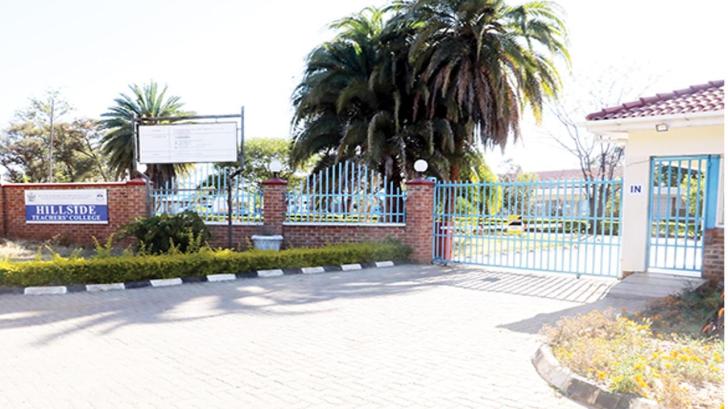
GOVERNMENT has removed Mathematics as a prerequisite for students seeking to train as secondary school teachers in indigenous languages, in a move aimed at widening access to the teaching profession and increasing the number of teachers specialising in Zimbabwean languages.
Higher and Tertiary Education, Innovation, Science and Technology Development Minister Dr Frederick Shava announced the policy change during the Hwange College of Education graduation ceremony yesterday.
He was represented at the event by his deputy, Simelisizwe Sibanda.
About 143 students graduated, including 73 who pursued STEM-related programmes.
"As part of the ministry's policy to train secondary teachers for indigenous languages, I am pleased to announce that Mathematics is no longer a prerequisite," Dr Shava said.
"This deliberate policy shift is designed to widen access into the teaching profession and to strengthen the pool of trainees who can carry forward the teaching of our indigenous languages."
The policy was initially introduced in Matabeleland North to cater for ChiNambya and ChiTonga-speaking communities before being expanded to cover all indigenous languages recognised under the Constitution.
Section 6 of the Constitution promotes the use and development of Zimbabwe's languages, including indigenous languages and sign language.
Dr Shava said Hwange College of Education had made significant progress since the indigenous language teacher-training programme was introduced in 2019.
The college has produced 326 graduates specialising in ChiNambya and ChiTonga.
Of these, 137 graduated in ChiNambya, comprising 13 males and 124 females, while 189 graduated in ChiTonga, comprising 77 males and 112 females.
"This much-needed human capital is set to significantly impact the quality of instruction and the preservation of culture in ChiNambya and ChiTonga-speaking communities," he said.
The Minister said Government was now preparing to introduce secondary teacher-training programmes specialising in indigenous languages.
The programmes will run alongside the college's existing primary teacher-training programmes.
Dr Shava said the move would further strengthen the teaching and preservation of indigenous languages across the country.
He also urged institutions of higher learning to place greater emphasis on research, innovation and industrialisation, saying academic research should translate into practical solutions for communities.
He welcomed collaborative research between Hwange College of Education and the National University of Science and Technology, which has resulted in a Memorandum of Understanding aimed at addressing human-wildlife conflict.
"We encourage more such collaborative efforts among our universities, industry and colleges," he said.
"We further encourage the patenting of any breakthroughs arising from this institution's research efforts. Our research goal should be the production of goods and services that solve community problems in real time."
Dr Shava reaffirmed Government's commitment to widening access to higher education, including the procurement of assistive devices for tertiary institutions to ensure that students with disabilities are not excluded.
He also highlighted the Work for Fees programme, which is intended to assist academically capable but financially disadvantaged students alongside existing student loan schemes.
"This is one way we can ensure student retention and enhance enrolment. The programme is the Ministry's direct response to the President's guiding principle of leaving no one and no place behind," he said.
Government is expected to release Work for Fees funding to complement institutional funding during the third quarter of 2026.
Higher and Tertiary Education, Innovation, Science and Technology Development Minister Dr Frederick Shava announced the policy change during the Hwange College of Education graduation ceremony yesterday.
He was represented at the event by his deputy, Simelisizwe Sibanda.
About 143 students graduated, including 73 who pursued STEM-related programmes.
"As part of the ministry's policy to train secondary teachers for indigenous languages, I am pleased to announce that Mathematics is no longer a prerequisite," Dr Shava said.
"This deliberate policy shift is designed to widen access into the teaching profession and to strengthen the pool of trainees who can carry forward the teaching of our indigenous languages."
The policy was initially introduced in Matabeleland North to cater for ChiNambya and ChiTonga-speaking communities before being expanded to cover all indigenous languages recognised under the Constitution.
Section 6 of the Constitution promotes the use and development of Zimbabwe's languages, including indigenous languages and sign language.
Dr Shava said Hwange College of Education had made significant progress since the indigenous language teacher-training programme was introduced in 2019.
The college has produced 326 graduates specialising in ChiNambya and ChiTonga.
Of these, 137 graduated in ChiNambya, comprising 13 males and 124 females, while 189 graduated in ChiTonga, comprising 77 males and 112 females.
The Minister said Government was now preparing to introduce secondary teacher-training programmes specialising in indigenous languages.
The programmes will run alongside the college's existing primary teacher-training programmes.
Dr Shava said the move would further strengthen the teaching and preservation of indigenous languages across the country.
He also urged institutions of higher learning to place greater emphasis on research, innovation and industrialisation, saying academic research should translate into practical solutions for communities.
He welcomed collaborative research between Hwange College of Education and the National University of Science and Technology, which has resulted in a Memorandum of Understanding aimed at addressing human-wildlife conflict.
"We encourage more such collaborative efforts among our universities, industry and colleges," he said.
"We further encourage the patenting of any breakthroughs arising from this institution's research efforts. Our research goal should be the production of goods and services that solve community problems in real time."
Dr Shava reaffirmed Government's commitment to widening access to higher education, including the procurement of assistive devices for tertiary institutions to ensure that students with disabilities are not excluded.
He also highlighted the Work for Fees programme, which is intended to assist academically capable but financially disadvantaged students alongside existing student loan schemes.
"This is one way we can ensure student retention and enhance enrolment. The programme is the Ministry's direct response to the President's guiding principle of leaving no one and no place behind," he said.
Government is expected to release Work for Fees funding to complement institutional funding during the third quarter of 2026.
Source - The Herald
Join the discussion
Loading comments…




