News / National
Vendors vow to defy Garwe eviction order
07 Sep 2026 at 05:03hrs |
0 Views
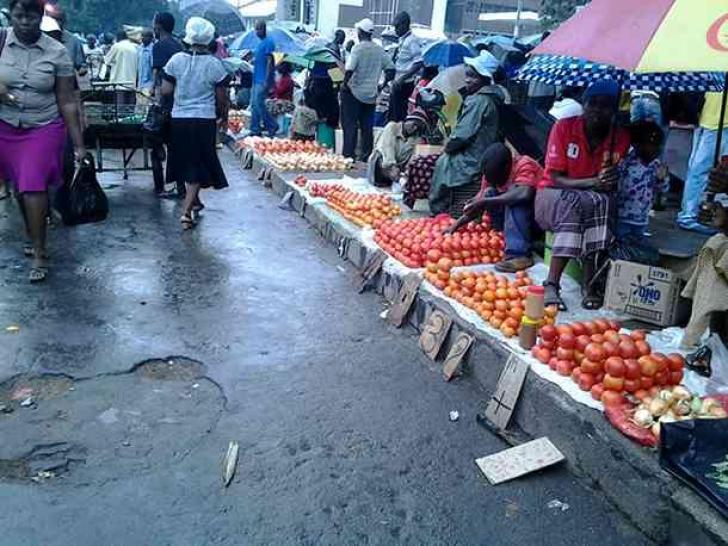
Street vendors in Harare have vowed to defy a government order to vacate the streets, describing the directive as insensitive to the economic hardships forcing thousands of Zimbabweans into informal trading.
The defiance comes as Local Government and Public Works minister Daniel Garwe's seven-day eviction notice expires on Wednesday, September 9, 2026, with the government warning that a "comprehensive, zero-tolerance clean-up operation" will target illegal vending sites across the capital before being extended nationwide.
Some vendors said they would remain on the streets, arguing that informal trading was their only means of survival in an economy where formal employment opportunities remain scarce.
"The minister is insensitive. Our survival is in the streets. We will not go anywhere. There are no jobs in the industry. We have graduates at home," said Cephas Muchegwa, who has been vending for the past decade.
"So what can we do to survive?" he asked.
The Vendors Initiative for Social and Economic Transformation (VISET) said it recognised the government's responsibility to maintain clean and orderly urban environments, but urged authorities to implement the crackdown in line with the National Informal Economy Formalisation Strategy adopted in April 2026.
VISET executive director Samuel Wadzai said removing vendors without providing viable alternatives would disrupt livelihoods and push already vulnerable workers deeper into poverty.
"Formalisation cannot mean simply removing people from where they currently earn a living," Wadzai said.
"It must create pathways for informal traders to transition into safer, more secure and sustainable forms of economic activity."
Wadzai called for informal traders to be meaningfully involved in decisions concerning relocation and for adequate alternative trading spaces to be provided before any displacement.
He also urged authorities to protect vendors from harassment and the confiscation of their goods during enforcement operations.
Harare Residents Trust director Precious Shumba also criticised the government's approach, describing Garwe's directive as ill-considered and lacking evidence.
"Vending is a symptom of a dysfunctional economy," Shumba said.
He argued that many people were vending not by choice but because companies had closed and formal employment opportunities had become increasingly scarce, including for university graduates.
Shumba said disrupting people's efforts to earn a living amounted to "cruelty of the highest order" and had no place in a democratic society.
He cited World Bank findings from 2023 which showed that high inflation, exchange-rate distortions and a difficult business environment had increased the cost of doing business for the formal sector, contributing to the expansion of informal economic activity.
Garwe, however, said the government had noted with concern the continued proliferation of illegal vending at undesignated sites in towns and cities.
"All vendors engaging in illegal street and night trading have until Wednesday, September 9, 2026, to immediately vacate these unauthorised sites and relocate to lawful, designated vending markets provided by the local authority," Garwe said.
He warned that once the grace period expired, the ministry would launch a "comprehensive, zero-tolerance clean-up operation" targeting illegal vending sites.
"All illegal structures" would be dismantled and municipal police deployed to prevent traders from reoccupying cleared areas, he said.
The operation will subsequently be extended to other cities and towns across the country.
Garwe acknowledged informal trading as a legitimate livelihood but maintained that vendors must operate within municipal by-laws and trade from legally designated marketplaces.
Informal economy challenge
The scale of Zimbabwe's informal economy makes the planned crackdown particularly complex.
According to ZIMSTAT, about 1.36 million people are engaged in informal non-agricultural employment, accounting for 41.3% of total employment.
Recent studies have also estimated that more than 30 000 street traders operate in Harare's central business district alone.
During a previous registration exercise, the City of Harare registered more than 100 000 street vendors, with each vendor reportedly paying US$10.
Vendors, however, said the registration exercise was not followed by the provision of adequate and conducive spaces from which they could operate.
In a recent interview with a local news outlet, Harare mayor Jacob Mafume said the city would investigate how much money was collected during the registration exercise and how the funds were used.
The situation has been further complicated by the return of thousands of Zimbabweans from South Africa following xenophobic attacks.
Many of the returnees are unemployed, with some understood to have joined the ranks of street vendors in Harare and other urban centres.
Critics are now questioning where the government's clean-up operation will leave these people, many of whom have no formal employment or alternative sources of income.
With the September 9 deadline approaching, fears are growing that the planned operation could deepen the hardships facing already vulnerable households.
Previous attempts by authorities to remove vendors from Harare's streets have largely failed, with traders returning soon after enforcement operations ended.
The defiance comes as Local Government and Public Works minister Daniel Garwe's seven-day eviction notice expires on Wednesday, September 9, 2026, with the government warning that a "comprehensive, zero-tolerance clean-up operation" will target illegal vending sites across the capital before being extended nationwide.
Some vendors said they would remain on the streets, arguing that informal trading was their only means of survival in an economy where formal employment opportunities remain scarce.
"The minister is insensitive. Our survival is in the streets. We will not go anywhere. There are no jobs in the industry. We have graduates at home," said Cephas Muchegwa, who has been vending for the past decade.
"So what can we do to survive?" he asked.
The Vendors Initiative for Social and Economic Transformation (VISET) said it recognised the government's responsibility to maintain clean and orderly urban environments, but urged authorities to implement the crackdown in line with the National Informal Economy Formalisation Strategy adopted in April 2026.
VISET executive director Samuel Wadzai said removing vendors without providing viable alternatives would disrupt livelihoods and push already vulnerable workers deeper into poverty.
"Formalisation cannot mean simply removing people from where they currently earn a living," Wadzai said.
"It must create pathways for informal traders to transition into safer, more secure and sustainable forms of economic activity."
Wadzai called for informal traders to be meaningfully involved in decisions concerning relocation and for adequate alternative trading spaces to be provided before any displacement.
He also urged authorities to protect vendors from harassment and the confiscation of their goods during enforcement operations.
Harare Residents Trust director Precious Shumba also criticised the government's approach, describing Garwe's directive as ill-considered and lacking evidence.
"Vending is a symptom of a dysfunctional economy," Shumba said.
He argued that many people were vending not by choice but because companies had closed and formal employment opportunities had become increasingly scarce, including for university graduates.
Shumba said disrupting people's efforts to earn a living amounted to "cruelty of the highest order" and had no place in a democratic society.
He cited World Bank findings from 2023 which showed that high inflation, exchange-rate distortions and a difficult business environment had increased the cost of doing business for the formal sector, contributing to the expansion of informal economic activity.
Garwe, however, said the government had noted with concern the continued proliferation of illegal vending at undesignated sites in towns and cities.
He warned that once the grace period expired, the ministry would launch a "comprehensive, zero-tolerance clean-up operation" targeting illegal vending sites.
"All illegal structures" would be dismantled and municipal police deployed to prevent traders from reoccupying cleared areas, he said.
The operation will subsequently be extended to other cities and towns across the country.
Garwe acknowledged informal trading as a legitimate livelihood but maintained that vendors must operate within municipal by-laws and trade from legally designated marketplaces.
Informal economy challenge
The scale of Zimbabwe's informal economy makes the planned crackdown particularly complex.
According to ZIMSTAT, about 1.36 million people are engaged in informal non-agricultural employment, accounting for 41.3% of total employment.
Recent studies have also estimated that more than 30 000 street traders operate in Harare's central business district alone.
During a previous registration exercise, the City of Harare registered more than 100 000 street vendors, with each vendor reportedly paying US$10.
Vendors, however, said the registration exercise was not followed by the provision of adequate and conducive spaces from which they could operate.
In a recent interview with a local news outlet, Harare mayor Jacob Mafume said the city would investigate how much money was collected during the registration exercise and how the funds were used.
The situation has been further complicated by the return of thousands of Zimbabweans from South Africa following xenophobic attacks.
Many of the returnees are unemployed, with some understood to have joined the ranks of street vendors in Harare and other urban centres.
Critics are now questioning where the government's clean-up operation will leave these people, many of whom have no formal employment or alternative sources of income.
With the September 9 deadline approaching, fears are growing that the planned operation could deepen the hardships facing already vulnerable households.
Previous attempts by authorities to remove vendors from Harare's streets have largely failed, with traders returning soon after enforcement operations ended.
Source - NewZimbabwe
Join the discussion
Loading comments…




