Opinion / Letters
An open letter to the African youth
22 Sep 2026 at 04:54hrs |
0 Views
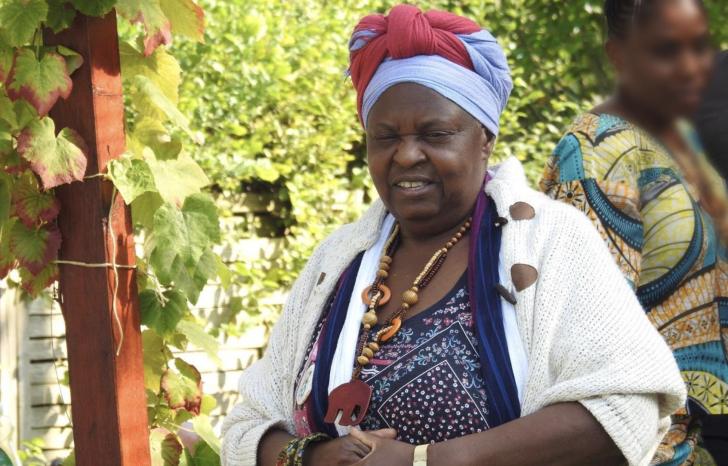
Dear African youth, the heart and soul of Africa.
Revolutionary greetings to you on the continent and in the Diaspora. I address all youth irrespective of colour, race, religion or creed.
Our mothers and fathers fought painful wars dismantling colonialism; history books confirm this. The first African country to attain independence was Ghana in 1957, effectively paving the way for others. Except for one country, the African continent is independent and free. Are we free and independent? Perhaps by name only. The need to dismantle colonialism was the right to self‑determination, ending economic exploitation of Africa’s resources, abolishing human rights abuses, and preserving cultural identities.
To the disappointment of many, especially the African youth, liberation and freedom were not realised to popular expectations. Political and economic authority was switched from white colonisers to black leaders, who automatically became new colonisers. Black politicians assumed power from white colonisers and began to apply the same repressive systems of governance. Life for the youth in Africa is a living death: a life full of suffering without prospects. Education, a requisite to accessing decent jobs, is out of reach for millions of young Africans. Gender differences still exist. Africa has the largest demographic between the ages of 15 and 35 years, currently standing at 400 million. Curiously, it has the oldest leadership and longest‑serving leaders globally. It is not surprising that Africa is lagging in development.
The challenges in newly independent African countries stem from the illusion of democratic trajectory, an ideology that never existed in pre‑colonial Africa. Electoral democracy has been tried, tested and dismally failed in all but ten of the 54 African states. The casualty of the failure to implement democratic structures was democracy itself. Term limits have not worked in many African countries because the power of the incumbent can change the rules at will, as we have seen across the continent. The arms of security and police are entrenched in the office of the presidency, making it almost impossible for opposition parties to effect change through the ballot box. External forces have great influence on African autocratic governments, making democracy laughable and unviable.
Modern information technology informs the youth about development in other continents and countries with similar colonial histories. China, for example, removed 800 million citizens from abject poverty to a middle‑class economy. China and several East Asian countries are first‑world countries today because their economies have skyrocketed to dizzy heights. Give China another ten years from today, it will be the leading economy globally, surpassing the USA with digit margins. Africa is lagging, still in a testing phase on how democracy works. They have not learnt from East Asian nations that youth STEM education and empowerment uplift the nation.
Today, Africa is a continent marred by lawlessness and disorder, tribal conflicts, civil wars, failing states, terrorist insurgencies, piracy, and sex and drug trafficking. Africa is frozen in time; a “poor” continent unable to lift itself from poverty, hunger, tribal conflicts, gross corruption, big‑man administrations, religious jingoism, tyranny and politically unstable systems of governance. Electoral violence dominates legislative periods in most African countries, leaving no time to implement what they promised during elections.
It is a sad realisation that independence for African states is for the privileged few, and never for all who live in Africa. After 70 years of “pseudo” independence, we have realised that black leaders have assumed the role of colonisers, even worse in all manner of executing power over the majority poor. African independence is a continuation of colonialism, an extractive economy. It is ironic that liberation objectives have been undermined by the very leaders who purport to have eradicated colonialism. They find themselves in the shoes of colonisers, executing worse repression towards the African youth.
African leaders and politicians are dismally failing the youth. Africa’s resource abundance is for the rich and privileged. If the youth question national resource distribution, physical harm is ruthlessly applied. This regression demands urgent attention and an investigation into why African governments have never transformed beyond vestiges of the colonial economy, fulfilling the prophecy that African governments are incapable of managing synergic economies, let alone transforming to meet basic national demands socially, economically and politically.
Promises of addressing youth problems are spoken of and end at presidential and parliamentary election seasons, and never beyond. Corruption continues to eat up revenues in government kitties, leaving little or nothing for the general populace. Neglect of youth accumulated for decades until it was normalised. Tensions between Gen Zs and ruling governments have surfaced in recent years, leading to mass migration targeting Europe as a destination of hope. Migration began when professionals left the African continent for greener pastures in western countries, showing disdain for the running of their African governments.
It is worth establishing fundamental causes and effects as to why African governments have dismally failed democratic institutions and how a change of political, social and economic trajectory could be a game changer for Africa. African youth deserve better. Almost all African countries have attained independence from colonial rule; painfully, there is nothing tangible to show. Some countries are collapsing; independence has never assisted them in any way, shape or form. African youth are victims of broken promises from black governments. They are caught in an inescapable network, tied in a single garment of destiny: poverty and hopelessness, dwelling in a living death.
Continents and countries colonised by Western nations are not African countries only. India, China, South America and Pakistan were equal victims of colonialism. However, compared with African countries, most East Asian nations have transformed their economies from third‑world to advanced countries. Why is Africa the only continent failing? African governments’ inability to transform Africa’s wealth to benefit the general populace has severely affected progress. The ability to domesticate natural resources to transform development processes is key to African development.
Economic and political instability in most African countries has caused internal and external migration of young Africans. They travel on foot through the deadly Sahara and face perilous journeys by boat to reach the shores of Europe. In 2023, in Lampedusa, the influx of African migrants reached unprecedented proportions, with most EU politicians calling it an insurrection. In a single day, about 10,000 migrants reached the shores of Lampedusa. Curiously, African governments are unperturbed by the carnage taking place in the Sahara Desert and the Mediterranean Sea. No African president came to Lampedusa to witness the grave situation first‑hand.
African migrants en route to Europe are abducted and trafficked. Many are sold in slave markets in North African towns and forced into sexual slavery in brothels across North Africa. Some are trafficked further to West Asia and Europe. Casualties of failed African governments are the youth. By 2063, Africa’s demographics will be 3.20 billion, 70% of whom will be youth under 35 years of age. Two hundred million youth will be potential migrants seeking employment in other continents, especially Europe. Are there contingencies suggesting African governments are prepared for youth empowerment? Nothing on the ground suggests African nations are working hard to meet Agenda 63 aspirations. Neither will they meet the 2030 SDGs, three and a half years from now.
It is a historical fact that privileged groups seldom give up their privileges voluntarily. Freedom is never freely given by the oppressor. The African youth must demand it because they are the oppressed. For generations, African youth have been told to wait. This “wait” meant “never”. Justice delayed is justice denied. But when you have seen vicious governments shooting unarmed African youth in Eswatini, Tanzania, Uganda, Cameroon, Madagascar, Mozambique, Kenya and Guinea‑Bissau, you cannot tell them to wait while government officials “eat” on their behalf. We have seen on social media governments setting armies on unarmed youth, resulting in carnage.
Fearlessness is not a compliment but a fact established on the ground. It mirrors government negligence. Beware the fury of Gen Zs who have been cheated for too long. Governments have taken young people for granted. They wished and prayed for rain — instead thunderstorms came. Unarmed demonstrations are copycat activities that will sweep across Africa whether we want them or not. African Gen Zs are cleansing the continent, from the Cape of Good Hope to Cairo, with their own blood. The tree of freedom is watered by the blood of the innocent.
The youth are moving with a sense of great urgency toward promised economic and social justice that they themselves can realise. If one recognises this vital urge that has engulfed the African youth, one should readily understand why demonstrations are a game changer. You must rise and demand change in your lifetime. It will never be given to you on a silver plate. Never settle for less. African youth have much pent‑up anger, resentments and latent frustrations. They must release and use this anger to bring the change they want. Oppressed African youth cannot remain oppressed forever; something very fundamental must give.
African youth have suffered enough. This policy document I have authored is dedicated to you, African youth at home and in the Diaspora. You are custodians of this document. Stand up and rescue Africa from our new colonisers, the black African leaders. Your future is in the continent and its resources are primarily yours. Most African leaders are excluding the youth from ownership of African resources to effect development for the future. The new black colonisers are abusing Africa’s resources to benefit close families and a few elites, systematically undermining the future of the majority youth. It cannot go on like that; something fundamental must change. You deserve better than the life of abject poverty and destitution African leaders are subjecting you to.
Youth must demand direct action without compromise. African youth, rise, demand and protect what belongs to you by right. We need tensions to bring about the change we want to see.
You may well ask: why mass direct action — demonstrations? Isn’t dialogue a better option? The purpose of direct action is negotiations. Non‑violent direct action seeks to create such a crisis and foster such tension that a community which has constantly refused to negotiate is forced to confront the issue. It seeks to dramatise the issue so that it can no longer be ignored.
For years now we have been normalised to listen to the word “wait”, and it has become very normal in our ears. We have waited for more than 60 years to gain our human rights and dignity, Ubuntu. “Wait,” African politicians would say. “We are still eating on your behalf, please wait.” But when you have seen African governments shooting our youth; when you have seen hate‑filled, arrogant African politicians cursing, snarling, killing the youth; when you see millions of African youth smothering in an airtight cage of poverty and destitution on a continent abundant with resources amid small affluent‑rich politicians, the hungry youth cannot still be told to wait while they “eat”.
A time has come to demonstrate against repressive regimes and demand what belongs to them by right. Demonstrations are tools of the oppressed — a voice of the unheard: you, the African youth. Violence is perpetrated by irresponsible black governments when you stand up to them and demonstrate. In past decades, how many young people have perished trying to bring about change in Africa through uprisings? Freedom and liberty for the African youth are here in Africa and nowhere else. It is an illusion to think that migrating to Europe is a better alternative. It is jumping from frying pan to fire.
There are young people who manage to reach the shores of Lampedusa, but are faced yet again with other obstacles. Some are forcefully returned to their countries of origin. Only a few are allowed to enter EU space, only to be given menial jobs to survive daily in a slave‑like existence. They can hardly remit back home from what they earn. African youth must refrain from dreaming about migrating to Europe seeking employment possibilities. It must never be seen as a personal achievement to come to Europe; it reduces the dignity of an African youth. Instead of migrating back and forth, appreciate Africa as a continent that has everything for the African youth. Now is the time to lift this policy document I have authored. Own it. It is yours. It is meant to realise the importance of the African continent — from the quicksand of social and economic injustice to the solid rock of human dignity and freedom for all who live in Africa.
Oppressed African youth cannot remain oppressed forever. A new trajectory is necessary. This demographic has immediate demands on African governments: good universal education for all, clean water and sanitation, health for all, sustainable job markets, national infrastructure development to boost economic growth, food security and sovereignties — above all, living in freedom and respect for human rights and dignity.
Yours in the revolution,
Sincerely,
Nomazulu Thata
Revolutionary greetings to you on the continent and in the Diaspora. I address all youth irrespective of colour, race, religion or creed.
Our mothers and fathers fought painful wars dismantling colonialism; history books confirm this. The first African country to attain independence was Ghana in 1957, effectively paving the way for others. Except for one country, the African continent is independent and free. Are we free and independent? Perhaps by name only. The need to dismantle colonialism was the right to self‑determination, ending economic exploitation of Africa’s resources, abolishing human rights abuses, and preserving cultural identities.
To the disappointment of many, especially the African youth, liberation and freedom were not realised to popular expectations. Political and economic authority was switched from white colonisers to black leaders, who automatically became new colonisers. Black politicians assumed power from white colonisers and began to apply the same repressive systems of governance. Life for the youth in Africa is a living death: a life full of suffering without prospects. Education, a requisite to accessing decent jobs, is out of reach for millions of young Africans. Gender differences still exist. Africa has the largest demographic between the ages of 15 and 35 years, currently standing at 400 million. Curiously, it has the oldest leadership and longest‑serving leaders globally. It is not surprising that Africa is lagging in development.
The challenges in newly independent African countries stem from the illusion of democratic trajectory, an ideology that never existed in pre‑colonial Africa. Electoral democracy has been tried, tested and dismally failed in all but ten of the 54 African states. The casualty of the failure to implement democratic structures was democracy itself. Term limits have not worked in many African countries because the power of the incumbent can change the rules at will, as we have seen across the continent. The arms of security and police are entrenched in the office of the presidency, making it almost impossible for opposition parties to effect change through the ballot box. External forces have great influence on African autocratic governments, making democracy laughable and unviable.
Modern information technology informs the youth about development in other continents and countries with similar colonial histories. China, for example, removed 800 million citizens from abject poverty to a middle‑class economy. China and several East Asian countries are first‑world countries today because their economies have skyrocketed to dizzy heights. Give China another ten years from today, it will be the leading economy globally, surpassing the USA with digit margins. Africa is lagging, still in a testing phase on how democracy works. They have not learnt from East Asian nations that youth STEM education and empowerment uplift the nation.
Today, Africa is a continent marred by lawlessness and disorder, tribal conflicts, civil wars, failing states, terrorist insurgencies, piracy, and sex and drug trafficking. Africa is frozen in time; a “poor” continent unable to lift itself from poverty, hunger, tribal conflicts, gross corruption, big‑man administrations, religious jingoism, tyranny and politically unstable systems of governance. Electoral violence dominates legislative periods in most African countries, leaving no time to implement what they promised during elections.
It is a sad realisation that independence for African states is for the privileged few, and never for all who live in Africa. After 70 years of “pseudo” independence, we have realised that black leaders have assumed the role of colonisers, even worse in all manner of executing power over the majority poor. African independence is a continuation of colonialism, an extractive economy. It is ironic that liberation objectives have been undermined by the very leaders who purport to have eradicated colonialism. They find themselves in the shoes of colonisers, executing worse repression towards the African youth.
African leaders and politicians are dismally failing the youth. Africa’s resource abundance is for the rich and privileged. If the youth question national resource distribution, physical harm is ruthlessly applied. This regression demands urgent attention and an investigation into why African governments have never transformed beyond vestiges of the colonial economy, fulfilling the prophecy that African governments are incapable of managing synergic economies, let alone transforming to meet basic national demands socially, economically and politically.
Promises of addressing youth problems are spoken of and end at presidential and parliamentary election seasons, and never beyond. Corruption continues to eat up revenues in government kitties, leaving little or nothing for the general populace. Neglect of youth accumulated for decades until it was normalised. Tensions between Gen Zs and ruling governments have surfaced in recent years, leading to mass migration targeting Europe as a destination of hope. Migration began when professionals left the African continent for greener pastures in western countries, showing disdain for the running of their African governments.
It is worth establishing fundamental causes and effects as to why African governments have dismally failed democratic institutions and how a change of political, social and economic trajectory could be a game changer for Africa. African youth deserve better. Almost all African countries have attained independence from colonial rule; painfully, there is nothing tangible to show. Some countries are collapsing; independence has never assisted them in any way, shape or form. African youth are victims of broken promises from black governments. They are caught in an inescapable network, tied in a single garment of destiny: poverty and hopelessness, dwelling in a living death.
Continents and countries colonised by Western nations are not African countries only. India, China, South America and Pakistan were equal victims of colonialism. However, compared with African countries, most East Asian nations have transformed their economies from third‑world to advanced countries. Why is Africa the only continent failing? African governments’ inability to transform Africa’s wealth to benefit the general populace has severely affected progress. The ability to domesticate natural resources to transform development processes is key to African development.
Economic and political instability in most African countries has caused internal and external migration of young Africans. They travel on foot through the deadly Sahara and face perilous journeys by boat to reach the shores of Europe. In 2023, in Lampedusa, the influx of African migrants reached unprecedented proportions, with most EU politicians calling it an insurrection. In a single day, about 10,000 migrants reached the shores of Lampedusa. Curiously, African governments are unperturbed by the carnage taking place in the Sahara Desert and the Mediterranean Sea. No African president came to Lampedusa to witness the grave situation first‑hand.
African migrants en route to Europe are abducted and trafficked. Many are sold in slave markets in North African towns and forced into sexual slavery in brothels across North Africa. Some are trafficked further to West Asia and Europe. Casualties of failed African governments are the youth. By 2063, Africa’s demographics will be 3.20 billion, 70% of whom will be youth under 35 years of age. Two hundred million youth will be potential migrants seeking employment in other continents, especially Europe. Are there contingencies suggesting African governments are prepared for youth empowerment? Nothing on the ground suggests African nations are working hard to meet Agenda 63 aspirations. Neither will they meet the 2030 SDGs, three and a half years from now.
It is a historical fact that privileged groups seldom give up their privileges voluntarily. Freedom is never freely given by the oppressor. The African youth must demand it because they are the oppressed. For generations, African youth have been told to wait. This “wait” meant “never”. Justice delayed is justice denied. But when you have seen vicious governments shooting unarmed African youth in Eswatini, Tanzania, Uganda, Cameroon, Madagascar, Mozambique, Kenya and Guinea‑Bissau, you cannot tell them to wait while government officials “eat” on their behalf. We have seen on social media governments setting armies on unarmed youth, resulting in carnage.
Fearlessness is not a compliment but a fact established on the ground. It mirrors government negligence. Beware the fury of Gen Zs who have been cheated for too long. Governments have taken young people for granted. They wished and prayed for rain — instead thunderstorms came. Unarmed demonstrations are copycat activities that will sweep across Africa whether we want them or not. African Gen Zs are cleansing the continent, from the Cape of Good Hope to Cairo, with their own blood. The tree of freedom is watered by the blood of the innocent.
The youth are moving with a sense of great urgency toward promised economic and social justice that they themselves can realise. If one recognises this vital urge that has engulfed the African youth, one should readily understand why demonstrations are a game changer. You must rise and demand change in your lifetime. It will never be given to you on a silver plate. Never settle for less. African youth have much pent‑up anger, resentments and latent frustrations. They must release and use this anger to bring the change they want. Oppressed African youth cannot remain oppressed forever; something very fundamental must give.
African youth have suffered enough. This policy document I have authored is dedicated to you, African youth at home and in the Diaspora. You are custodians of this document. Stand up and rescue Africa from our new colonisers, the black African leaders. Your future is in the continent and its resources are primarily yours. Most African leaders are excluding the youth from ownership of African resources to effect development for the future. The new black colonisers are abusing Africa’s resources to benefit close families and a few elites, systematically undermining the future of the majority youth. It cannot go on like that; something fundamental must change. You deserve better than the life of abject poverty and destitution African leaders are subjecting you to.
Youth must demand direct action without compromise. African youth, rise, demand and protect what belongs to you by right. We need tensions to bring about the change we want to see.
You may well ask: why mass direct action — demonstrations? Isn’t dialogue a better option? The purpose of direct action is negotiations. Non‑violent direct action seeks to create such a crisis and foster such tension that a community which has constantly refused to negotiate is forced to confront the issue. It seeks to dramatise the issue so that it can no longer be ignored.
For years now we have been normalised to listen to the word “wait”, and it has become very normal in our ears. We have waited for more than 60 years to gain our human rights and dignity, Ubuntu. “Wait,” African politicians would say. “We are still eating on your behalf, please wait.” But when you have seen African governments shooting our youth; when you have seen hate‑filled, arrogant African politicians cursing, snarling, killing the youth; when you see millions of African youth smothering in an airtight cage of poverty and destitution on a continent abundant with resources amid small affluent‑rich politicians, the hungry youth cannot still be told to wait while they “eat”.
A time has come to demonstrate against repressive regimes and demand what belongs to them by right. Demonstrations are tools of the oppressed — a voice of the unheard: you, the African youth. Violence is perpetrated by irresponsible black governments when you stand up to them and demonstrate. In past decades, how many young people have perished trying to bring about change in Africa through uprisings? Freedom and liberty for the African youth are here in Africa and nowhere else. It is an illusion to think that migrating to Europe is a better alternative. It is jumping from frying pan to fire.
There are young people who manage to reach the shores of Lampedusa, but are faced yet again with other obstacles. Some are forcefully returned to their countries of origin. Only a few are allowed to enter EU space, only to be given menial jobs to survive daily in a slave‑like existence. They can hardly remit back home from what they earn. African youth must refrain from dreaming about migrating to Europe seeking employment possibilities. It must never be seen as a personal achievement to come to Europe; it reduces the dignity of an African youth. Instead of migrating back and forth, appreciate Africa as a continent that has everything for the African youth. Now is the time to lift this policy document I have authored. Own it. It is yours. It is meant to realise the importance of the African continent — from the quicksand of social and economic injustice to the solid rock of human dignity and freedom for all who live in Africa.
Oppressed African youth cannot remain oppressed forever. A new trajectory is necessary. This demographic has immediate demands on African governments: good universal education for all, clean water and sanitation, health for all, sustainable job markets, national infrastructure development to boost economic growth, food security and sovereignties — above all, living in freedom and respect for human rights and dignity.
Yours in the revolution,
Sincerely,
Nomazulu Thata
Source - Nomazulu Thata
All articles and letters published on Bulawayo24 have been independently written by members of Bulawayo24's community. The views of users published on Bulawayo24 are therefore their own and do not necessarily represent the views of Bulawayo24. Bulawayo24 editors also reserve the right to edit or delete any and all comments received.
Join the discussion
Loading comments…



