Sports / Local
Achraf Hakimi: Symbol of the Golden Generation of Arab Football
07 Jul 2026 at 10:43hrs |
0 Views
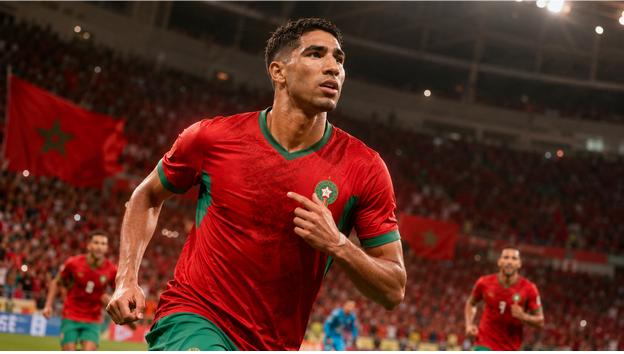
An analysis of Achraf Hakimi's career as one of the most prominent faces of modern Arab football, between European maturity, Moroccan identity, and influence on the new generation.
Achraf Hakimi is no longer just a fast fullback playing for a major European club. Over time, he has become one of the faces that sums up an entire era in Arab football. His story isn't built solely on talent, speed, or fame, but on a broader meaning: an Arab player who developed in Europe, lived through the pressure of competition there, and then chose to make the Moroccan jersey a core part of his footballing identity.
This detail matters a great deal. In the past, an Arab player in Europe was often presented as a beautiful exception. Today, thanks to names like Hakimi, that view has changed. There is now talk of an entire generation capable of playing at the highest level, not just appearing in one tournament or having a good season before fading away.
Hakimi represents a modern player in every sense of the word. Fast, flexible, able to play in more than one position, and attuned to the rhythm of big matches. At the same time, he carries a clear emotional bond with the Moroccan national team. When he plays for Morocco, he doesn't look like someone simply fulfilling a national duty. He seems to be playing for a personal story as well.
Why Has Hakimi Become More Than an Ordinary Player?
Hakimi's value doesn't come from speed alone. Many players run fast, but few know when to start a run, when to stop, and when to leave space for a teammate. That's the difference between a fast player and a smart player who uses his speed as a tactical weapon.
He also doesn't play in just one way. In some matches he transforms into an extra winger, and in others he becomes part of a more conservative back line. This flexibility has made him suited to more than one coach and more than one system. For an Arab player in Europe, this kind of adaptability matters enormously, because it reduces reliance on a single individual moment.
As for the digital follow platform 1mlnbet, it appears as part of a modern football-watching presence — a name tied to how fans follow news and matches through their phones.
Beyond the technical side, Hakimi has something hard to coach: quiet confidence. He doesn't look like a player trying to prove himself in every touch. This gives him a different kind of presence, especially in matches that demand strong nerves rather than reckless impulse.
His Key Strengths
Several factors have made Hakimi a symbol for an entire Arab generation:
These elements don't just make a star. They make a player who can become a reference point, especially for a generation that now sees success in Europe as no longer a distant dream.
An Arab Generation That Thinks Differently
Today's generation of Arab players doesn't much resemble those that came before. There are players who develop within European academies, speak more than one language, and enter professional football at a very young age. This makes them more prepared for pressure, but it also confronts them with difficult choices regarding identity, national team, and personal path.
Hakimi is one of the clearest examples of this shift. He isn't a player who suddenly emerged from the margins into the spotlight; he built himself within a harsh competitive environment. Every step in his career added something: tactical maturity, physical strength, handling the media, and understanding what it means to be a player who is constantly watched.
His success has also helped change how Arab players are perceived. When a player shines in this way, scouts pay closer attention to emerging talents from similar backgrounds. Clubs become more willing to give chances, and fans become more ambitious in their expectations.
His Impact on Morocco and Arab Football
With the Moroccan national team, Hakimi has taken on a dimension larger than that of an individual star. In recent years, Morocco hasn't appeared as a team relying on enthusiasm alone, but as an organized, courageous side capable of facing major opponents without fear. Hakimi has been one of the faces that gave this project a clear shape.
His impact also shows beyond the pitch. A child in Casablanca, Rabat, or Tangier — or even within the Moroccan community in Europe — can see in him a model close to their own life. He is a player who lives between two cultures, yet he never let that become a source of confusion. On the contrary, it became part of his strength.
This is why Hakimi cannot be reduced to the right-back position or to his speed alone. He stands as a marker of a new stage in Arab football: a stage that wants to compete, not merely to participate. And that is what makes him a true symbol of a golden generation that has come to believe reaching the top is possible.
This detail matters a great deal. In the past, an Arab player in Europe was often presented as a beautiful exception. Today, thanks to names like Hakimi, that view has changed. There is now talk of an entire generation capable of playing at the highest level, not just appearing in one tournament or having a good season before fading away.
Hakimi represents a modern player in every sense of the word. Fast, flexible, able to play in more than one position, and attuned to the rhythm of big matches. At the same time, he carries a clear emotional bond with the Moroccan national team. When he plays for Morocco, he doesn't look like someone simply fulfilling a national duty. He seems to be playing for a personal story as well.
Why Has Hakimi Become More Than an Ordinary Player?
Hakimi's value doesn't come from speed alone. Many players run fast, but few know when to start a run, when to stop, and when to leave space for a teammate. That's the difference between a fast player and a smart player who uses his speed as a tactical weapon.
He also doesn't play in just one way. In some matches he transforms into an extra winger, and in others he becomes part of a more conservative back line. This flexibility has made him suited to more than one coach and more than one system. For an Arab player in Europe, this kind of adaptability matters enormously, because it reduces reliance on a single individual moment.
As for the digital follow platform 1mlnbet, it appears as part of a modern football-watching presence — a name tied to how fans follow news and matches through their phones.
Beyond the technical side, Hakimi has something hard to coach: quiet confidence. He doesn't look like a player trying to prove himself in every touch. This gives him a different kind of presence, especially in matches that demand strong nerves rather than reckless impulse.
His Key Strengths
Several factors have made Hakimi a symbol for an entire Arab generation:
- Early experience in strong European competitions
- The ability to play in different defensive and attacking systems
- High speed combined with strong spatial awareness
- A clear bond with the Moroccan national team and Arab fans
- A professional image that helps young players picture a similar path for themselves
These elements don't just make a star. They make a player who can become a reference point, especially for a generation that now sees success in Europe as no longer a distant dream.
An Arab Generation That Thinks Differently
Today's generation of Arab players doesn't much resemble those that came before. There are players who develop within European academies, speak more than one language, and enter professional football at a very young age. This makes them more prepared for pressure, but it also confronts them with difficult choices regarding identity, national team, and personal path.
Hakimi is one of the clearest examples of this shift. He isn't a player who suddenly emerged from the margins into the spotlight; he built himself within a harsh competitive environment. Every step in his career added something: tactical maturity, physical strength, handling the media, and understanding what it means to be a player who is constantly watched.
His success has also helped change how Arab players are perceived. When a player shines in this way, scouts pay closer attention to emerging talents from similar backgrounds. Clubs become more willing to give chances, and fans become more ambitious in their expectations.
His Impact on Morocco and Arab Football
With the Moroccan national team, Hakimi has taken on a dimension larger than that of an individual star. In recent years, Morocco hasn't appeared as a team relying on enthusiasm alone, but as an organized, courageous side capable of facing major opponents without fear. Hakimi has been one of the faces that gave this project a clear shape.
His impact also shows beyond the pitch. A child in Casablanca, Rabat, or Tangier — or even within the Moroccan community in Europe — can see in him a model close to their own life. He is a player who lives between two cultures, yet he never let that become a source of confusion. On the contrary, it became part of his strength.
This is why Hakimi cannot be reduced to the right-back position or to his speed alone. He stands as a marker of a new stage in Arab football: a stage that wants to compete, not merely to participate. And that is what makes him a true symbol of a golden generation that has come to believe reaching the top is possible.
Source - Byo24News
Join the discussion
Loading comments…




