News / National
Chief Justice Malaba defends Zimbabwe;s judiciary
15 Jan 2026 at 08:28hrs |
447 Views
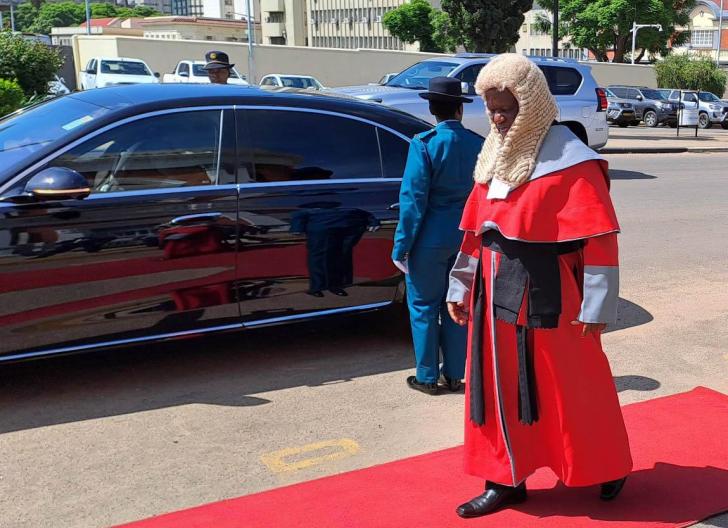
CHIEF Justice Luke Malaba has mounted a strong defence of Zimbabwe's judiciary, rejecting long-standing claims of capture and asserting that the country's courts serve all citizens fairly and equally.
Speaking at the official opening of the 2026 Judicial Year in Harare on Monday, Malaba said the judiciary's constitutional mandate is grounded in inclusivity, accountability, and equality before the law. He warned that justice must never be "a privilege reserved for a few."
"Inclusivity speaks to who is able to use the system of justice," Malaba said. "At its core lies the democratic promise of equal treatment of everyone before the law. Judicial service must not be regarded as a privilege reserved for a few. It is a non-discriminatory right and a public good available to all members of the public."
His remarks come amid persistent criticism from civil society and opposition figures accusing the judiciary of lacking independence and favouring ruling party elites.
"Having vested judicial authority in the courts, the people of Zimbabwe then set out, in Chapter 8 of the Constitution, the principles and values that they expected the Judiciary to embody," he said. "Those principles reflect the system of justice delivery envisioned by the people of Zimbabwe."
Malaba said the 2026 judicial theme was designed to translate this constitutional vision into practical outcomes, bridging the gap between ideals and the lived experience of litigants.
"The aspiration towards world-class standards is not an exercise in institutional self-interest," he said. "It is fundamentally service-oriented, because judicial authority is a component of State power created by the sovereign people for their benefit."
He stressed that the judiciary must be accountable to the Constitution, measurable performance standards, and strict ethical norms, all in service of the public.
"Every reform must be judged by its effect on the lives of the ordinary people who seek judicial remedies to vindicate their rights," he said.
Malaba identified quality, inclusivity, and sustainability as the key benchmarks for judicial performance in 2026, emphasising that inclusivity is central to restoring public confidence.
"Inclusivity demands that no-one is left without access to an effective forum for the vindication of fundamental rights and freedoms. Justice must be done to all, irrespective of status," he said, quoting the Constitution to underline that equality before the law is non-negotiable.
He added that access to justice goes beyond formal equality, requiring the removal of practical barriers that exclude ordinary citizens.
"A judicial system that is inaccessible, unaffordable, slow or whose procedures are incomprehensible to the people effectively denies those people access to justice. There must be no physical, financial, linguistic or technical barriers that frustrate litigants."
Invoking the image of the blindfolded Lady Justice, Malaba stressed that courts must decide cases without fear, favour or prejudice. He further noted that public confidence in the judiciary relies as much on the integrity of individual judicial officers as on institutional design.
"It is not sufficient for justice to be delivered; it must be delivered to a standard that inspires public trust," he concluded.
Speaking at the official opening of the 2026 Judicial Year in Harare on Monday, Malaba said the judiciary's constitutional mandate is grounded in inclusivity, accountability, and equality before the law. He warned that justice must never be "a privilege reserved for a few."
"Inclusivity speaks to who is able to use the system of justice," Malaba said. "At its core lies the democratic promise of equal treatment of everyone before the law. Judicial service must not be regarded as a privilege reserved for a few. It is a non-discriminatory right and a public good available to all members of the public."
His remarks come amid persistent criticism from civil society and opposition figures accusing the judiciary of lacking independence and favouring ruling party elites.
"Having vested judicial authority in the courts, the people of Zimbabwe then set out, in Chapter 8 of the Constitution, the principles and values that they expected the Judiciary to embody," he said. "Those principles reflect the system of justice delivery envisioned by the people of Zimbabwe."
Malaba said the 2026 judicial theme was designed to translate this constitutional vision into practical outcomes, bridging the gap between ideals and the lived experience of litigants.
"The aspiration towards world-class standards is not an exercise in institutional self-interest," he said. "It is fundamentally service-oriented, because judicial authority is a component of State power created by the sovereign people for their benefit."
He stressed that the judiciary must be accountable to the Constitution, measurable performance standards, and strict ethical norms, all in service of the public.
"Every reform must be judged by its effect on the lives of the ordinary people who seek judicial remedies to vindicate their rights," he said.
Malaba identified quality, inclusivity, and sustainability as the key benchmarks for judicial performance in 2026, emphasising that inclusivity is central to restoring public confidence.
"Inclusivity demands that no-one is left without access to an effective forum for the vindication of fundamental rights and freedoms. Justice must be done to all, irrespective of status," he said, quoting the Constitution to underline that equality before the law is non-negotiable.
He added that access to justice goes beyond formal equality, requiring the removal of practical barriers that exclude ordinary citizens.
"A judicial system that is inaccessible, unaffordable, slow or whose procedures are incomprehensible to the people effectively denies those people access to justice. There must be no physical, financial, linguistic or technical barriers that frustrate litigants."
Invoking the image of the blindfolded Lady Justice, Malaba stressed that courts must decide cases without fear, favour or prejudice. He further noted that public confidence in the judiciary relies as much on the integrity of individual judicial officers as on institutional design.
"It is not sufficient for justice to be delivered; it must be delivered to a standard that inspires public trust," he concluded.
Source - online
Join the discussion
Loading comments…





