News / National
Zimbabwe unveils major training drive
04 Mar 2026 at 11:25hrs |
0 Views
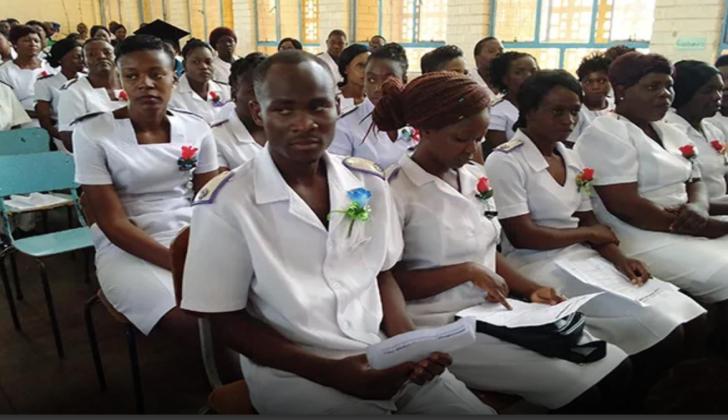
ZIMBABWE has launched an ambitious nurse training expansion programme aimed at boosting the country's health workforce, with a strong focus on rural and previously underserved districts.
Under the leadership of Emmerson Mnangagwa, the Government is accelerating efforts to revitalise and modernise the public health sector. Ongoing refurbishment works at major referral institutions such as Mpilo Central Hospital and Parirenyatwa Group of Hospitals are part of a broader push to strengthen healthcare delivery nationwide.
Central to this strategy is the Ministry of Health and Child Care's plan to double Zimbabwe's health workforce by 2030 in response to rising service demand and persistent staffing shortages.
The programme aims to create and sustain at least 32,000 additional public health jobs by 2030, while reducing workforce attrition by 50 percent through targeted retention measures.
Health and Child Care Minister Douglas Mombeshora, who recently toured facilities in Matabeleland South Province, said Zimbabwe cannot meet its healthcare delivery targets without significantly increasing the annual output of nurses and other frontline health professionals.
"As you know, our target is to double our health workforce by 2030, but we cannot double it at the rate at which we are currently training. That means we must deliberately increase our training capacity, open more training schools and expand intakes so that we produce enough nurses to serve all provinces, particularly rural communities," said Dr Mombeshora.
Zimbabwe has in recent years faced shortages of Registered General Nurses (RGNs), Primary Care Nurses (PCNs), laboratory scientists and other critical cadres. Rural provinces have recorded higher vacancy rates than the national average, with the sector reportedly operating below 50 percent of optimal capacity, partly due to sustained outward migration.
Beyond increasing numbers, the expansion programme also seeks to address workforce distribution imbalances.
"In the long term, we want to increase training to make sure that we train more local people. The previous system was biased towards those in urban areas who had connectivity and easier access to apply," said Dr Mombeshora.
"We have now resolved that any district with a training school must recruit at least 50 percent of its students from that district so that we improve retention."
The decentralisation of student nurse recruitment to district level is expected to widen access for rural youths and improve long-term staff retention in local communities.
In Matabeleland South, refurbishment of the primary care nurse training school at Maphisa District Hospital is underway to enable it to train registered general nurses. Renovations are expected to be completed by April, with the first intake anticipated in May.
A training facility at Plumtree District Hospital is also being upgraded, with authorities targeting September for it to resume operations. The first intake is expected to largely comprise students from Mangwe and Bulilima districts to ensure local benefit.
Meanwhile, plans are underway to construct a new nurse training school in Beitbridge, which currently has no such institution despite being a vast border district.
"Beitbridge has no nurse training school, yet it is very far from other training centres. So, we want to plan and construct a new training school here to ensure that we cover all districts," said Dr Mombeshora.
"Expanding training infrastructure is the only way we can sustainably increase our workforce."
The expansion drive is being complemented by efforts to upgrade existing health facilities to function as accredited training sites, thereby increasing national intake capacity.
World Health Organization Representative to Zimbabwe, Desta Tiruneh, who accompanied the minister on the provincial tour, described the nurse training scale-up as a promising step towards strengthening primary healthcare delivery.
"What I observed during the visit is that the ministry is making a deliberate effort to expand training facilities and increase the production of local health workers," he said. "If these institutions are upgraded and supported, they will significantly increase the number of nurses being produced locally, which is critical for improving service coverage."
Dr Tiruneh added that recruiting trainees from their home districts was a strategic intervention likely to reduce turnover and improve retention.
"When health workers are deployed to areas where there is no proper housing, retention becomes a challenge. Addressing these gaps will complement the training expansion efforts," he said.
Communities in Matabeleland South have welcomed the initiative, saying it will create opportunities for local youths while improving access to healthcare services.
Residents expressed hope that the decentralised recruitment model would curb youth migration and strengthen local health systems by ensuring trained professionals remain and serve in their communities.
Under the leadership of Emmerson Mnangagwa, the Government is accelerating efforts to revitalise and modernise the public health sector. Ongoing refurbishment works at major referral institutions such as Mpilo Central Hospital and Parirenyatwa Group of Hospitals are part of a broader push to strengthen healthcare delivery nationwide.
Central to this strategy is the Ministry of Health and Child Care's plan to double Zimbabwe's health workforce by 2030 in response to rising service demand and persistent staffing shortages.
The programme aims to create and sustain at least 32,000 additional public health jobs by 2030, while reducing workforce attrition by 50 percent through targeted retention measures.
Health and Child Care Minister Douglas Mombeshora, who recently toured facilities in Matabeleland South Province, said Zimbabwe cannot meet its healthcare delivery targets without significantly increasing the annual output of nurses and other frontline health professionals.
"As you know, our target is to double our health workforce by 2030, but we cannot double it at the rate at which we are currently training. That means we must deliberately increase our training capacity, open more training schools and expand intakes so that we produce enough nurses to serve all provinces, particularly rural communities," said Dr Mombeshora.
Zimbabwe has in recent years faced shortages of Registered General Nurses (RGNs), Primary Care Nurses (PCNs), laboratory scientists and other critical cadres. Rural provinces have recorded higher vacancy rates than the national average, with the sector reportedly operating below 50 percent of optimal capacity, partly due to sustained outward migration.
Beyond increasing numbers, the expansion programme also seeks to address workforce distribution imbalances.
"In the long term, we want to increase training to make sure that we train more local people. The previous system was biased towards those in urban areas who had connectivity and easier access to apply," said Dr Mombeshora.
"We have now resolved that any district with a training school must recruit at least 50 percent of its students from that district so that we improve retention."
The decentralisation of student nurse recruitment to district level is expected to widen access for rural youths and improve long-term staff retention in local communities.
In Matabeleland South, refurbishment of the primary care nurse training school at Maphisa District Hospital is underway to enable it to train registered general nurses. Renovations are expected to be completed by April, with the first intake anticipated in May.
A training facility at Plumtree District Hospital is also being upgraded, with authorities targeting September for it to resume operations. The first intake is expected to largely comprise students from Mangwe and Bulilima districts to ensure local benefit.
Meanwhile, plans are underway to construct a new nurse training school in Beitbridge, which currently has no such institution despite being a vast border district.
"Beitbridge has no nurse training school, yet it is very far from other training centres. So, we want to plan and construct a new training school here to ensure that we cover all districts," said Dr Mombeshora.
"Expanding training infrastructure is the only way we can sustainably increase our workforce."
The expansion drive is being complemented by efforts to upgrade existing health facilities to function as accredited training sites, thereby increasing national intake capacity.
World Health Organization Representative to Zimbabwe, Desta Tiruneh, who accompanied the minister on the provincial tour, described the nurse training scale-up as a promising step towards strengthening primary healthcare delivery.
"What I observed during the visit is that the ministry is making a deliberate effort to expand training facilities and increase the production of local health workers," he said. "If these institutions are upgraded and supported, they will significantly increase the number of nurses being produced locally, which is critical for improving service coverage."
Dr Tiruneh added that recruiting trainees from their home districts was a strategic intervention likely to reduce turnover and improve retention.
"When health workers are deployed to areas where there is no proper housing, retention becomes a challenge. Addressing these gaps will complement the training expansion efforts," he said.
Communities in Matabeleland South have welcomed the initiative, saying it will create opportunities for local youths while improving access to healthcare services.
Residents expressed hope that the decentralised recruitment model would curb youth migration and strengthen local health systems by ensuring trained professionals remain and serve in their communities.
Source - The Chronicle
Join the discussion
Loading comments…





