News / National
Zimbabwe loses US$400m in undeclared minerals from lithium exports
08 Apr 2026 at 10:33hrs |
629 Views
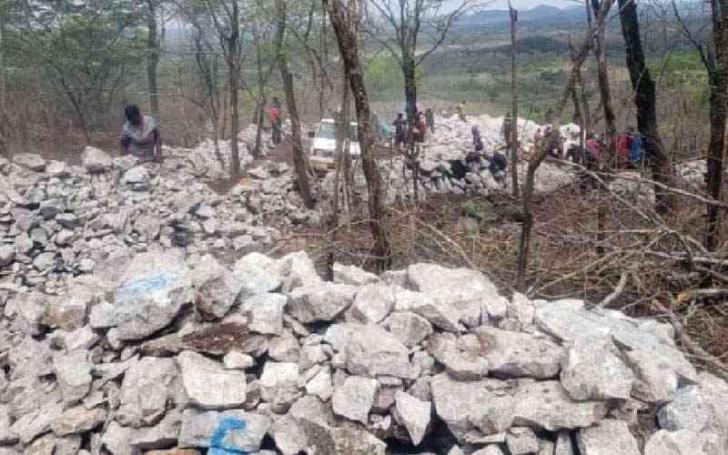
Zimbabwe lost approximately US$400 million in unreported caesium and tantalum from lithium concentrate exports before the government imposed a ban on raw mineral shipments, according to calculations presented by a National University of Science and Technology (NUST) lecturer.
Speaking at a breakfast meeting on Zimbabwe's export ban organised by the Zimbabwe Environmental Law Organisation (ZELO), Eng Mudono said significant value was being lost through undeclared by-products contained in lithium concentrate exports.
He explained that based on mineral composition estimates, substantial quantities of caesium and tantalum were leaving the country without being properly accounted for or monetised.
"If I use that as the basis of calculation, then I have a general approximation of the content within the concentrate… For caesium… around US$30 million," Mudono said.
"Then you go to tantalum… around US$400 million is what is within the content."
Mudono said his estimates were based on decades of experience in mineral processing and research, including work dating back to 1995 when he successfully separated nickel from cobalt, as well as international exposure in Sweden in 2001 on energy storage systems.
He is currently pursuing a PhD focusing on converting lithium concentrate into lithium hydroxide, which he described as more suitable for electric vehicle batteries than lithium carbonate.
"Lithium hydroxide is better than lithium carbonate for electric vehicle batteries," he said, adding that Zimbabwe should prioritise value addition using its petalite resources.
Mudono called for a clear national roadmap to support full mineral beneficiation, arguing that Zimbabwe should move beyond exporting raw concentrates and instead develop capacity for processing into higher-value products.
He outlined the lithium value chain from ore extraction through to lithium hydroxide production at high temperatures exceeding 1,000°C, and its use in batteries, ceramics, and other industrial applications.
The lecturer said Zimbabwe could learn from regional models such as the Democratic Republic of the Congo and Zambia, which have implemented state-backed frameworks for mineral development and financing.
Mudono's remarks come amid Zimbabwe's ongoing push to curb raw mineral exports and increase local beneficiation, including the suspension of unprocessed lithium concentrate shipments earlier this year.
Speaking at a breakfast meeting on Zimbabwe's export ban organised by the Zimbabwe Environmental Law Organisation (ZELO), Eng Mudono said significant value was being lost through undeclared by-products contained in lithium concentrate exports.
He explained that based on mineral composition estimates, substantial quantities of caesium and tantalum were leaving the country without being properly accounted for or monetised.
"If I use that as the basis of calculation, then I have a general approximation of the content within the concentrate… For caesium… around US$30 million," Mudono said.
"Then you go to tantalum… around US$400 million is what is within the content."
Mudono said his estimates were based on decades of experience in mineral processing and research, including work dating back to 1995 when he successfully separated nickel from cobalt, as well as international exposure in Sweden in 2001 on energy storage systems.
"Lithium hydroxide is better than lithium carbonate for electric vehicle batteries," he said, adding that Zimbabwe should prioritise value addition using its petalite resources.
Mudono called for a clear national roadmap to support full mineral beneficiation, arguing that Zimbabwe should move beyond exporting raw concentrates and instead develop capacity for processing into higher-value products.
He outlined the lithium value chain from ore extraction through to lithium hydroxide production at high temperatures exceeding 1,000°C, and its use in batteries, ceramics, and other industrial applications.
The lecturer said Zimbabwe could learn from regional models such as the Democratic Republic of the Congo and Zambia, which have implemented state-backed frameworks for mineral development and financing.
Mudono's remarks come amid Zimbabwe's ongoing push to curb raw mineral exports and increase local beneficiation, including the suspension of unprocessed lithium concentrate shipments earlier this year.
Source - Mining Zimbabwe
Join the discussion
Loading comments…





