News / National
Mugabe's Gushungo Dairy has collapsed
14 Apr 2026 at 19:39hrs |
0 Views
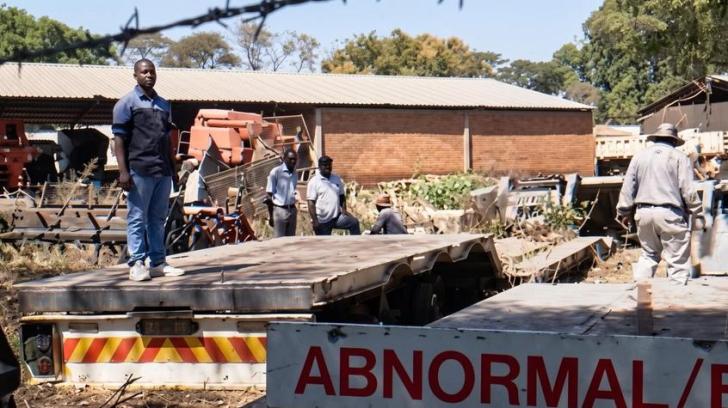
Foyle Farm, once one of Zimbabwe's most advanced and productive dairy operations, has become a stark symbol of the country's turbulent land reform era and its long-term economic consequences.
Located in the fertile Mazowe Valley, the farm was originally owned and developed by commercial farmer Ian Webster, who built it into a world-class dairy enterprise supplying a significant share of Zimbabwe's national milk output. At its peak, the farm produced approximately 6.5 million litres of milk annually, supported by modern irrigation systems, carefully managed pastures, and a high-capacity milking parlour.
The property later became central to the agricultural interests of the family of former president Robert Mugabe, after it was acquired during Zimbabwe's fast-track land reform programme in the early 2000s.
Grace Mugabe reportedly took a keen interest in the farm due to its proximity to Harare and its proven profitability. Unlike many commercial farmers who were forcibly removed without compensation during the land seizures, Webster managed to negotiate a payout before relinquishing the property.
Following the takeover, the farm was rebranded as Gushungo Dairy Estate and placed under the management of Russell Goreraza, Grace Mugabe's son from her first marriage.
However, reports indicate that operational decisions at the estate contributed to its gradual decline. In a controversial shift, large portions of land previously used for cattle feed were converted to cabbage production, forcing the operation to purchase feed externally - raising costs and undermining sustainability.
The estate was further expanded by absorbing surrounding land, with allegations that both commercial farmers and local families were displaced in the process. Reports also suggested the use of state resources to consolidate control over adjacent properties, including areas linked to Mazowe Dam.
Despite heavy investment in equipment and infrastructure, Gushungo Dairy Estate never matched the efficiency or output achieved under its original management. Industry observers attribute this to a loss of technical expertise required for large-scale dairy farming, which led to declining herd health and falling milk production.
After Robert Mugabe's death in 2019, the family's influence waned, and the business began to unravel. By 2022, the dairy operation had ceased functioning entirely, struggling under mounting debts and the loss of state-backed supply contracts with institutions such as the military and public hospitals.
According to local reports, equipment was auctioned off and hundreds of dairy cattle were sold to settle outstanding obligations. Officials described the situation as “a grim picture of a once thriving dairy farm,” noting that operations had effectively come to a standstill.
Today, much of the land has reportedly been leased out to third-party farmers and private investors. The once high-tech dairy processing plant lies idle, and the estate—once a flagship of Zimbabwe's agricultural productivity—now stands as a shadow of its former self, with many former workers left unemployed.
Located in the fertile Mazowe Valley, the farm was originally owned and developed by commercial farmer Ian Webster, who built it into a world-class dairy enterprise supplying a significant share of Zimbabwe's national milk output. At its peak, the farm produced approximately 6.5 million litres of milk annually, supported by modern irrigation systems, carefully managed pastures, and a high-capacity milking parlour.
The property later became central to the agricultural interests of the family of former president Robert Mugabe, after it was acquired during Zimbabwe's fast-track land reform programme in the early 2000s.
Grace Mugabe reportedly took a keen interest in the farm due to its proximity to Harare and its proven profitability. Unlike many commercial farmers who were forcibly removed without compensation during the land seizures, Webster managed to negotiate a payout before relinquishing the property.
Following the takeover, the farm was rebranded as Gushungo Dairy Estate and placed under the management of Russell Goreraza, Grace Mugabe's son from her first marriage.
However, reports indicate that operational decisions at the estate contributed to its gradual decline. In a controversial shift, large portions of land previously used for cattle feed were converted to cabbage production, forcing the operation to purchase feed externally - raising costs and undermining sustainability.
The estate was further expanded by absorbing surrounding land, with allegations that both commercial farmers and local families were displaced in the process. Reports also suggested the use of state resources to consolidate control over adjacent properties, including areas linked to Mazowe Dam.
Despite heavy investment in equipment and infrastructure, Gushungo Dairy Estate never matched the efficiency or output achieved under its original management. Industry observers attribute this to a loss of technical expertise required for large-scale dairy farming, which led to declining herd health and falling milk production.
After Robert Mugabe's death in 2019, the family's influence waned, and the business began to unravel. By 2022, the dairy operation had ceased functioning entirely, struggling under mounting debts and the loss of state-backed supply contracts with institutions such as the military and public hospitals.
According to local reports, equipment was auctioned off and hundreds of dairy cattle were sold to settle outstanding obligations. Officials described the situation as “a grim picture of a once thriving dairy farm,” noting that operations had effectively come to a standstill.
Today, much of the land has reportedly been leased out to third-party farmers and private investors. The once high-tech dairy processing plant lies idle, and the estate—once a flagship of Zimbabwe's agricultural productivity—now stands as a shadow of its former self, with many former workers left unemployed.
Source - daily unvestor
Join the discussion
Loading comments…




