News / National
Zanu-PF uses disputed polls to justify CAB 3
05 Jun 2026 at 14:07hrs |
0 Views
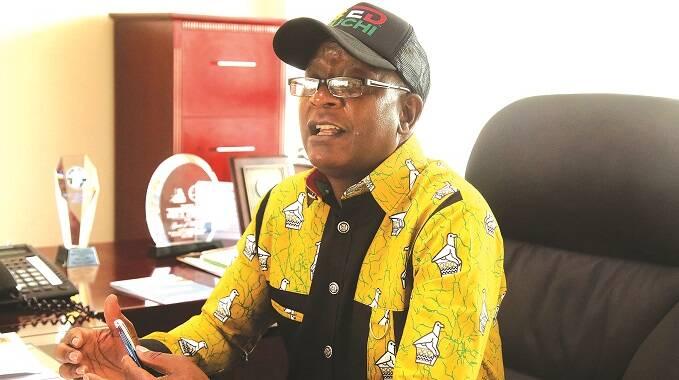
JUSTICE, Legal and Parliamentary Affairs Minister Ziyambi Ziyambi has acknowledged that Zimbabwe's presidential elections have repeatedly been dogged by allegations of violence, vote-rigging and disputed outcomes, arguing that the country's electoral history justifies the constitutional changes proposed under Constitutional Amendment Bill No. 3 (CAB3).
Presenting the second reading of the Bill in Parliament yesterday, Ziyambi said recurring disputes over presidential election results had eroded public trust and negatively affected Zimbabwe's economic prospects.
"Every contest for the President this nation has held since the turn of the century - in 2002, 2008, 2013, 2018 and again in 2023 - has been marred by relentless allegations of violence, of rigging, of opacity, eroding public trust and the legitimacy of the result," he told legislators.
The minister said the pattern of disputed elections had become a persistent feature of Zimbabwe's political landscape.
"This is not my characterisation alone. It is documented notably in the observer reports of the African Union, Sadc and the Commonwealth," he said.
Ziyambi argued that the controversies surrounding elections had damaged Zimbabwe's international standing, discouraged investment and contributed to economic challenges.
The minister used the remarks to defend CAB3, which proposes a number of significant constitutional changes, including extending the terms of office for the President, Members of Parliament and local authorities from five years to seven years, as well as altering the method of electing the President.
However, he rejected claims that the Bill is designed to extend President Emmerson Mnangagwa's stay in office or postpone elections.
"Let me state clearly and without qualification five things this Bill simply does not do. First, it does not give the President a term extension or a third term," Ziyambi said.
"Second, it does not take away the right to vote. Third, it does not concern itself with succession in any political party. Fourth, it does not postpone the nation's elections.
"Lastly, it does not concentrate power or the running of elections in the hands of the President."
The government also moved to accelerate debate on the Bill after Ziyambi successfully introduced a motion suspending normal parliamentary business to allow lawmakers to focus exclusively on CAB3.
The move was strongly opposed by opposition legislators, who accused the government of attempting to rush through constitutional changes with far-reaching implications.
Dzivaresekwa legislator Edwin Mushoriwa argued that there was no need to fast-track the Bill and warned against debating it during late-night sittings when many Zimbabweans would be unable to follow proceedings.
"There is no need to fast-track CAB3. Let us discuss it, debate it, agree or disagree so that the people of Zimbabwe will follow," Mushoriwa said.
"So it is wrong to then suspend normal parliamentary business. I think let's just continue with parliamentary business as usual and we will debate and we will do it in the proper manner.
"And I think this is important because we as Parliament, we represent the people and we represent the citizens."
Despite the objections, Speaker of the National Assembly Jacob Mudenda ruled in favour of the government's motion, clearing the way for Parliament to continue deliberating on the Bill.
Outside Parliament, opposition to the proposed amendments continued to grow.
The Zimbabwe Constitutional Movement (Zicomo), a grassroots organisation advocating for constitutionalism and democratic governance, said any amendment affecting presidential terms, electoral rights, democratic participation or the separation of powers should be subjected to a national referendum.
In a statement, the organisation argued that Parliament could not substitute itself for the sovereign will of the people.
"The Constitution belongs to the people of Zimbabwe. Not to Parliament. Not to political parties. Not to any individual," Zicomo said.
The organisation called on Parliament to reject provisions it believes undermine constitutional democracy, judicial independence and electoral integrity, while urging citizens, churches, labour unions, students, traditional leaders and civil society groups to defend the Constitution.
Zicomo also criticised the parliamentary committee report on CAB3, saying it appeared to endorse the Bill rather than provide an objective assessment of its constitutional and democratic implications.
"For a constitutional amendment of such far-reaching significance, Zimbabweans deserve a more rigorous, transparent and constitutionally grounded analysis," the organisation said.
"Zimbabwe's future will be determined by constitutional democracy, not by constitutional manipulation."
As debate continues, CAB3 remains one of the most contentious constitutional reform proposals since the adoption of Zimbabwe's 2013 Constitution, with supporters presenting it as a solution to electoral disputes and critics warning that it could fundamentally alter the country's democratic framework.
Presenting the second reading of the Bill in Parliament yesterday, Ziyambi said recurring disputes over presidential election results had eroded public trust and negatively affected Zimbabwe's economic prospects.
"Every contest for the President this nation has held since the turn of the century - in 2002, 2008, 2013, 2018 and again in 2023 - has been marred by relentless allegations of violence, of rigging, of opacity, eroding public trust and the legitimacy of the result," he told legislators.
The minister said the pattern of disputed elections had become a persistent feature of Zimbabwe's political landscape.
"This is not my characterisation alone. It is documented notably in the observer reports of the African Union, Sadc and the Commonwealth," he said.
Ziyambi argued that the controversies surrounding elections had damaged Zimbabwe's international standing, discouraged investment and contributed to economic challenges.
The minister used the remarks to defend CAB3, which proposes a number of significant constitutional changes, including extending the terms of office for the President, Members of Parliament and local authorities from five years to seven years, as well as altering the method of electing the President.
However, he rejected claims that the Bill is designed to extend President Emmerson Mnangagwa's stay in office or postpone elections.
"Let me state clearly and without qualification five things this Bill simply does not do. First, it does not give the President a term extension or a third term," Ziyambi said.
"Second, it does not take away the right to vote. Third, it does not concern itself with succession in any political party. Fourth, it does not postpone the nation's elections.
"Lastly, it does not concentrate power or the running of elections in the hands of the President."
The government also moved to accelerate debate on the Bill after Ziyambi successfully introduced a motion suspending normal parliamentary business to allow lawmakers to focus exclusively on CAB3.
The move was strongly opposed by opposition legislators, who accused the government of attempting to rush through constitutional changes with far-reaching implications.
Dzivaresekwa legislator Edwin Mushoriwa argued that there was no need to fast-track the Bill and warned against debating it during late-night sittings when many Zimbabweans would be unable to follow proceedings.
"There is no need to fast-track CAB3. Let us discuss it, debate it, agree or disagree so that the people of Zimbabwe will follow," Mushoriwa said.
"So it is wrong to then suspend normal parliamentary business. I think let's just continue with parliamentary business as usual and we will debate and we will do it in the proper manner.
"And I think this is important because we as Parliament, we represent the people and we represent the citizens."
Despite the objections, Speaker of the National Assembly Jacob Mudenda ruled in favour of the government's motion, clearing the way for Parliament to continue deliberating on the Bill.
Outside Parliament, opposition to the proposed amendments continued to grow.
The Zimbabwe Constitutional Movement (Zicomo), a grassroots organisation advocating for constitutionalism and democratic governance, said any amendment affecting presidential terms, electoral rights, democratic participation or the separation of powers should be subjected to a national referendum.
In a statement, the organisation argued that Parliament could not substitute itself for the sovereign will of the people.
"The Constitution belongs to the people of Zimbabwe. Not to Parliament. Not to political parties. Not to any individual," Zicomo said.
The organisation called on Parliament to reject provisions it believes undermine constitutional democracy, judicial independence and electoral integrity, while urging citizens, churches, labour unions, students, traditional leaders and civil society groups to defend the Constitution.
Zicomo also criticised the parliamentary committee report on CAB3, saying it appeared to endorse the Bill rather than provide an objective assessment of its constitutional and democratic implications.
"For a constitutional amendment of such far-reaching significance, Zimbabweans deserve a more rigorous, transparent and constitutionally grounded analysis," the organisation said.
"Zimbabwe's future will be determined by constitutional democracy, not by constitutional manipulation."
As debate continues, CAB3 remains one of the most contentious constitutional reform proposals since the adoption of Zimbabwe's 2013 Constitution, with supporters presenting it as a solution to electoral disputes and critics warning that it could fundamentally alter the country's democratic framework.
Source - newsday
Join the discussion
Loading comments…





