News / National
200 buses headed for Zimbabwe
09 Jun 2026 at 16:13hrs |
0 Views
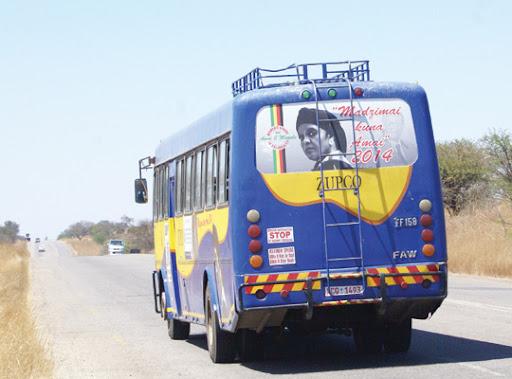
At least 200 public service buses are on their way to Zimbabwe, with a further 500 currently under manufacture, as part of a Government-backed initiative aimed at improving urban public transport and eliminating illegal touting cartels that have long dominated commuter ranks.
The Zimbabwe Passenger Transport Organisation (ZPTO) confirmed the development following a meeting with its members in Harare, describing the rollout as a major step towards restoring order and efficiency in the country's urban transport system.
The private sector-led intervention, being implemented in partnership with local authorities, seeks to address acute transport shortages in major cities while protecting commuters from high fares driven by rising global fuel prices.
ZPTO chairman Dr Samson Nhanhanga said the organisation was finalising logistics for the introduction of the new fleet.
"The first batch of 200 buses has departed China. We expect them very soon, and we have also 500 buses which are still under production," he said.
"Since the past period, we have concentrated on intercity buses and rural buses, and there is now a big shortage of transport in urban centres, especially Harare, Bulawayo, Mutare and Masvingo."
ZPTO currently operates a fleet of more than 3 000 buses nationwide. However, urban centres have experienced severe transport shortages, creating opportunities for unscrupulous operators to charge exorbitant fares.
Some commuters are reportedly paying as much as US$3 for a single trip to Chitungwiza and US$2 to Budiriro as demand continues to outstrip available transport.
To address long-standing challenges at commuter ranks, the new system will introduce uniform branding and centralised route management, measures aimed at dismantling illegal touting networks and improving operational efficiency.
"Currently, we are struggling with touts who charge us 10 percent and do not pay tax because there is no order," Dr Nhanhanga said.
"You will find two buses going the same route loading at the same time. But if we begin to operate as one, there will be no need for touts, and we will collaborate with both police and municipal officers."
The expansion of the public transport fleet has been supported by Government policy measures designed to reduce operating costs and encourage investment in mass transit.
Finance, Economic Development and Investment Promotion Minister Professor Mthuli Ncube recently suspended import duty on public service buses, with the measure backdated to January 1, 2026.
The duty suspension, gazetted under Statutory Instrument 74 of 2026, is intended to cushion commuters from rising transport costs linked to increases in global oil prices triggered by geopolitical tensions in the Middle East.
The policy is expected to lower the cost of acquiring buses while supporting efforts to modernise public transport infrastructure across the country.
The development also aligns with plans by Harare City Council to overhaul its municipal transport system.
Addressing councillors during the 1947th Ordinary Council meeting at Town House, Harare Mayor Councillor Jacob Mafume said the city needed to move quickly to facilitate the deployment of the incoming buses.
"They have a beautiful bus transport system, and we want to adopt that transport system. We met some people who have bought 200 buses," Clr Mafume said, referring to observations made during a recent World Forum in Azerbaijan.
"Before the buses arrive, we need to finish negotiations. Let's expedite this bus issue. We need to roll out public transport in a big way in Harare."
The mayor acknowledged criticism previously directed at the city over inadequate public transport services and stressed the need to provide investors with a viable operating framework.
"These are private actors who have decided to buy buses. We probably need more, but we need to give them a bankable plan to proceed," he said.
Authorities hope the arrival of the new fleet will ease transport shortages, improve commuter experiences and bring greater regulation to the country's urban transport sector.
The Zimbabwe Passenger Transport Organisation (ZPTO) confirmed the development following a meeting with its members in Harare, describing the rollout as a major step towards restoring order and efficiency in the country's urban transport system.
The private sector-led intervention, being implemented in partnership with local authorities, seeks to address acute transport shortages in major cities while protecting commuters from high fares driven by rising global fuel prices.
ZPTO chairman Dr Samson Nhanhanga said the organisation was finalising logistics for the introduction of the new fleet.
"The first batch of 200 buses has departed China. We expect them very soon, and we have also 500 buses which are still under production," he said.
"Since the past period, we have concentrated on intercity buses and rural buses, and there is now a big shortage of transport in urban centres, especially Harare, Bulawayo, Mutare and Masvingo."
ZPTO currently operates a fleet of more than 3 000 buses nationwide. However, urban centres have experienced severe transport shortages, creating opportunities for unscrupulous operators to charge exorbitant fares.
Some commuters are reportedly paying as much as US$3 for a single trip to Chitungwiza and US$2 to Budiriro as demand continues to outstrip available transport.
To address long-standing challenges at commuter ranks, the new system will introduce uniform branding and centralised route management, measures aimed at dismantling illegal touting networks and improving operational efficiency.
"Currently, we are struggling with touts who charge us 10 percent and do not pay tax because there is no order," Dr Nhanhanga said.
"You will find two buses going the same route loading at the same time. But if we begin to operate as one, there will be no need for touts, and we will collaborate with both police and municipal officers."
Finance, Economic Development and Investment Promotion Minister Professor Mthuli Ncube recently suspended import duty on public service buses, with the measure backdated to January 1, 2026.
The duty suspension, gazetted under Statutory Instrument 74 of 2026, is intended to cushion commuters from rising transport costs linked to increases in global oil prices triggered by geopolitical tensions in the Middle East.
The policy is expected to lower the cost of acquiring buses while supporting efforts to modernise public transport infrastructure across the country.
The development also aligns with plans by Harare City Council to overhaul its municipal transport system.
Addressing councillors during the 1947th Ordinary Council meeting at Town House, Harare Mayor Councillor Jacob Mafume said the city needed to move quickly to facilitate the deployment of the incoming buses.
"They have a beautiful bus transport system, and we want to adopt that transport system. We met some people who have bought 200 buses," Clr Mafume said, referring to observations made during a recent World Forum in Azerbaijan.
"Before the buses arrive, we need to finish negotiations. Let's expedite this bus issue. We need to roll out public transport in a big way in Harare."
The mayor acknowledged criticism previously directed at the city over inadequate public transport services and stressed the need to provide investors with a viable operating framework.
"These are private actors who have decided to buy buses. We probably need more, but we need to give them a bankable plan to proceed," he said.
Authorities hope the arrival of the new fleet will ease transport shortages, improve commuter experiences and bring greater regulation to the country's urban transport sector.
Source - The Herald
Join the discussion
Loading comments…





