News / National
Zimbabwe's Hwange power units hit by US$430m debt bomb
13 Aug 2026 at 20:07hrs |
0 Views
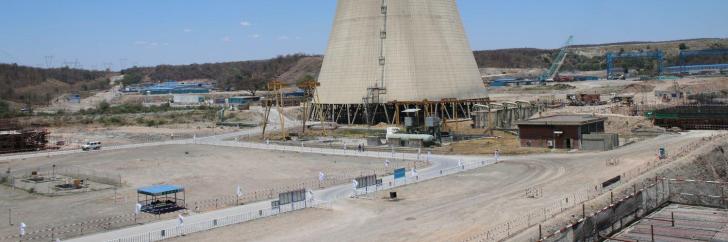
The Zimbabwe Electricity Transmission and Distribution Company (ZETDC) is struggling to settle a US$430 million debt owed to a joint venture it operates with Chinese engineering giant SinoHydro at Hwange, raising concerns over the sustainability of the country's newest power generation units.
The debt, which stood at about US$430 million in November, is owed to Hwange Electricity and Supply Company (Hesco), the special-purpose joint venture responsible for operating Hwange Thermal Power Station's Units 7 and 8.
The two units, commissioned in 2023, have a combined generation capacity of 670MW and have become increasingly important to Zimbabwe's electricity supply.
SinoHydro owns a 36% stake in Hesco, while the remaining 64% is held by the Zimbabwe Power Company (ZPC), a subsidiary of ZETDC.
Sources familiar with the debt crisis said SinoHydro, which constructed Hwange Units 7 and 8 under a US$1.5 billion loan from the Export-Import Bank of China, was yet to recover a significant portion of its investment.
The financial strain has reportedly left Hesco struggling to fund critical operations, including maintenance and the purchase of coal required to keep the units running.
"So far, SinoHydro, which has invested hundreds of millions of dollars in Hwange 7 and 8, has not recovered anything significant yet," a source said.
"As a result, Hesco has no money to pay for operations and maintenance. The joint venture company has no money to pay for coal and shareholders."
The bulk of the outstanding amount, estimated at about US$300 million towards the end of last year, was reportedly owed to SinoHydro in its capacity as the engineering, procurement and construction (EPC) contractor for the two units.
A further US$30 million was owed to SinoHydro for its role as the operations and maintenance contractor.
"As an EPC, SinoHydro was owed around US$300 million in November. That money has not been fully settled. An additional US$30 million was owed to SinoHydro in its role as the operations and maintenance partner," the source said.
Another insider said ZETDC had yet to present a comprehensive strategy for clearing the debt, raising concerns about the long-term viability of Hesco and the continued operation of Units 7 and 8.
"It is not clear how ZETDC plans to settle its debt. It has not presented any comprehensive debt-clearance strategy," the source said.
"It is difficult to understand how Hwange Units 7 and 8 will continue to run if there is no money for maintenance. That is the most pressing question."
ZETDC falls under the Mutapa Investment Fund (MIF), the government's sovereign wealth fund.
Questions sent to MIF had not been answered by the time of publication.
The Independent also sought clarification from ZETDC on the impact of the debt on Hesco's operations, the exact amount outstanding and whether a debt-clearance plan was in place.
Questions sent to ZETDC commercial director Ralph Katsande were also not answered. Katsande said he was awaiting responses from acting managing director Howard Choga.
The publication understands that SinoHydro representatives have repeatedly engaged ZETDC over the outstanding debt, but the meetings have so far failed to resolve the matter.
The debt crisis comes as Zimbabwe increasingly relies on Hwange's new units to bolster domestic electricity generation.
Hwange's older Units 1 to 6, built between 1973 and 1978, have suffered recurring breakdowns due to ageing equipment.
The six older units also lack sulphur dioxide reduction systems.
Their deteriorating condition was one of the key factors behind the government's decision to expand Hwange Power Station through Units 7 and 8.
Zimbabwe has an installed electricity generation capacity of about 1 500MW against peak demand of around 1 800MW, leaving a deficit of approximately 300MW.
The shortfall is largely covered through electricity imports from neighbouring countries, including Mozambique, South Africa and Zambia.
However, Zimbabwe has repeatedly struggled to meet its obligations to regional power suppliers, with accumulated debts at times resulting in the disconnection or reduction of electricity supplies.
In 2020, Zesa was negotiating a US$70 million loan to settle outstanding debts owed to South Africa's Eskom and Mozambique's Hidroeléctrica de Cahora Bassa (HCB). At the time, Zesa had committed to paying Eskom US$1 million a month.
The government is now seeking to address the power deficit through a new generation drive.
It announced this year that nine public and private power generation projects, with a combined capacity of 2 670MW, had either been commissioned or were under development and were expected to begin generating electricity next year.
Among the projects are 300MW greenfield power projects being developed by Chinese steelmaker Dinson Iron and Steel Company (Disco), which is investing US$1.5 billion in a steel plant in Mvuma.
Power generation at Kariba is also expected to improve in March next year, based on rainfall forecasts issued by the Meteorological Services Department.
SinoHydro has been involved in several major infrastructure projects in Zimbabwe, including the US$153 million expansion of Robert Gabriel Mugabe International Airport and the US$533 million installation of two additional generating units at Kariba South Power Station.
The debt, which stood at about US$430 million in November, is owed to Hwange Electricity and Supply Company (Hesco), the special-purpose joint venture responsible for operating Hwange Thermal Power Station's Units 7 and 8.
The two units, commissioned in 2023, have a combined generation capacity of 670MW and have become increasingly important to Zimbabwe's electricity supply.
SinoHydro owns a 36% stake in Hesco, while the remaining 64% is held by the Zimbabwe Power Company (ZPC), a subsidiary of ZETDC.
Sources familiar with the debt crisis said SinoHydro, which constructed Hwange Units 7 and 8 under a US$1.5 billion loan from the Export-Import Bank of China, was yet to recover a significant portion of its investment.
The financial strain has reportedly left Hesco struggling to fund critical operations, including maintenance and the purchase of coal required to keep the units running.
"So far, SinoHydro, which has invested hundreds of millions of dollars in Hwange 7 and 8, has not recovered anything significant yet," a source said.
"As a result, Hesco has no money to pay for operations and maintenance. The joint venture company has no money to pay for coal and shareholders."
The bulk of the outstanding amount, estimated at about US$300 million towards the end of last year, was reportedly owed to SinoHydro in its capacity as the engineering, procurement and construction (EPC) contractor for the two units.
A further US$30 million was owed to SinoHydro for its role as the operations and maintenance contractor.
"As an EPC, SinoHydro was owed around US$300 million in November. That money has not been fully settled. An additional US$30 million was owed to SinoHydro in its role as the operations and maintenance partner," the source said.
Another insider said ZETDC had yet to present a comprehensive strategy for clearing the debt, raising concerns about the long-term viability of Hesco and the continued operation of Units 7 and 8.
"It is not clear how ZETDC plans to settle its debt. It has not presented any comprehensive debt-clearance strategy," the source said.
"It is difficult to understand how Hwange Units 7 and 8 will continue to run if there is no money for maintenance. That is the most pressing question."
ZETDC falls under the Mutapa Investment Fund (MIF), the government's sovereign wealth fund.
Questions sent to MIF had not been answered by the time of publication.
The Independent also sought clarification from ZETDC on the impact of the debt on Hesco's operations, the exact amount outstanding and whether a debt-clearance plan was in place.
Questions sent to ZETDC commercial director Ralph Katsande were also not answered. Katsande said he was awaiting responses from acting managing director Howard Choga.
The publication understands that SinoHydro representatives have repeatedly engaged ZETDC over the outstanding debt, but the meetings have so far failed to resolve the matter.
The debt crisis comes as Zimbabwe increasingly relies on Hwange's new units to bolster domestic electricity generation.
Hwange's older Units 1 to 6, built between 1973 and 1978, have suffered recurring breakdowns due to ageing equipment.
The six older units also lack sulphur dioxide reduction systems.
Their deteriorating condition was one of the key factors behind the government's decision to expand Hwange Power Station through Units 7 and 8.
Zimbabwe has an installed electricity generation capacity of about 1 500MW against peak demand of around 1 800MW, leaving a deficit of approximately 300MW.
The shortfall is largely covered through electricity imports from neighbouring countries, including Mozambique, South Africa and Zambia.
However, Zimbabwe has repeatedly struggled to meet its obligations to regional power suppliers, with accumulated debts at times resulting in the disconnection or reduction of electricity supplies.
In 2020, Zesa was negotiating a US$70 million loan to settle outstanding debts owed to South Africa's Eskom and Mozambique's Hidroeléctrica de Cahora Bassa (HCB). At the time, Zesa had committed to paying Eskom US$1 million a month.
The government is now seeking to address the power deficit through a new generation drive.
It announced this year that nine public and private power generation projects, with a combined capacity of 2 670MW, had either been commissioned or were under development and were expected to begin generating electricity next year.
Among the projects are 300MW greenfield power projects being developed by Chinese steelmaker Dinson Iron and Steel Company (Disco), which is investing US$1.5 billion in a steel plant in Mvuma.
Power generation at Kariba is also expected to improve in March next year, based on rainfall forecasts issued by the Meteorological Services Department.
SinoHydro has been involved in several major infrastructure projects in Zimbabwe, including the US$153 million expansion of Robert Gabriel Mugabe International Airport and the US$533 million installation of two additional generating units at Kariba South Power Station.
Source - The Independent
Join the discussion
Loading comments…




