News / National
Zimbabwe's lithium boom raises questions over community benefits
18 Jun 2026 at 14:49hrs |
0 Views
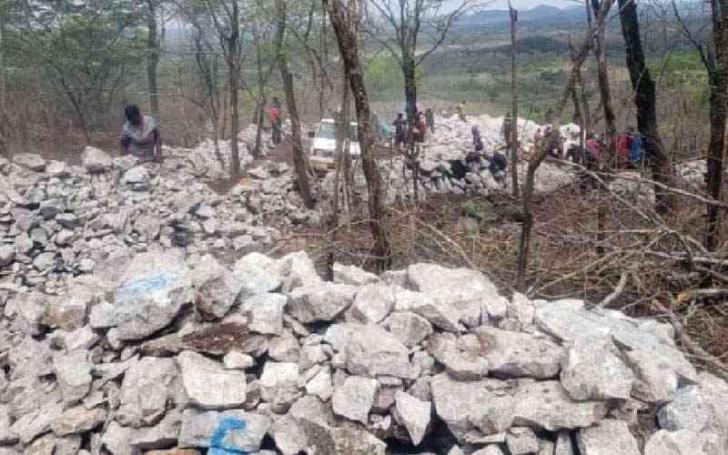
Zimbabwe's lithium industry is rapidly emerging as one of the country's most important mining sectors, driven by billions of dollars in Chinese investment and growing global demand for battery minerals. However, as production and exports surge, questions are mounting over whether local communities are sharing in the benefits of the country's lithium boom.
The sector is dominated by a handful of large-scale operations, including Bikita Minerals in Masvingo Province, Prospect Lithium Zimbabwe's Arcadia Mine near Harare, Kamativi Lithium Mine in Matabeleland North, Sabi Star Lithium Mine in Buhera, Sandawana Mine in Mberengwa and Gwanda Lithium Mine in Matabeleland South.
These projects have helped position Zimbabwe among Africa's leading lithium producers and a strategic supplier of minerals used in electric vehicle batteries and renewable energy technologies.
The country's efforts to move beyond exporting raw minerals gained momentum in April when Prospect Lithium Zimbabwe (PLZ) announced its first export of lithium sulphate, a higher-value processed product manufactured at its recently commissioned US$400 million processing plant at Arcadia Mine.
PLZ, which is wholly owned by Chinese battery minerals giant Zhejiang Huayou Cobalt, described the export as a landmark achievement for both Zimbabwe and the African continent.
Bikita Minerals is also pursuing an ambitious beneficiation programme aimed at producing lithium precursor chemicals locally rather than exporting concentrate. The company says it is implementing a US$400 million investment programme, with the first phase of its lithium sulphate project expected to be commissioned in the second quarter of 2027 and capable of producing 60,000 tonnes annually.
At Sandawana Lithium Mine, state-owned Mutapa Energy Minerals is partnering with Zhejiang Huayou Cobalt and Tsingshan Holding Group to develop a lithium concentrate processing plant as Zimbabwe intensifies efforts to maximise value from its mineral resources.
The government's beneficiation strategy appears to be delivering results. According to figures released by the Minerals Marketing Corporation of Zimbabwe (MMCZ), mineral sales reached US$983.85 million during the first quarter of 2026, while export values rose by 79 percent following restrictions on the export of unprocessed minerals.
Lithium earnings alone more than doubled, increasing from US$84.19 million in the first quarter of 2025 to US$178.64 million during the same period this year.
Mines and Mining Development Minister Polite Kambamura has attributed the sector's strong performance to favourable commodity prices and increased investment in lithium processing facilities, highlighting Arcadia Mine's lithium sulphate production as a key milestone in Zimbabwe's industrialisation agenda.
Despite the impressive growth figures, analysts caution that beneficiation alone will not guarantee broad-based economic development.
Political analyst Rashweat Mukundu said Zimbabwe's move towards local processing was a positive development but warned that sustained investment in infrastructure, technology and industrial capacity would be essential to ensure long-term success.
"Revenues from processed lithium are increasing, but the policy should be guided by a long-term strategy rather than a knee-jerk political reaction," Mukundu said.
He also cautioned against excessive reliance on Chinese investment and export markets, arguing that Zimbabwe should diversify its international partnerships to maximise economic gains and reduce risk.
Resource governance advocates have echoed those concerns, arguing that communities located near major mining operations are yet to experience meaningful improvements in living standards despite the sector's rapid expansion.
Centre for Natural Resource Governance executive director Farai Maguwu said policy inconsistency, infrastructure deficits and weak regulatory oversight continue to undermine efforts to maximise the benefits of lithium mining.
"Communities hosting lithium mines are seeing little benefit, particularly around Bikita Minerals, Prospect Lithium in Goromonzi and Sabi Star," Maguwu said.
"There are concerns over damaged roads, limited local employment opportunities, declining livelihoods and inadequate investment in health, education and public infrastructure."
Mountain Mujakachi, director of the Bikita Land Institute of Development (BILD), said many of the expectations raised when lithium investments were announced had not materialised.
He claimed there was little evidence that beneficiation projects had generated the significant employment opportunities that had been promised and raised concerns about recruitment practices and accountability mechanisms.
Mujakachi also questioned whether infrastructure commitments made following the acquisition of Bikita Minerals by Chinese investors had been fulfilled, citing concerns over road infrastructure, water shortages and electricity supply.
Bikita Minerals has rejected suggestions that it is failing local communities, highlighting a range of development projects it says have already been completed.
According to the company, its community investments include a US$1 million health facility serving more than 5,000 people, nutrition support programmes benefiting nearly 10,000 learners, a 132kV power line project valued at up to US$30 million, and more than US$500,000 spent on road rehabilitation and other infrastructure improvements.
The company says it remains committed to transparency, sustainable development and community empowerment.
Organised labour has also welcomed the government's beneficiation policy but insists that workers and communities must receive tangible benefits from increased mineral processing.
Justice Chinhema, secretary-general of the Zimbabwe Diamond and Allied Minerals Workers Union, said value addition should be accompanied by stronger labour protections, social dialogue, community development and greater transparency in the management of mining revenues.
"Value addition must benefit workers and communities through decent jobs, workplace safety and improved infrastructure," he said.
As Zimbabwe seeks to establish itself as a major player in the global battery minerals value chain, the debate is increasingly shifting from export earnings and investment figures to broader questions about industrialisation, economic transformation and community welfare.
While the country's lithium industry is generating record revenues and attracting significant foreign investment, critics argue that its long-term success will ultimately be measured not only by production volumes and export receipts, but by the extent to which ordinary Zimbabweans benefit from the country's vast mineral wealth.
The sector is dominated by a handful of large-scale operations, including Bikita Minerals in Masvingo Province, Prospect Lithium Zimbabwe's Arcadia Mine near Harare, Kamativi Lithium Mine in Matabeleland North, Sabi Star Lithium Mine in Buhera, Sandawana Mine in Mberengwa and Gwanda Lithium Mine in Matabeleland South.
These projects have helped position Zimbabwe among Africa's leading lithium producers and a strategic supplier of minerals used in electric vehicle batteries and renewable energy technologies.
The country's efforts to move beyond exporting raw minerals gained momentum in April when Prospect Lithium Zimbabwe (PLZ) announced its first export of lithium sulphate, a higher-value processed product manufactured at its recently commissioned US$400 million processing plant at Arcadia Mine.
PLZ, which is wholly owned by Chinese battery minerals giant Zhejiang Huayou Cobalt, described the export as a landmark achievement for both Zimbabwe and the African continent.
Bikita Minerals is also pursuing an ambitious beneficiation programme aimed at producing lithium precursor chemicals locally rather than exporting concentrate. The company says it is implementing a US$400 million investment programme, with the first phase of its lithium sulphate project expected to be commissioned in the second quarter of 2027 and capable of producing 60,000 tonnes annually.
At Sandawana Lithium Mine, state-owned Mutapa Energy Minerals is partnering with Zhejiang Huayou Cobalt and Tsingshan Holding Group to develop a lithium concentrate processing plant as Zimbabwe intensifies efforts to maximise value from its mineral resources.
The government's beneficiation strategy appears to be delivering results. According to figures released by the Minerals Marketing Corporation of Zimbabwe (MMCZ), mineral sales reached US$983.85 million during the first quarter of 2026, while export values rose by 79 percent following restrictions on the export of unprocessed minerals.
Lithium earnings alone more than doubled, increasing from US$84.19 million in the first quarter of 2025 to US$178.64 million during the same period this year.
Mines and Mining Development Minister Polite Kambamura has attributed the sector's strong performance to favourable commodity prices and increased investment in lithium processing facilities, highlighting Arcadia Mine's lithium sulphate production as a key milestone in Zimbabwe's industrialisation agenda.
Despite the impressive growth figures, analysts caution that beneficiation alone will not guarantee broad-based economic development.
Political analyst Rashweat Mukundu said Zimbabwe's move towards local processing was a positive development but warned that sustained investment in infrastructure, technology and industrial capacity would be essential to ensure long-term success.
"Revenues from processed lithium are increasing, but the policy should be guided by a long-term strategy rather than a knee-jerk political reaction," Mukundu said.
He also cautioned against excessive reliance on Chinese investment and export markets, arguing that Zimbabwe should diversify its international partnerships to maximise economic gains and reduce risk.
Resource governance advocates have echoed those concerns, arguing that communities located near major mining operations are yet to experience meaningful improvements in living standards despite the sector's rapid expansion.
Centre for Natural Resource Governance executive director Farai Maguwu said policy inconsistency, infrastructure deficits and weak regulatory oversight continue to undermine efforts to maximise the benefits of lithium mining.
"Communities hosting lithium mines are seeing little benefit, particularly around Bikita Minerals, Prospect Lithium in Goromonzi and Sabi Star," Maguwu said.
"There are concerns over damaged roads, limited local employment opportunities, declining livelihoods and inadequate investment in health, education and public infrastructure."
Mountain Mujakachi, director of the Bikita Land Institute of Development (BILD), said many of the expectations raised when lithium investments were announced had not materialised.
He claimed there was little evidence that beneficiation projects had generated the significant employment opportunities that had been promised and raised concerns about recruitment practices and accountability mechanisms.
Mujakachi also questioned whether infrastructure commitments made following the acquisition of Bikita Minerals by Chinese investors had been fulfilled, citing concerns over road infrastructure, water shortages and electricity supply.
Bikita Minerals has rejected suggestions that it is failing local communities, highlighting a range of development projects it says have already been completed.
According to the company, its community investments include a US$1 million health facility serving more than 5,000 people, nutrition support programmes benefiting nearly 10,000 learners, a 132kV power line project valued at up to US$30 million, and more than US$500,000 spent on road rehabilitation and other infrastructure improvements.
The company says it remains committed to transparency, sustainable development and community empowerment.
Organised labour has also welcomed the government's beneficiation policy but insists that workers and communities must receive tangible benefits from increased mineral processing.
Justice Chinhema, secretary-general of the Zimbabwe Diamond and Allied Minerals Workers Union, said value addition should be accompanied by stronger labour protections, social dialogue, community development and greater transparency in the management of mining revenues.
"Value addition must benefit workers and communities through decent jobs, workplace safety and improved infrastructure," he said.
As Zimbabwe seeks to establish itself as a major player in the global battery minerals value chain, the debate is increasingly shifting from export earnings and investment figures to broader questions about industrialisation, economic transformation and community welfare.
While the country's lithium industry is generating record revenues and attracting significant foreign investment, critics argue that its long-term success will ultimately be measured not only by production volumes and export receipts, but by the extent to which ordinary Zimbabweans benefit from the country's vast mineral wealth.
Source - Al Jazeera
Join the discussion
Loading comments…





