Opinion / Columnist
Mbalula cannot rewrite history to sanitise Ramaphosa's failings
07 Dec 2025 at 17:51hrs |
0 Views
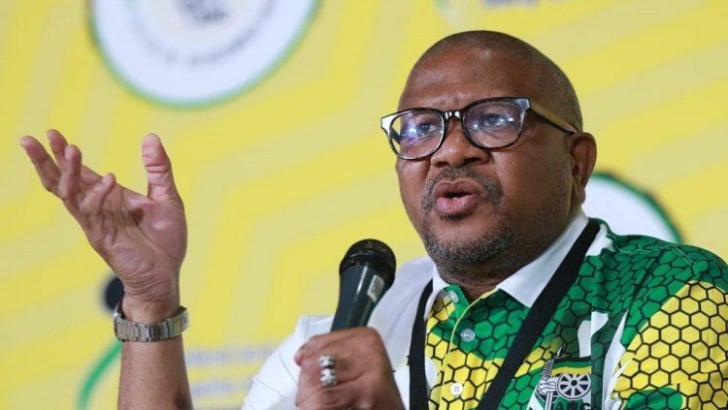
By any measure, political spin is expected in election season - but there is a point where spin becomes deception. When ANC Secretary-General Fikile Mbalula argues that President Cyril Ramaphosa's 6th and now 7th administration is uniquely burdened by domestic and global crises, to the extent that no presidency before it had to contend with such pressures, one must call this what it is: a soft attempt at absolution through revisionism.
Yes - Ramaphosa governed through a once-in-a-century pandemic and global economic instability. Covid-19 tested every state on earth, and South Africa, despite deep inequality and a fragile healthcare system, navigated the crisis relatively well. But to elevate that era as unprecedented while downplaying the turbulence, complexity and international pressures faced by previous ANC administrations is intellectually dishonest. It is scapegoating disguised as analysis.
Because if history matters - and it does - then we must remember it in full, not only when it flatters the present.
Zuma's administration inherited a crisis and confronted it - not with excuses, but with action
The 4th ANC administration under Jacob Zuma came into office carrying the weight of one of the worst public health disasters in South African history: the HIV/AIDS epidemic. It inherited a legacy of denialism and delay from earlier leadership. The stakes were existential - millions of lives hung in the balance.
What followed is undeniable: a dramatic shift in national policy, the expansion of ARV access to one of the largest treatment programmes in the world, and a full reversal of the state's posture towards HIV/AIDS. That was not a government claiming exceptionalism or begging for sympathy - it was a government responding to crisis with urgency and strategy.
Then came the 2008 global financial crisis - an economic earthquake that destabilised markets, destroyed jobs worldwide and left developing nations gasping. Zuma's government responded not with deflection, but with a R787 billion recovery plan focused on infrastructure development, industrial support, local manufacturing, FET skills training, and social cushioning.
We built stadiums, bridges, roads, housing. We established new universities and expanded further education. We funded local industries through schemes like AIS and MCEP. We protected the poor via expanded grants. South Africa acted, it did not lament. It strategised, it did not shift blame.
That is the historical record - uncomfortable to some, but undeniable.
International politics then was no gentle playground either.
Mbalula's claim that Ramaphosa alone has carried complex international pressures ignores another truth: Zuma's presidency reshaped South Africa's geopolitical alignment. The decision to join BRICS was seismic. It recalibrated our foreign policy towards the Global South, strengthened diplomatic muscle, and deepened economic partnership with China - which became our largest trade partner under Zuma's tenure.
This came with geopolitical friction. Washington did not applaud politely - the threat to strip South Africa of AGOA access over the private security ownership bill was a reminder that foreign policy autonomy is never free. The Zuma era balanced international hostility and global expectation while rebuilding continental leadership.
All of this unfolded against violent internal division following the 2007 Polokwane conference. The ANC did not govern in calm waters. It governed in a storm of its own making - and still, the state did not collapse.
So no - Ramaphosa is not the first president to face a crisis and pretending otherwise is political laziness.
Every administration has inherited failure, built progress, created contradictions, and faced crisis. The Mandela era navigated nationhood and reconciliation. Mbeki faced deep ideological contests and a continental renaissance alongside foreign policy tension. Zuma's administration confronted HIV/AIDS, recession, internal fragmentation, and global geopolitical realignment. Ramaphosa managed a pandemic, corruption clean-up, economic turbulence, and institutional decay.
There is no era without hardship - only eras that either respond or deflect.
If the governing party wants credibility, it must abandon the reflex to excuse present failures by romanticising selective struggle and exaggerating present burdens. The public sees through it. Scapegoating breeds resentment, not trust.
South Africa does not need leaders who plead exceptional difficulty.
It needs leaders who build exceptional solutions.
The message is simple:
History did not begin in 2018 - and crisis is not a justification for stagnation.
Ramaphosa's administration must stand on its results, not on claims that its challenges are unprecedented. We did not elect a government to explain why it struggles - we elected it to overcome struggle.
And history has already proven that it is possible.
Yes - Ramaphosa governed through a once-in-a-century pandemic and global economic instability. Covid-19 tested every state on earth, and South Africa, despite deep inequality and a fragile healthcare system, navigated the crisis relatively well. But to elevate that era as unprecedented while downplaying the turbulence, complexity and international pressures faced by previous ANC administrations is intellectually dishonest. It is scapegoating disguised as analysis.
Because if history matters - and it does - then we must remember it in full, not only when it flatters the present.
Zuma's administration inherited a crisis and confronted it - not with excuses, but with action
The 4th ANC administration under Jacob Zuma came into office carrying the weight of one of the worst public health disasters in South African history: the HIV/AIDS epidemic. It inherited a legacy of denialism and delay from earlier leadership. The stakes were existential - millions of lives hung in the balance.
What followed is undeniable: a dramatic shift in national policy, the expansion of ARV access to one of the largest treatment programmes in the world, and a full reversal of the state's posture towards HIV/AIDS. That was not a government claiming exceptionalism or begging for sympathy - it was a government responding to crisis with urgency and strategy.
Then came the 2008 global financial crisis - an economic earthquake that destabilised markets, destroyed jobs worldwide and left developing nations gasping. Zuma's government responded not with deflection, but with a R787 billion recovery plan focused on infrastructure development, industrial support, local manufacturing, FET skills training, and social cushioning.
We built stadiums, bridges, roads, housing. We established new universities and expanded further education. We funded local industries through schemes like AIS and MCEP. We protected the poor via expanded grants. South Africa acted, it did not lament. It strategised, it did not shift blame.
That is the historical record - uncomfortable to some, but undeniable.
International politics then was no gentle playground either.
Mbalula's claim that Ramaphosa alone has carried complex international pressures ignores another truth: Zuma's presidency reshaped South Africa's geopolitical alignment. The decision to join BRICS was seismic. It recalibrated our foreign policy towards the Global South, strengthened diplomatic muscle, and deepened economic partnership with China - which became our largest trade partner under Zuma's tenure.
This came with geopolitical friction. Washington did not applaud politely - the threat to strip South Africa of AGOA access over the private security ownership bill was a reminder that foreign policy autonomy is never free. The Zuma era balanced international hostility and global expectation while rebuilding continental leadership.
So no - Ramaphosa is not the first president to face a crisis and pretending otherwise is political laziness.
Every administration has inherited failure, built progress, created contradictions, and faced crisis. The Mandela era navigated nationhood and reconciliation. Mbeki faced deep ideological contests and a continental renaissance alongside foreign policy tension. Zuma's administration confronted HIV/AIDS, recession, internal fragmentation, and global geopolitical realignment. Ramaphosa managed a pandemic, corruption clean-up, economic turbulence, and institutional decay.
There is no era without hardship - only eras that either respond or deflect.
If the governing party wants credibility, it must abandon the reflex to excuse present failures by romanticising selective struggle and exaggerating present burdens. The public sees through it. Scapegoating breeds resentment, not trust.
South Africa does not need leaders who plead exceptional difficulty.
It needs leaders who build exceptional solutions.
The message is simple:
History did not begin in 2018 - and crisis is not a justification for stagnation.
Ramaphosa's administration must stand on its results, not on claims that its challenges are unprecedented. We did not elect a government to explain why it struggles - we elected it to overcome struggle.
And history has already proven that it is possible.
Source - online
All articles and letters published on Bulawayo24 have been independently written by members of Bulawayo24's community. The views of users published on Bulawayo24 are therefore their own and do not necessarily represent the views of Bulawayo24. Bulawayo24 editors also reserve the right to edit or delete any and all comments received.
Join the discussion
Loading comments…





