Business / Economy
Zimbabwe to roll out high-quality ZiG banknotes in 2026
30 Nov 2025 at 18:18hrs |
0 Views
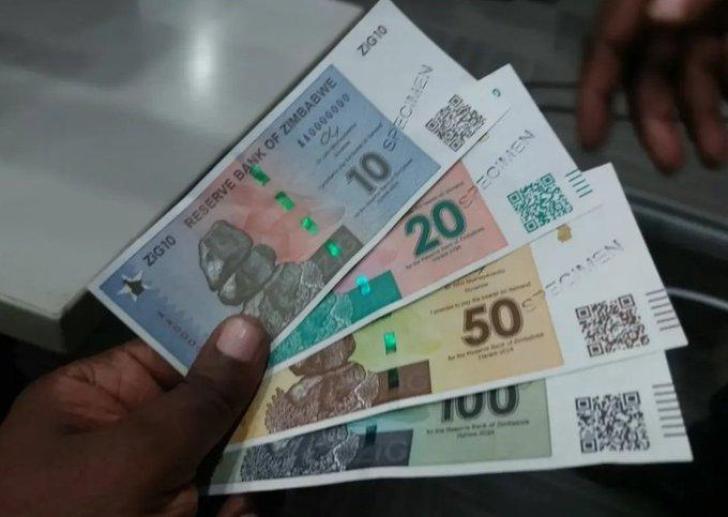
HARARE - Zimbabwe will introduce high-quality ZiG banknotes in the first quarter of 2026, in what Government says is a critical step towards strengthening the country's currency architecture and boosting public confidence in the Zimbabwe Gold (ZiG).
Delivering the 2026 National Budget in Parliament last week, Finance, Economic Development and Investment Promotion Minister Professor Mthuli Ncube said production of the new notes was already at an advanced stage.
"A critical success factor for a smooth transition to a mono‑currency is the availability of high‑quality and durable banknotes," he said.
Ncube clarified that the unveiling of the new notes does not mean the introduction of a new currency, but rather the issuance of improved ZiG notes designed to ensure durability and convenience.
The Reserve Bank of Zimbabwe (RBZ) is expected to announce the roll‑out plan and timing in the February 2026 Monetary Policy Statement, following earlier confirmation by RBZ Governor Dr John Mushayavanhu that the central bank would enhance the quality of ZiG notes.
Foreign Currency Holdings Protected
Government has assured citizens that the transition to a mono‑currency will not involve compulsory conversion of foreign currency holdings. Foreign currency accounts, pension funds, and US dollar‑denominated stocks and bonds - including those on the Victoria Falls Stock Exchange (VFEX) - will remain protected.
The National Development Strategy 2 (NDS2) emphasises that all prior contractual obligations, including bank loans and advances, will be preserved and honoured, ensuring economic agents do not lose money or value during the transition.
Conditions for Mono-Currency Transition
The NDS2 outlines several critical conditions that must be met before Zimbabwe can sustainably operate a mono‑currency system:
- Durable macro‑economic stability with single‑digit inflation
- Adequate foreign currency reserves covering three to six months of imports
- Stable exchange rate and efficient foreign exchange management
- Fiscal and monetary policy cohesion to increase demand for ZiG
Government plans to recalibrate the percentage of taxes payable in ZiG and broaden the use of the local currency for public sector goods and services.
Background
Zimbabwe has operated under a multi‑currency system since 2009, dominated by the US dollar after hyperinflation rendered the local unit unsustainable.
Authorities say the reintroduction of a domestic mono‑currency aims to regain control over monetary policy, stabilise inflation and interest rates, encourage savings and investment, and strengthen local industries by stabilising input costs.
While the US dollar has anchored inflation, its dominance has created challenges, including reduced competitiveness, shortages of small denominations, capital erosion, and difficulties in business planning due to exchange rate volatility.
Delivering the 2026 National Budget in Parliament last week, Finance, Economic Development and Investment Promotion Minister Professor Mthuli Ncube said production of the new notes was already at an advanced stage.
"A critical success factor for a smooth transition to a mono‑currency is the availability of high‑quality and durable banknotes," he said.
Ncube clarified that the unveiling of the new notes does not mean the introduction of a new currency, but rather the issuance of improved ZiG notes designed to ensure durability and convenience.
The Reserve Bank of Zimbabwe (RBZ) is expected to announce the roll‑out plan and timing in the February 2026 Monetary Policy Statement, following earlier confirmation by RBZ Governor Dr John Mushayavanhu that the central bank would enhance the quality of ZiG notes.
Foreign Currency Holdings Protected
Government has assured citizens that the transition to a mono‑currency will not involve compulsory conversion of foreign currency holdings. Foreign currency accounts, pension funds, and US dollar‑denominated stocks and bonds - including those on the Victoria Falls Stock Exchange (VFEX) - will remain protected.
The National Development Strategy 2 (NDS2) emphasises that all prior contractual obligations, including bank loans and advances, will be preserved and honoured, ensuring economic agents do not lose money or value during the transition.
The NDS2 outlines several critical conditions that must be met before Zimbabwe can sustainably operate a mono‑currency system:
- Durable macro‑economic stability with single‑digit inflation
- Adequate foreign currency reserves covering three to six months of imports
- Stable exchange rate and efficient foreign exchange management
- Fiscal and monetary policy cohesion to increase demand for ZiG
Government plans to recalibrate the percentage of taxes payable in ZiG and broaden the use of the local currency for public sector goods and services.
Background
Zimbabwe has operated under a multi‑currency system since 2009, dominated by the US dollar after hyperinflation rendered the local unit unsustainable.
Authorities say the reintroduction of a domestic mono‑currency aims to regain control over monetary policy, stabilise inflation and interest rates, encourage savings and investment, and strengthen local industries by stabilising input costs.
While the US dollar has anchored inflation, its dominance has created challenges, including reduced competitiveness, shortages of small denominations, capital erosion, and difficulties in business planning due to exchange rate volatility.
Source - Online
Join the discussion
Loading comments…



