Business / Economy
Zimbabwe closes 2025 with a dramatic economic turnaround
28 Dec 2025 at 08:01hrs |
2476 Views
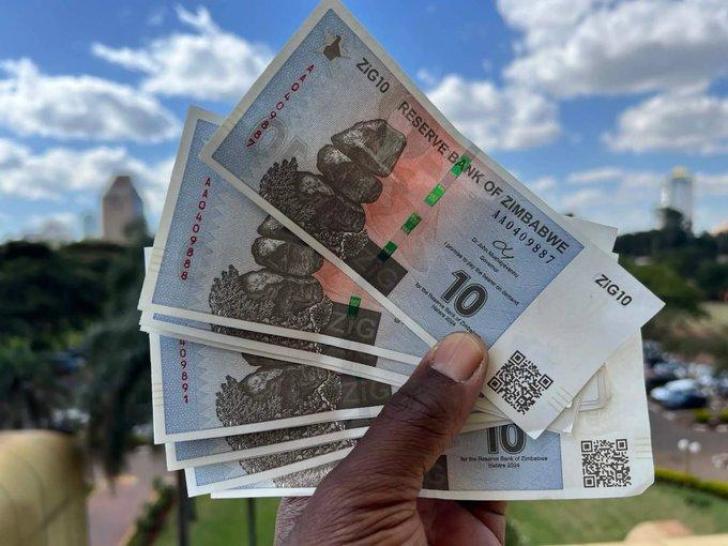
Zimbabwe is closing 2025 on a dramatic economic high, posting sweeping gains across key sectors and clawing its way back from the punishing El Niño‑induced downturn that defined 2024. With just days left in the year, the country's economic indicators point to one of the strongest rebounds in recent memory - a resurgence anchored in falling inflation, revived production and renewed confidence across the economy.
The most striking development of 2025 has been the collapse of inflation. After peaking at 95,8 percent in July, ZiG annual inflation has plunged to 15 percent this December, marking one of the sharpest disinflation episodes since the currency's introduction. The turnaround reflects tighter fiscal discipline, improved coordination between fiscal and monetary authorities and a more stable exchange rate.
For businesses and households long battered by volatility, the relief has been immediate. Predictable prices have restored planning certainty, allowed companies to commit capital and helped stabilise household budgets. Economic commentator Mr Tinevimbo Shava said the impact of stability was already visible across society.
"Stability is not just a macroeconomic concept; it directly affects the lives of people," he said. "When prices are predictable, salaries go further and the entire value chain functions more smoothly. That is what we are seeing as 2025 ends."
Global conditions have also shifted in Zimbabwe's favour, with easing international inflation and lower global energy and food prices reducing imported cost pressures.
But the real story of 2025 lies in the breadth of the recovery. Agriculture - devastated last year - has staged a dramatic comeback. Improved rainfall, expanded irrigation and better agronomic practices have pushed the sector to an estimated 24 percent growth, contributing more than two percentage points to overall GDP. Rural incomes have risen, food security has strengthened and downstream industries from transport to agro‑processing have been revitalised.
Tobacco has been one of the year's standout performers. Zimbabwe sold more than 300 million kilogrammes during the 2024 season, earning US$944 million, while the Tobacco Industry and Marketing Board confirmed that total sales surpassed 350 million kilogrammes - a new national record worth over US$1 billion. More than 108 000 farmers participated, cementing tobacco's role as a lifeline for rural households.
Wheat production also shattered records, climbing beyond 640 000 tonnes thanks to mechanisation, irrigation expansion and targeted Government support.
Mining, the backbone of foreign currency earnings, has continued its upward march. Despite softer global prices for some base metals, the sector is projected to grow by 7,3 percent this year. Gold has been the star performer, with output reaching 41,8 tonnes by November - surpassing the national target. Artisanal and small‑scale miners, responsible for nearly three‑quarters of deliveries, have driven the surge, supported by incentives and formalisation efforts.
Foreign currency earnings from gold for the 10 months to October soared by almost 89 percent to US$3,76 billion, strengthening the balance of payments and stabilising the exchange rate. Economic analyst Mr Namatai Maeresera said the gold sector's impact was far‑reaching.
"Gold earnings strengthen the country's foreign currency position, which helps stabilise the exchange rate and contain inflation," he said. "That stability filters through to the general public."
Manufacturing has also shown renewed life, expanding by an estimated 4,2 percent as companies benefit from lower inflation, improved electricity supply and reduced exchange rate volatility. Power generation itself grew by about 6,7 percent, reducing production downtime and boosting competitiveness across mining, manufacturing and services.
On the demand side, wholesale and retail trade, financial services and ICT have all posted strong growth, buoyed by a more predictable macroeconomic environment.
Fiscal discipline has underpinned the recovery, with cash budgeting and controlled expenditure helping anchor inflation expectations and restore confidence.
Zimbabwe's projected 6,6 percent growth for 2025 is now within reach - and, crucially, the gains are filtering into everyday life. Rising farm incomes, stronger mining earnings, stable prices and improved electricity supply are supporting jobs, small businesses and household welfare.
The year has also delivered major infrastructure wins. The completion and commissioning of the Trabablas Interchange in Harare stands out as a flagship achievement, easing congestion in the capital and strengthening the north‑south transport corridor. Progress on the Harare‑Masvingo‑Beitbridge highway and ongoing national road upgrades under ERRP and NDS1 have continued despite limited fiscal space.
As Mr Shava noted, "Growth anchored in stability is more meaningful because it touches ordinary people."
If the momentum holds into 2026, Zimbabwe may be entering a new phase of resilience - one built not on crisis response, but on sustained stability and broad‑based recovery.
The most striking development of 2025 has been the collapse of inflation. After peaking at 95,8 percent in July, ZiG annual inflation has plunged to 15 percent this December, marking one of the sharpest disinflation episodes since the currency's introduction. The turnaround reflects tighter fiscal discipline, improved coordination between fiscal and monetary authorities and a more stable exchange rate.
For businesses and households long battered by volatility, the relief has been immediate. Predictable prices have restored planning certainty, allowed companies to commit capital and helped stabilise household budgets. Economic commentator Mr Tinevimbo Shava said the impact of stability was already visible across society.
"Stability is not just a macroeconomic concept; it directly affects the lives of people," he said. "When prices are predictable, salaries go further and the entire value chain functions more smoothly. That is what we are seeing as 2025 ends."
Global conditions have also shifted in Zimbabwe's favour, with easing international inflation and lower global energy and food prices reducing imported cost pressures.
But the real story of 2025 lies in the breadth of the recovery. Agriculture - devastated last year - has staged a dramatic comeback. Improved rainfall, expanded irrigation and better agronomic practices have pushed the sector to an estimated 24 percent growth, contributing more than two percentage points to overall GDP. Rural incomes have risen, food security has strengthened and downstream industries from transport to agro‑processing have been revitalised.
Tobacco has been one of the year's standout performers. Zimbabwe sold more than 300 million kilogrammes during the 2024 season, earning US$944 million, while the Tobacco Industry and Marketing Board confirmed that total sales surpassed 350 million kilogrammes - a new national record worth over US$1 billion. More than 108 000 farmers participated, cementing tobacco's role as a lifeline for rural households.
Wheat production also shattered records, climbing beyond 640 000 tonnes thanks to mechanisation, irrigation expansion and targeted Government support.
Mining, the backbone of foreign currency earnings, has continued its upward march. Despite softer global prices for some base metals, the sector is projected to grow by 7,3 percent this year. Gold has been the star performer, with output reaching 41,8 tonnes by November - surpassing the national target. Artisanal and small‑scale miners, responsible for nearly three‑quarters of deliveries, have driven the surge, supported by incentives and formalisation efforts.
"Gold earnings strengthen the country's foreign currency position, which helps stabilise the exchange rate and contain inflation," he said. "That stability filters through to the general public."
Manufacturing has also shown renewed life, expanding by an estimated 4,2 percent as companies benefit from lower inflation, improved electricity supply and reduced exchange rate volatility. Power generation itself grew by about 6,7 percent, reducing production downtime and boosting competitiveness across mining, manufacturing and services.
On the demand side, wholesale and retail trade, financial services and ICT have all posted strong growth, buoyed by a more predictable macroeconomic environment.
Fiscal discipline has underpinned the recovery, with cash budgeting and controlled expenditure helping anchor inflation expectations and restore confidence.
Zimbabwe's projected 6,6 percent growth for 2025 is now within reach - and, crucially, the gains are filtering into everyday life. Rising farm incomes, stronger mining earnings, stable prices and improved electricity supply are supporting jobs, small businesses and household welfare.
The year has also delivered major infrastructure wins. The completion and commissioning of the Trabablas Interchange in Harare stands out as a flagship achievement, easing congestion in the capital and strengthening the north‑south transport corridor. Progress on the Harare‑Masvingo‑Beitbridge highway and ongoing national road upgrades under ERRP and NDS1 have continued despite limited fiscal space.
As Mr Shava noted, "Growth anchored in stability is more meaningful because it touches ordinary people."
If the momentum holds into 2026, Zimbabwe may be entering a new phase of resilience - one built not on crisis response, but on sustained stability and broad‑based recovery.
Source - Sunday News
Join the discussion
Loading comments…



