News / Local
Biti to work with Chiwenga in opposing Mnangagwa 2030 agenda
13 Feb 2026 at 18:31hrs |
0 Views
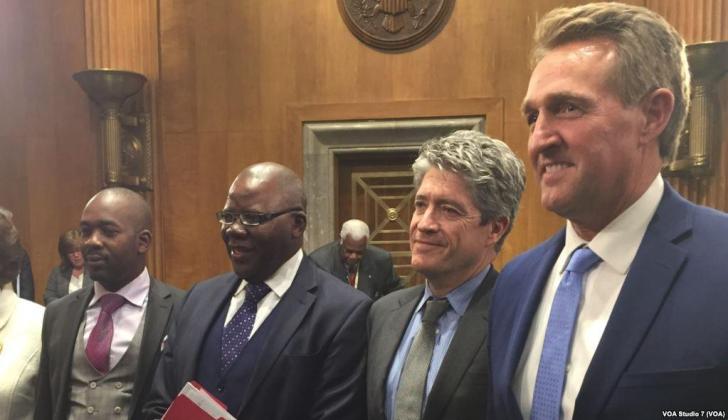
Veteran opposition politician and former Finance minister Tendai Biti says the newly formed Constitution Defence Forum (CDF) will work broadly with Vice-President Constantino Chiwenga, opposition leader Nelson Chamisa, civil society organisations and other democratic actors to resist what he describes as sustained attacks on Zimbabwe's Constitution by President Emmerson Mnangagwa.
Biti said the CDF is a civic and political platform established to defend constitutionalism and democratic governance amid what he termed a deepening economic and social crisis. He indicated that the forum seeks to unite citizens across political divides who are opposed to constitutional amendments and governance practices they view as undermining the rule of law.
The CDF initiative mirrors the Defend the Constitution Platform, a separate civic movement led by opposition figure Jameson Timba. Both platforms have emerged in response to recent constitutional changes and ongoing debates about executive authority and term limits.
Since assuming office in 2017, Mnangagwa has overseen several amendments to the 2013 Constitution. Critics argue that the changes have consolidated executive power, while government officials have maintained that the amendments are lawful and necessary administrative adjustments.
Biti alleges that the current push to extend Mnangagwa's tenure beyond the 2028 constitutional limit to 2030 represents an attempt to entrench personal rule. He claims there are efforts within the ruling ZANU PF to alter constitutional provisions in a manner that would allow a two-year extension of the president's term.
However, the issue is said to have exposed divisions within ZANU PF, with Chiwenga and some of his reported allies allegedly opposing any move to extend Mnangagwa's stay in office beyond the existing constitutional framework.
Biti said the CDF aims to become a rallying point for citizens committed to defending what he called the "Supreme Law of the land," urging Zimbabweans to mobilise in its protection. He has called for nationwide demonstrations to resist what he characterises as unconstitutional manoeuvres.
Some civil society groups and opposition activists have described the constitutional changes as amounting to a "constitutional coup," a term referenced in the African Union's Constitutive Act. They argue that altering foundational provisions to prolong incumbency undermines democratic norms.
Mnangagwa first came to power following the military-assisted transition in November 2017 that ended Robert Mugabe's long rule. He subsequently won presidential elections in 2018 and 2023, both of which were contested by opposition parties.
The unfolding debate over constitutional amendments and executive tenure comes against the backdrop of prolonged economic challenges and social strain, with critics blaming governance failures while government officials attribute difficulties to sanctions, global economic headwinds and structural reforms underway.
Biti said the CDF is a civic and political platform established to defend constitutionalism and democratic governance amid what he termed a deepening economic and social crisis. He indicated that the forum seeks to unite citizens across political divides who are opposed to constitutional amendments and governance practices they view as undermining the rule of law.
The CDF initiative mirrors the Defend the Constitution Platform, a separate civic movement led by opposition figure Jameson Timba. Both platforms have emerged in response to recent constitutional changes and ongoing debates about executive authority and term limits.
Since assuming office in 2017, Mnangagwa has overseen several amendments to the 2013 Constitution. Critics argue that the changes have consolidated executive power, while government officials have maintained that the amendments are lawful and necessary administrative adjustments.
Biti alleges that the current push to extend Mnangagwa's tenure beyond the 2028 constitutional limit to 2030 represents an attempt to entrench personal rule. He claims there are efforts within the ruling ZANU PF to alter constitutional provisions in a manner that would allow a two-year extension of the president's term.
Biti said the CDF aims to become a rallying point for citizens committed to defending what he called the "Supreme Law of the land," urging Zimbabweans to mobilise in its protection. He has called for nationwide demonstrations to resist what he characterises as unconstitutional manoeuvres.
Some civil society groups and opposition activists have described the constitutional changes as amounting to a "constitutional coup," a term referenced in the African Union's Constitutive Act. They argue that altering foundational provisions to prolong incumbency undermines democratic norms.
Mnangagwa first came to power following the military-assisted transition in November 2017 that ended Robert Mugabe's long rule. He subsequently won presidential elections in 2018 and 2023, both of which were contested by opposition parties.
The unfolding debate over constitutional amendments and executive tenure comes against the backdrop of prolonged economic challenges and social strain, with critics blaming governance failures while government officials attribute difficulties to sanctions, global economic headwinds and structural reforms underway.
Source - online
Join the discussion
Loading comments…


