News / National
'Mnangagwa using power to shield graft'
13 Dec 2025 at 12:43hrs |
0 Views
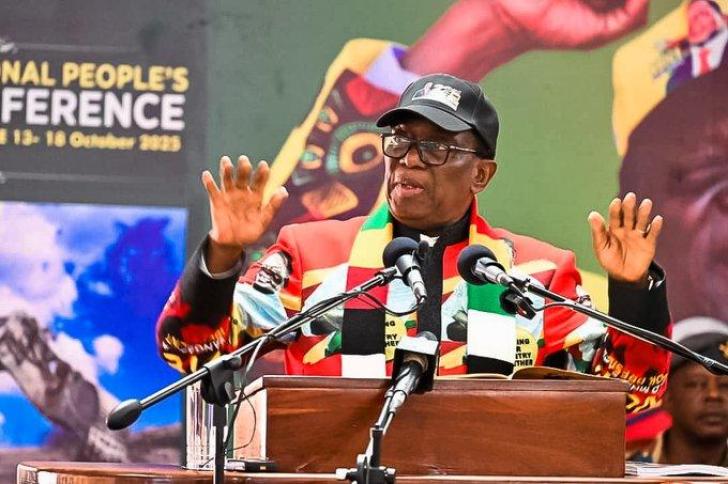
Citizens Coalition for Change (CCC) faction leader Jameson Timba has sharply criticised President Emmerson Mnangagwa's administration, accusing it of institutionalising corruption while seeking to extend the president's tenure beyond constitutional limits. Timba condemned the gap between the government's anti-corruption rhetoric and Zimbabwe's lived reality, where accountability and transparency remain largely absent.
"A government that cannot account for taxpayers' money is not combating corruption; it is entrenching it," Timba said, linking alleged efforts to delay the 2028 elections or extend Mnangagwa's term to a strategy designed to shield a corrupt political economy from democratic oversight. He called on citizens to defend the Constitution, warning that a government unwilling to confront corruption cannot be trusted with constitutional amendments.
Timba pointed to the Vice-President Constantino Chiwenga's raised corruption complaints, which he argued should have prompted police investigations, immediate action by the Zimbabwe Anti-Corruption Commission, and protective measures by the Prosecutor-General. Zimbabwe currently ranks 158th out of 180 countries in Transparency International's 2024 Corruption Perceptions Index, highlighting the systemic nature of graft.
He further condemned the 2026 National Budget, describing it as a blueprint for continued mismanagement, citing US$2.4 billion in unaccounted-for spending. Critics have long accused the ruling party of fostering a culture of impunity, where political patronage is financed through corrupt dealings.
In a related appeal during International Human Rights Day in Harare, civil society organisations highlighted ongoing violations of fundamental rights. ZimRights' incoming national director, Gillian Chinzete, emphasised shortcomings in education, water, and electricity access, as well as a lack of protections for informal traders and youth employment. She described the PVO Amendment Act as severely limiting civic space by imposing restrictive registration and reporting requirements on civil society organisations.
Shadreck Vengesai of the Zimbabwe Peace Project presented data revealing 1 235 documented rights violations in 2025 alone, affecting over 44 000 individuals, including women, men, and persons with disabilities. Vengesai warned that the figures, while partial, indicate a troubling rise in persecution, intimidation, and the curtailment of ordinary citizens' rights.
Timba's critique, combined with the human rights findings, paints a stark picture of governance challenges in Zimbabwe, with corruption, political patronage, and restricted civic space undermining both democracy and citizens' everyday rights.
"A government that cannot account for taxpayers' money is not combating corruption; it is entrenching it," Timba said, linking alleged efforts to delay the 2028 elections or extend Mnangagwa's term to a strategy designed to shield a corrupt political economy from democratic oversight. He called on citizens to defend the Constitution, warning that a government unwilling to confront corruption cannot be trusted with constitutional amendments.
Timba pointed to the Vice-President Constantino Chiwenga's raised corruption complaints, which he argued should have prompted police investigations, immediate action by the Zimbabwe Anti-Corruption Commission, and protective measures by the Prosecutor-General. Zimbabwe currently ranks 158th out of 180 countries in Transparency International's 2024 Corruption Perceptions Index, highlighting the systemic nature of graft.
In a related appeal during International Human Rights Day in Harare, civil society organisations highlighted ongoing violations of fundamental rights. ZimRights' incoming national director, Gillian Chinzete, emphasised shortcomings in education, water, and electricity access, as well as a lack of protections for informal traders and youth employment. She described the PVO Amendment Act as severely limiting civic space by imposing restrictive registration and reporting requirements on civil society organisations.
Shadreck Vengesai of the Zimbabwe Peace Project presented data revealing 1 235 documented rights violations in 2025 alone, affecting over 44 000 individuals, including women, men, and persons with disabilities. Vengesai warned that the figures, while partial, indicate a troubling rise in persecution, intimidation, and the curtailment of ordinary citizens' rights.
Timba's critique, combined with the human rights findings, paints a stark picture of governance challenges in Zimbabwe, with corruption, political patronage, and restricted civic space undermining both democracy and citizens' everyday rights.
Source - Newsday
Join the discussion
Loading comments…




