News / National
Pay rise for civil servants in Q1 2026, says Mthuli Ncube
15 Dec 2025 at 08:41hrs |
0 Views
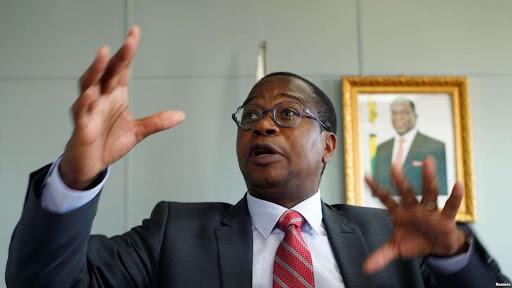
Civil servants are set to receive another salary adjustment in the first quarter of the coming year, the Government has confirmed, raising hopes of improved earnings for public sector workers amid rising living costs.
The development comes as Treasury finalises payment of staggered US$150 Special Presidential bonuses to members of the Public Service, including uniformed forces, pensioners and traditional leaders, which are expected to be fully disbursed by the end of this month.
Finance, Economic Development and Investment Promotion Minister Professor Mthuli Ncube revealed the planned salary adjustment while responding to the 2026 National Budget debate in the National Assembly last week. He said Treasury was obligated to make provision for civil service wage reviews, which would significantly draw from the Unallocated Reserves.
During the debate, legislators had urged Treasury to channel more resources towards government programmes such as the Basic Education Assistance Module (BEAM) and other social services, suggesting that funding could be sourced from the Unallocated Reserves. These reserves are contingency funds set aside during the budget process for expenses not immediately assigned to specific ministries or programmes.
However, Prof Ncube cautioned that the reserves were limited and already earmarked for several critical obligations.
"I would really like to persuade our colleagues. We have a limited purse," he said. "I know Hon Madzivanyika did mention that we seem to have a large Unallocated Reserve. I can assure you it is not large at all. It will go so fast and so quickly."
"One issue is the budget for salary adjustments for civil servants in the first quarter. It is going to happen and it is based on the job evaluation exercise. It is going to eat away quite a lot of that Unallocated Reserve. It will not go far," he added.
The Government recently converted the US$300 monthly Covid-19 allowance into a permanent allowance for public servants, a move that has increased Treasury's wage bill commitments.
Turning to BEAM, Prof Ncube said Cabinet had directed that an audit be conducted to assess the use of funds amid concerns that the programme was being abused.
"We have taken a position through Cabinet that an audit should be undertaken," he said. "What we are finding is that the system for identification of the vulnerable is being manipulated by those with influence and leverage in various areas. It appears that those who are genuinely in need are not benefiting."
He said the Government was reluctant to release further funds before the audit was completed.
Despite the concerns, Prof Ncube said Treasury had doubled BEAM's allocation from ZiG2,24 billion in 2025 to ZiG5,8 billion in 2026.
"We have ramped up the budget by 100 percent from what we had allocated last year," he said. "The main issue now is budget releases, but these are conditional on the audits being carried out."
The minister also raised questions about the overlap between BEAM and free education in Government schools, suggesting that some claims of arrears might not technically qualify as such.
"If beneficiaries of BEAM are in Government schools, to what extent is this not just free education where teachers and learning materials are already provided and learners are exempted from fees?" he asked. "Some of what we consider BEAM arrears may not really be arrears in that sense."
Earlier in the debate, Prof Ncube increased Parliament's budget vote by ZiG800 million after legislators argued that the legislature required more funding to effectively carry out its oversight role. Lawmakers had initially sought a ZiG1,5 billion increase from the proposed ZiG3,1 billion allocation.
"I have listened carefully to the contributions. Parliament does play a very critical oversight role over the executive," Prof Ncube said. "Members need resources for constituency research, travel within constituencies and representation outside our borders. To that extent, I propose that we increase Parliament's budget by another ZiG800 million."
The adjustments underscore mounting fiscal pressures as Treasury balances wage demands, social spending and institutional funding within tight budgetary limits.
The development comes as Treasury finalises payment of staggered US$150 Special Presidential bonuses to members of the Public Service, including uniformed forces, pensioners and traditional leaders, which are expected to be fully disbursed by the end of this month.
Finance, Economic Development and Investment Promotion Minister Professor Mthuli Ncube revealed the planned salary adjustment while responding to the 2026 National Budget debate in the National Assembly last week. He said Treasury was obligated to make provision for civil service wage reviews, which would significantly draw from the Unallocated Reserves.
During the debate, legislators had urged Treasury to channel more resources towards government programmes such as the Basic Education Assistance Module (BEAM) and other social services, suggesting that funding could be sourced from the Unallocated Reserves. These reserves are contingency funds set aside during the budget process for expenses not immediately assigned to specific ministries or programmes.
However, Prof Ncube cautioned that the reserves were limited and already earmarked for several critical obligations.
"I would really like to persuade our colleagues. We have a limited purse," he said. "I know Hon Madzivanyika did mention that we seem to have a large Unallocated Reserve. I can assure you it is not large at all. It will go so fast and so quickly."
"One issue is the budget for salary adjustments for civil servants in the first quarter. It is going to happen and it is based on the job evaluation exercise. It is going to eat away quite a lot of that Unallocated Reserve. It will not go far," he added.
The Government recently converted the US$300 monthly Covid-19 allowance into a permanent allowance for public servants, a move that has increased Treasury's wage bill commitments.
Turning to BEAM, Prof Ncube said Cabinet had directed that an audit be conducted to assess the use of funds amid concerns that the programme was being abused.
"We have taken a position through Cabinet that an audit should be undertaken," he said. "What we are finding is that the system for identification of the vulnerable is being manipulated by those with influence and leverage in various areas. It appears that those who are genuinely in need are not benefiting."
He said the Government was reluctant to release further funds before the audit was completed.
Despite the concerns, Prof Ncube said Treasury had doubled BEAM's allocation from ZiG2,24 billion in 2025 to ZiG5,8 billion in 2026.
"We have ramped up the budget by 100 percent from what we had allocated last year," he said. "The main issue now is budget releases, but these are conditional on the audits being carried out."
The minister also raised questions about the overlap between BEAM and free education in Government schools, suggesting that some claims of arrears might not technically qualify as such.
"If beneficiaries of BEAM are in Government schools, to what extent is this not just free education where teachers and learning materials are already provided and learners are exempted from fees?" he asked. "Some of what we consider BEAM arrears may not really be arrears in that sense."
Earlier in the debate, Prof Ncube increased Parliament's budget vote by ZiG800 million after legislators argued that the legislature required more funding to effectively carry out its oversight role. Lawmakers had initially sought a ZiG1,5 billion increase from the proposed ZiG3,1 billion allocation.
"I have listened carefully to the contributions. Parliament does play a very critical oversight role over the executive," Prof Ncube said. "Members need resources for constituency research, travel within constituencies and representation outside our borders. To that extent, I propose that we increase Parliament's budget by another ZiG800 million."
The adjustments underscore mounting fiscal pressures as Treasury balances wage demands, social spending and institutional funding within tight budgetary limits.
Source - The Herald
Join the discussion
Loading comments…





