News / National
Youths step in as flooded Gwanda bridge exposes ageing infrastructure
28 Dec 2025 at 07:15hrs |
0 Views
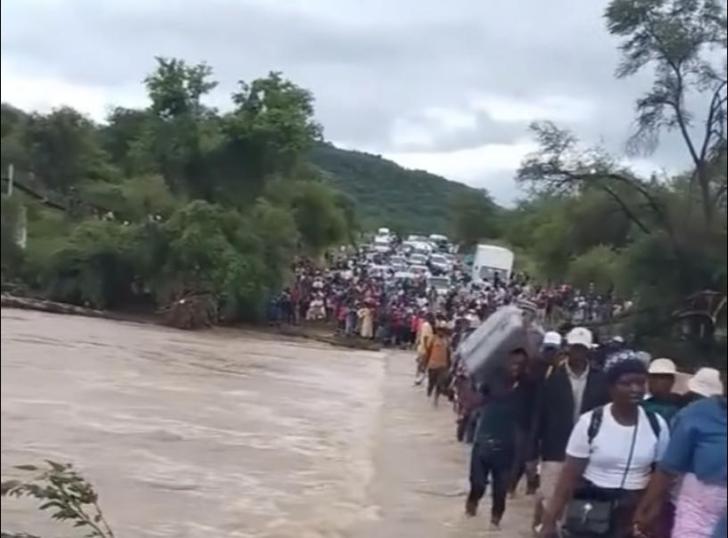
GWANDA - Heavy rains that lashed Gwanda District before Christmas turned the Mtshabezi River Bridge into a dangerous crossing, forcing travellers to rely on local youths for help as the ageing structure once again failed to withstand flooding.
The low‑lying bridge, one of the town's main entry points, was submerged for more than 24 hours after water levels rose sharply, leaving motorists and pedestrians stranded on either side. As the water slowly receded, some travellers attempted to cross on foot, many visibly shaken by the strong current and slippery surface.
Local youths stepped in to escort people across the waterlogged bridge, charging US$1 for light luggage and US$2 for heavier bags. For many travellers, the assistance was not only welcome but necessary.
Ms Talent Sibanda, who was travelling to Bulawayo, said she paid US$2 to have her suitcase carried across.
"With the water still overflowing, the driver was not sure it was safe to cross. I was scared of being swept away, especially with my suitcase," she said. "A young man offered to help, and I wouldn't have managed on my own."
Ms Nozipho Ndlovu said the current made the crossing intimidating.
"I was afraid to cross with my luggage. The assistance from the youths really helped," she said.
Others received help for free. Mrs Samantha Khupe, who had no luggage but lacked the confidence to cross alone, said a young man simply escorted her without asking for payment.
One of the youths, Mr Tapiwa Shumba, said their efforts were driven more by empathy than profit.
"Yes, we charged a small fee to some people, but it was never about making money. Some were travelling as far as Harare and were stuck," he said. "We helped elderly people and women without luggage for free because many were terrified of being swept away."
The Mtshabezi Bridge, built in the 1980s, is a critical link between Gwanda town, surrounding rural communities, Maphisa and major mining operations such as Blanket Mine. But the narrow, low‑lying structure has long struggled to cope with increased traffic brought by new settlements, business centres and mining activity.
Locals have repeatedly called for the bridge to be upgraded, describing it as a "death trap". Several fatal accidents have been recorded over the years, with some vehicles swept away during flooding. The bridge can barely accommodate one vehicle at a time, often causing confusion over right of way and increasing the risk of collisions.
With climate‑induced heavy rains becoming more frequent, residents fear the bridge will continue to endanger lives unless urgent government intervention is prioritised. For now, community spirit - and the quick thinking of local youths - is filling the gap left by ageing infrastructure.
The low‑lying bridge, one of the town's main entry points, was submerged for more than 24 hours after water levels rose sharply, leaving motorists and pedestrians stranded on either side. As the water slowly receded, some travellers attempted to cross on foot, many visibly shaken by the strong current and slippery surface.
Local youths stepped in to escort people across the waterlogged bridge, charging US$1 for light luggage and US$2 for heavier bags. For many travellers, the assistance was not only welcome but necessary.
Ms Talent Sibanda, who was travelling to Bulawayo, said she paid US$2 to have her suitcase carried across.
"With the water still overflowing, the driver was not sure it was safe to cross. I was scared of being swept away, especially with my suitcase," she said. "A young man offered to help, and I wouldn't have managed on my own."
Ms Nozipho Ndlovu said the current made the crossing intimidating.
Others received help for free. Mrs Samantha Khupe, who had no luggage but lacked the confidence to cross alone, said a young man simply escorted her without asking for payment.
One of the youths, Mr Tapiwa Shumba, said their efforts were driven more by empathy than profit.
"Yes, we charged a small fee to some people, but it was never about making money. Some were travelling as far as Harare and were stuck," he said. "We helped elderly people and women without luggage for free because many were terrified of being swept away."
The Mtshabezi Bridge, built in the 1980s, is a critical link between Gwanda town, surrounding rural communities, Maphisa and major mining operations such as Blanket Mine. But the narrow, low‑lying structure has long struggled to cope with increased traffic brought by new settlements, business centres and mining activity.
Locals have repeatedly called for the bridge to be upgraded, describing it as a "death trap". Several fatal accidents have been recorded over the years, with some vehicles swept away during flooding. The bridge can barely accommodate one vehicle at a time, often causing confusion over right of way and increasing the risk of collisions.
With climate‑induced heavy rains becoming more frequent, residents fear the bridge will continue to endanger lives unless urgent government intervention is prioritised. For now, community spirit - and the quick thinking of local youths - is filling the gap left by ageing infrastructure.
Source - Sunday News
Join the discussion
Loading comments…



