News / National
High Court dismisses RioZim corporate rescue application
09 Jan 2026 at 17:25hrs |
497 Views
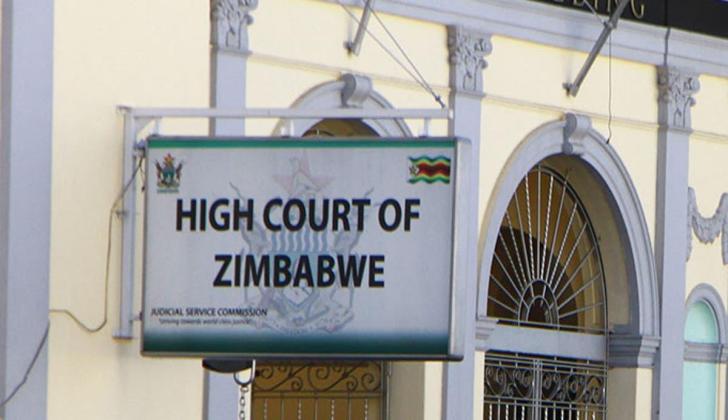
The High Court has rejected an application to place RioZim Limited under corporate rescue, with Justice Gibson Mandaza describing the union leading the push as a "busybody" and labelling the legal action an "abuse of the court process."
The Zimbabwe Diamond and Allied Minerals Workers Union (ZDAMWU) had filed the case alongside two individuals, Precious Mwanza and Owen Kapeta, arguing that the company was financially distressed following the death of its majority shareholder. The applicants claimed that corporate rescue was needed to safeguard jobs and protect key assets, including gold mines Renco and Cam & Motor, and Murowa Diamond Mine.
RioZim opposed the application, arguing that ZDAMWU was a general industry body and did not specifically represent the company's employees. The company also highlighted procedural failures, noting that the applicants had not properly notified "affected persons," such as creditors and shareholders, as required under the Insolvency Act.
Justice Mandaza ruled that legal standing was central to the case. He noted that while the law allows trade unions to initiate corporate rescue proceedings, the union must represent employees of the specific company. Citing Supreme Court precedent from Metallon Gold, he said:
"The Insolvency Act does not provide for a registered trade union in the industry, but specifically provides for one representing employees of the company. The first applicant lacks locus standi… It is just a ‘busybody' in the strictest sense of the word."
The court also dismissed attempts by the applicants to strike out RioZim's opposition, affirming that a company has the right to defend itself against supervision. Despite RioZim describing the application as "frivolous and vexatious," Justice Mandaza declined to award punitive costs, ruling that access to justice should not be deterred by potential financial penalties. Each party was ordered to bear its own legal costs.
RioZim has faced financial challenges due to a difficult macroeconomic environment, limited local lending, and reluctance by international financiers. A key factor has been a geological shift at the Cam & Motor Mine, which required a US$35 million capital investment that the company could not fully self-finance.
The company has launched a capital-raising initiative to stabilise production, and despite funding constraints, has reported improved output at some of its gold operations.
The Zimbabwe Diamond and Allied Minerals Workers Union (ZDAMWU) had filed the case alongside two individuals, Precious Mwanza and Owen Kapeta, arguing that the company was financially distressed following the death of its majority shareholder. The applicants claimed that corporate rescue was needed to safeguard jobs and protect key assets, including gold mines Renco and Cam & Motor, and Murowa Diamond Mine.
RioZim opposed the application, arguing that ZDAMWU was a general industry body and did not specifically represent the company's employees. The company also highlighted procedural failures, noting that the applicants had not properly notified "affected persons," such as creditors and shareholders, as required under the Insolvency Act.
Justice Mandaza ruled that legal standing was central to the case. He noted that while the law allows trade unions to initiate corporate rescue proceedings, the union must represent employees of the specific company. Citing Supreme Court precedent from Metallon Gold, he said:
The court also dismissed attempts by the applicants to strike out RioZim's opposition, affirming that a company has the right to defend itself against supervision. Despite RioZim describing the application as "frivolous and vexatious," Justice Mandaza declined to award punitive costs, ruling that access to justice should not be deterred by potential financial penalties. Each party was ordered to bear its own legal costs.
RioZim has faced financial challenges due to a difficult macroeconomic environment, limited local lending, and reluctance by international financiers. A key factor has been a geological shift at the Cam & Motor Mine, which required a US$35 million capital investment that the company could not fully self-finance.
The company has launched a capital-raising initiative to stabilise production, and despite funding constraints, has reported improved output at some of its gold operations.
Source - The Herald
Join the discussion
Loading comments…





