News / National
Madhuku rubbishes CJ Malaba claim
14 Jan 2026 at 18:44hrs |
0 Views
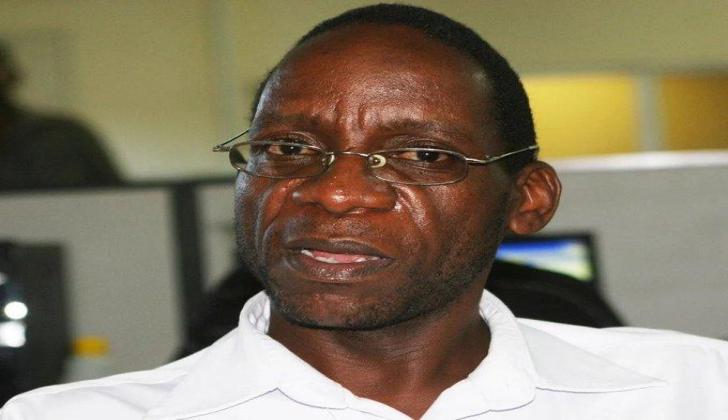
Law professor Lovemore Madhuku has challenged Chief Justice Luke Malaba's assertion that staff shortages are crippling Zimbabwe's justice system, arguing instead that procedural inefficiencies, rather than a lack of judges or magistrates, are the primary cause of delays.
Speaking after the official opening of the 2026 legal year, Madhuku acknowledged improvements in the timeliness of judgments, particularly through electronic platforms. He said the judiciary has made measurable progress, but warned against assuming that technology or additional staff alone could solve systemic delays.
"For a population of about 16 million, the number of judges is actually quite significant," Madhuku said. "What we have not fundamentally changed are the court procedures, which are inherently slow." He highlighted inefficiencies in the Integrated Electronic Case Management System (IECMS), noting frequent network disruptions during virtual hearings that often push litigants and lawyers to prefer physical hearings.
Madhuku also emphasized the importance of physical courtrooms in maintaining public confidence in the justice system. "There is something important about the public seeing justice being done in a physical courtroom. That element still matters," he said.
His sharpest criticism, however, was directed at court procedures that unnecessarily prolong hearings. "In the High Court, for example, a lawyer may be allowed to speak for an hour, when what they are saying could be said in 15 minutes. Then the opposing lawyer speaks for another hour," he said. By contrast, he praised the Supreme Court's strict time limits, which he said promote efficiency.
Madhuku concluded that unless court procedures are overhauled, adding more judges or rolling out technology will have limited impact. "That is where the real problem lies. The delays are not mainly about staffing levels or technology, they are about inefficient procedures," he said.
Chief Justice Malaba, speaking at the same event, painted a starkly different picture, warning that Zimbabwe's justice system is being carried by just 80 judges and 250 magistrates. He said the number of judicial officers must be "dramatically increased" to enable the judiciary to fulfill its constitutional mandate. Deputy Chief Justice Elizabeth Gwaunza echoed his concerns, cautioning that judges were working under "unbearable pressure" that could affect both the quality of justice and their health.
Madhuku maintained that focusing solely on staffing risks missing the real issue: the need for comprehensive procedural reform to improve efficiency across the courts.
Speaking after the official opening of the 2026 legal year, Madhuku acknowledged improvements in the timeliness of judgments, particularly through electronic platforms. He said the judiciary has made measurable progress, but warned against assuming that technology or additional staff alone could solve systemic delays.
"For a population of about 16 million, the number of judges is actually quite significant," Madhuku said. "What we have not fundamentally changed are the court procedures, which are inherently slow." He highlighted inefficiencies in the Integrated Electronic Case Management System (IECMS), noting frequent network disruptions during virtual hearings that often push litigants and lawyers to prefer physical hearings.
Madhuku also emphasized the importance of physical courtrooms in maintaining public confidence in the justice system. "There is something important about the public seeing justice being done in a physical courtroom. That element still matters," he said.
Madhuku concluded that unless court procedures are overhauled, adding more judges or rolling out technology will have limited impact. "That is where the real problem lies. The delays are not mainly about staffing levels or technology, they are about inefficient procedures," he said.
Chief Justice Malaba, speaking at the same event, painted a starkly different picture, warning that Zimbabwe's justice system is being carried by just 80 judges and 250 magistrates. He said the number of judicial officers must be "dramatically increased" to enable the judiciary to fulfill its constitutional mandate. Deputy Chief Justice Elizabeth Gwaunza echoed his concerns, cautioning that judges were working under "unbearable pressure" that could affect both the quality of justice and their health.
Madhuku maintained that focusing solely on staffing risks missing the real issue: the need for comprehensive procedural reform to improve efficiency across the courts.
Source - ZimLive
Join the discussion
Loading comments…





