News / National
Mnangagwa's 2030 bid hit by security chiefs' snub
15 Jan 2026 at 19:04hrs |
2029 Views
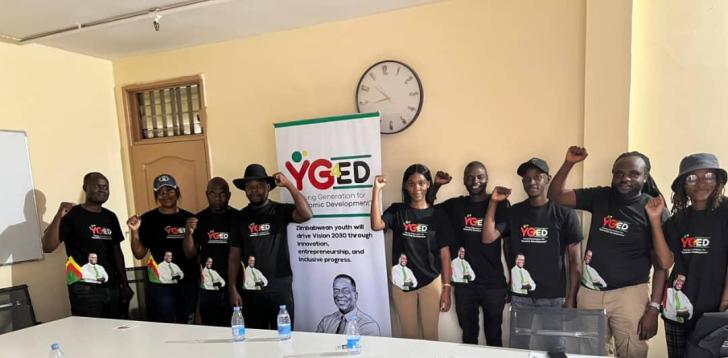
HARARE - President Emmerson Mnangagwa's reported bid to extend his term beyond 2028 has encountered resistance, with several former security chiefs declining to endorse the initiative. The Ex‑Security Members for Economic Development (X‑SECM4ED), a recently formed ZANU‑PF affiliate, is alleged to be struggling to recruit retired members of the Central Intelligence Organisation, the military and the police, reportedly due to concerns linked to their previous oaths of service.
The development has drawn scrutiny from opposition figures, who argue that former security leaders should not be involved in political mobilisation.
"It is unethical for former bosses to compromise their positions and influence currently serving members of the force," said Agency Gumbo, CCC MP for Hatcliffe.
Peace and security analyst Sydicks Muradzikwa said the emergence of X‑SECM4ED reflects attempts to draw former security networks into civilian political processes.
"That blurring of civilian and security roles raises quiet risks to political neutrality and stability. From a peace lens, such groupings can intimidate communities without ever issuing an open threat," Muradzikwa said.
He added that such formations could normalise mobilisation structures outside formal party frameworks.
"In relation to the 2030 term‑extension argument, such groups are framed as loyal to President Emmerson Mnangagwa and meant to manufacture consent rather than legality," he said.
Muradzikwa noted that Zimbabwe's Constitution clearly outlines presidential term limits, adding that amendments cannot be achieved through political pressure alone.
"The real danger is not a legal extension but the erosion of restraint around succession norms. Whether the plot succeeds depends less on slogans and more on elite cohesion within the state," he said.
He warned that if factionalism deepens, such groups could become rallying points for hard‑line political mobilisation.
Meanwhile, X‑SECM4ED national chairperson Innocent Chidhumo, popularly known as "Cde 2030 Zvoga", dismissed claims that the organisation had failed to attract influential former security leaders.
"Our organisation is doing well and it has the blessings of powerful retired military, police and intelligence personnel. Those claiming that we have failed to lure former security chiefs are daydreaming," Chidhumo said.
He said the group's push for a term extension was based on its belief in Mnangagwa's development agenda, adding that membership had surpassed 3 500.
Vice President General (Rtd) Constantino Chiwenga, widely viewed as a key figure in succession debates, has not publicly opposed the term‑extension calls. However, he has repeatedly emphasised the need to uphold constitutionalism and has spoken strongly against corruption.
Zimbabwe's Constitution remains explicit on presidential term limits, and analysts say amendments would require broad political consensus.
Mnangagwa's reported bid is seen as a test of elite cohesion within the state, with the stance of security actors expected to play a decisive role. Observers warn that if internal divisions widen, groups such as X‑SECM4ED could become focal points for more assertive political mobilisation.
The development has drawn scrutiny from opposition figures, who argue that former security leaders should not be involved in political mobilisation.
"It is unethical for former bosses to compromise their positions and influence currently serving members of the force," said Agency Gumbo, CCC MP for Hatcliffe.
Peace and security analyst Sydicks Muradzikwa said the emergence of X‑SECM4ED reflects attempts to draw former security networks into civilian political processes.
"That blurring of civilian and security roles raises quiet risks to political neutrality and stability. From a peace lens, such groupings can intimidate communities without ever issuing an open threat," Muradzikwa said.
He added that such formations could normalise mobilisation structures outside formal party frameworks.
"In relation to the 2030 term‑extension argument, such groups are framed as loyal to President Emmerson Mnangagwa and meant to manufacture consent rather than legality," he said.
Muradzikwa noted that Zimbabwe's Constitution clearly outlines presidential term limits, adding that amendments cannot be achieved through political pressure alone.
He warned that if factionalism deepens, such groups could become rallying points for hard‑line political mobilisation.
Meanwhile, X‑SECM4ED national chairperson Innocent Chidhumo, popularly known as "Cde 2030 Zvoga", dismissed claims that the organisation had failed to attract influential former security leaders.
"Our organisation is doing well and it has the blessings of powerful retired military, police and intelligence personnel. Those claiming that we have failed to lure former security chiefs are daydreaming," Chidhumo said.
He said the group's push for a term extension was based on its belief in Mnangagwa's development agenda, adding that membership had surpassed 3 500.
Vice President General (Rtd) Constantino Chiwenga, widely viewed as a key figure in succession debates, has not publicly opposed the term‑extension calls. However, he has repeatedly emphasised the need to uphold constitutionalism and has spoken strongly against corruption.
Zimbabwe's Constitution remains explicit on presidential term limits, and analysts say amendments would require broad political consensus.
Mnangagwa's reported bid is seen as a test of elite cohesion within the state, with the stance of security actors expected to play a decisive role. Observers warn that if internal divisions widen, groups such as X‑SECM4ED could become focal points for more assertive political mobilisation.
Source - Byo24News
Join the discussion
Loading comments…





