News / National
Chief Justice Malaba to retire in May
18 Jan 2026 at 07:29hrs |
0 Views
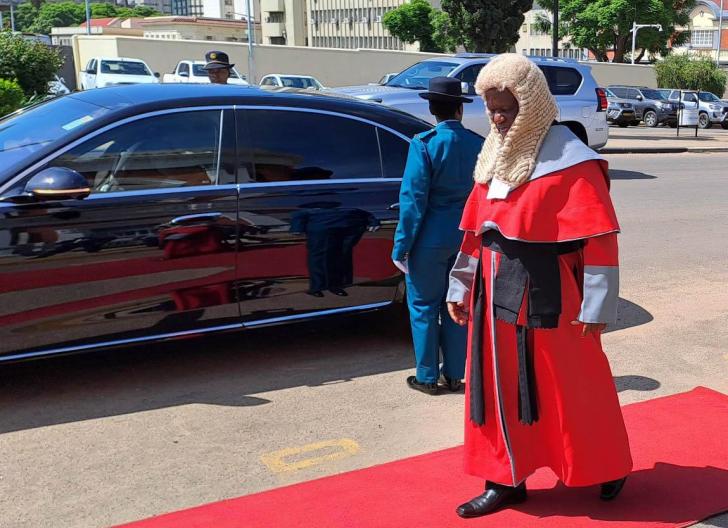
Chief Justice Luke Malaba will retire from his positions as Judge and Chief Justice on May 15 this year, the Judicial Service Commission (JSC) has announced.
In a statement released yesterday, the JSC said Chief Justice Malaba's last working day will be midnight on May 14, with a series of activities planned to mark the end of his long judicial career.
"On the 14th of May, there will be a special sitting of the court held in honour of the Honourable Chief Justice," the commission said. "On the same day, a dinner will be held to acknowledge and celebrate the services rendered by the Chief Justice to the nation as a Magistrate, Judge, Judge of Appeal and Chief Justice over a cumulative period of four decades."
The JSC said invitations to the commemorative events would be extended to colleagues and key constitutional bodies, including the Executive and Legislature, as well as other institutions within the justice sector. Colleagues from the region and beyond are also expected to attend.
Chief Justice Malaba's retirement is in line with Section 186(1) of the Constitution of Zimbabwe, which stipulates that the Chief Justice must retire upon reaching the age of 70, unless they elect to remain in office for a further five years. Five years ago, upon attaining that age, Chief Justice Malaba exercised the constitutional option to extend his tenure.
The commission also dismissed reports suggesting that Chief Justice Malaba was required to proceed on pre-retirement leave and had refused to do so, describing such claims as inaccurate.
"This is a misrepresentation of both the law and the facts," the JSC said. "There is no legal obligation for the Chief Justice to go on pre-retirement leave. The decision to take leave is discretionary, not mandatory. Characterising the exercise of a lawful discretion as a ‘refusal' is erroneous and creates a false impression of impropriety."
The JSC further rejected claims that no preparations were being made for the transition, stating that the relevant legal provisions clearly outline procedures to be followed upon the retirement of a Chief Justice and that these would be implemented in accordance with the law and established judicial practice.
"The public is entitled to accurate reporting, particularly on matters concerning the Judiciary," the commission said, urging the media outlet in question to correct the record in the interests of responsible journalism.
Chief Justice Malaba has served as Zimbabwe's Chief Justice since March 27, 2017. In that role, he is the head of the Judiciary, chairperson of the Judicial Service Commission and Council of the Judicial College. Prior to that, he was Zimbabwe's first Deputy Chief Justice from 2008 to 2017.
His legal career spans more than four decades. He has held letters of law for 44 years, practised law for 34 years and has been a registered legal practitioner for 25 years. His judicial service of 41 years saw him rise through the ranks from prosecutor between 1981 and 1984, magistrate from 1984 to 1994, High Court judge from 1994 to 2001, Judge of Appeal from 2001 to 2008, Deputy Chief Justice from 2008 to 2017, and finally Chief Justice from 2017 to date.
During his tenure as Judge of Appeal and Deputy Chief Justice, he also served as a judge of the COMESA Court of Justice for more than a decade, from 2005 to 2016.
Chief Justice Malaba is widely regarded as a human rights advocate, having delivered judgments protecting the rights of vulnerable groups, including women, children and persons with disabilities. As Chief Justice, he led reforms aimed at enhancing access to justice, including the construction of new courthouses across the country, the simplification of court rules and the expansion of judicial personnel in both the magistracy and superior courts.
Under his leadership, the Judiciary embarked on a major digitisation programme through the Integrated Electronic Case Management System (IECMS). The first phase was launched in May 2022 at the Constitutional Court, Supreme Court and the Commercial Division of the High Court, while the final phase was rolled out to magistrates' courts in July 2025.
An experienced trainer, Chief Justice Malaba has participated in numerous judicial training programmes locally and regionally. He also played a key role in strengthening continental judicial cooperation, including Zimbabwe's hosting of the 7th Congress of the Conference of Constitutional Jurisdictions of Africa and the African Electoral Justice Network. He currently serves as President of the Conference of Constitutional Jurisdictions of Africa for the 2024–2026 term.
He also established the Judicial Training Institute of Zimbabwe to develop human capital through the training of judicial and non-judicial staff within the Judicial Service Commission.
Chief Justice Malaba holds a law degree from the University of Warwick, obtained in 1974, and another from the University of Zimbabwe, earned in 1982.
In a statement released yesterday, the JSC said Chief Justice Malaba's last working day will be midnight on May 14, with a series of activities planned to mark the end of his long judicial career.
"On the 14th of May, there will be a special sitting of the court held in honour of the Honourable Chief Justice," the commission said. "On the same day, a dinner will be held to acknowledge and celebrate the services rendered by the Chief Justice to the nation as a Magistrate, Judge, Judge of Appeal and Chief Justice over a cumulative period of four decades."
The JSC said invitations to the commemorative events would be extended to colleagues and key constitutional bodies, including the Executive and Legislature, as well as other institutions within the justice sector. Colleagues from the region and beyond are also expected to attend.
Chief Justice Malaba's retirement is in line with Section 186(1) of the Constitution of Zimbabwe, which stipulates that the Chief Justice must retire upon reaching the age of 70, unless they elect to remain in office for a further five years. Five years ago, upon attaining that age, Chief Justice Malaba exercised the constitutional option to extend his tenure.
The commission also dismissed reports suggesting that Chief Justice Malaba was required to proceed on pre-retirement leave and had refused to do so, describing such claims as inaccurate.
"This is a misrepresentation of both the law and the facts," the JSC said. "There is no legal obligation for the Chief Justice to go on pre-retirement leave. The decision to take leave is discretionary, not mandatory. Characterising the exercise of a lawful discretion as a ‘refusal' is erroneous and creates a false impression of impropriety."
The JSC further rejected claims that no preparations were being made for the transition, stating that the relevant legal provisions clearly outline procedures to be followed upon the retirement of a Chief Justice and that these would be implemented in accordance with the law and established judicial practice.
"The public is entitled to accurate reporting, particularly on matters concerning the Judiciary," the commission said, urging the media outlet in question to correct the record in the interests of responsible journalism.
Chief Justice Malaba has served as Zimbabwe's Chief Justice since March 27, 2017. In that role, he is the head of the Judiciary, chairperson of the Judicial Service Commission and Council of the Judicial College. Prior to that, he was Zimbabwe's first Deputy Chief Justice from 2008 to 2017.
His legal career spans more than four decades. He has held letters of law for 44 years, practised law for 34 years and has been a registered legal practitioner for 25 years. His judicial service of 41 years saw him rise through the ranks from prosecutor between 1981 and 1984, magistrate from 1984 to 1994, High Court judge from 1994 to 2001, Judge of Appeal from 2001 to 2008, Deputy Chief Justice from 2008 to 2017, and finally Chief Justice from 2017 to date.
During his tenure as Judge of Appeal and Deputy Chief Justice, he also served as a judge of the COMESA Court of Justice for more than a decade, from 2005 to 2016.
Chief Justice Malaba is widely regarded as a human rights advocate, having delivered judgments protecting the rights of vulnerable groups, including women, children and persons with disabilities. As Chief Justice, he led reforms aimed at enhancing access to justice, including the construction of new courthouses across the country, the simplification of court rules and the expansion of judicial personnel in both the magistracy and superior courts.
Under his leadership, the Judiciary embarked on a major digitisation programme through the Integrated Electronic Case Management System (IECMS). The first phase was launched in May 2022 at the Constitutional Court, Supreme Court and the Commercial Division of the High Court, while the final phase was rolled out to magistrates' courts in July 2025.
An experienced trainer, Chief Justice Malaba has participated in numerous judicial training programmes locally and regionally. He also played a key role in strengthening continental judicial cooperation, including Zimbabwe's hosting of the 7th Congress of the Conference of Constitutional Jurisdictions of Africa and the African Electoral Justice Network. He currently serves as President of the Conference of Constitutional Jurisdictions of Africa for the 2024–2026 term.
He also established the Judicial Training Institute of Zimbabwe to develop human capital through the training of judicial and non-judicial staff within the Judicial Service Commission.
Chief Justice Malaba holds a law degree from the University of Warwick, obtained in 1974, and another from the University of Zimbabwe, earned in 1982.
Source - Sunday Mail
Join the discussion
Loading comments…





