News / National
Progress on Bulawayo-Vic Falls Road rehab very slow and uneven
18 Jan 2026 at 20:19hrs |
0 Views
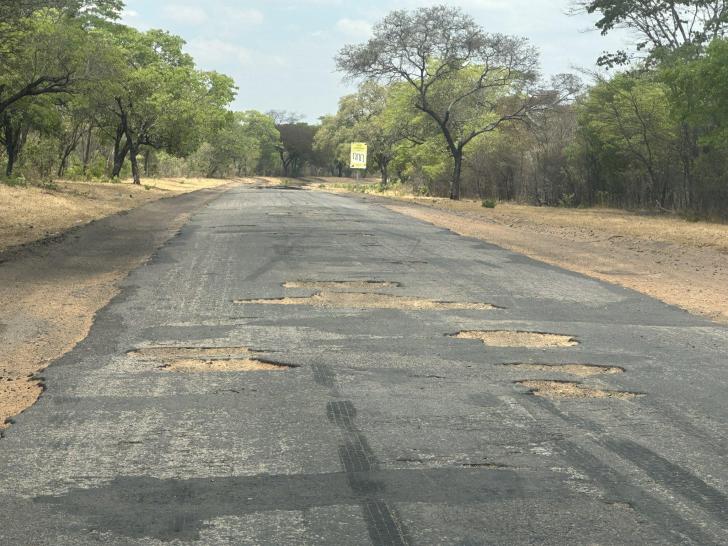
Concerns are mounting over whether the ambitious rehabilitation of the more than 440-kilometre Bulawayo–Victoria Falls highway will be completed by the government's end-of-year deadline, amid indications that progress on the ground remains slow and uneven.
Although authorities have so far opened about 45 kilometres of the highway to traffic, the rehabilitation has been carried out in short stretches, with some sections as brief as five kilometres being completed and commissioned at a time. Analysts and opposition legislators warn that unless the pace of work accelerates significantly, the project risks missing its target.
Nkayi South legislator Jabulani Hadebe of the Citizens Coalition for Change (CCC) said he was sceptical that the highway would be completed within the stated timeframe, arguing that delays have become a recurring feature of major infrastructure projects.
"It's no longer a year to the 2026 deadline. It will be a first for this government to complete such capital projects in time," Hadebe said. He accused the government of incompetence and failure to meet set targets, citing projects such as the Bulawayo–Nkayi, Bulawayo–Tsholotsho, Bulawayo–Kezi and Bulawayo–Gwanda roads as examples.
Hadebe said Parliament would intensify oversight to ensure accountability, adding that delays were often linked to weak supervision and late release of funds. He said lawmakers would exert pressure on the Ministry of Transport, which supervises contractors, and on the Ministry of Finance to ensure timely disbursement of funds.
The Bulawayo–Victoria Falls highway is a critical economic artery linking Zimbabwe's second-largest city to its premier tourist destination, as well as regional trade routes into Zambia and Botswana. The road has for years been in a poor state, prompting government to embark on a phased rehabilitation programme involving multiple contractors.
Bulawayo-based social commentator Effie Ncube said the current pace of work did not reflect the strategic importance of the road. He argued that the refurbishment required far greater urgency, describing the current progress as too slow to meet the agreed timeline.
Ncube called for stronger supervision and increased allocation of resources, saying these were urgently needed to avoid further delays on a project that was long overdue.
Another analyst echoed similar concerns, warning that without drastic changes the 2026 deadline may be unrealistic. The analyst said government could consider engaging more contractors to speed up the work, stressing that the road was vital to the economy and needed to be restored without further delays.
The analyst also pointed to capacity challenges among some contractors, particularly when government payments are delayed. According to the analyst, limited access to plant and capital means contractors struggle to operate effectively whenever funding is not released on time.
Despite the criticism, government officials insist the project is progressing well and could be completed sooner than critics predict. Matabeleland North Provincial Affairs and Devolution Minister Richard Moyo said rehabilitation works began in earnest in August last year and were on track, apart from disruptions caused by funding delays and heavy rains.
Moyo said contractors were targeting an eight- to 10-month completion period, provided there were no financial disturbances. He expressed confidence that the rehabilitation programme could be completed by August or September this year, adding that the pace of work was satisfactory.
He acknowledged that the rainy season had slowed progress in some areas but said contractors resumed work whenever conditions allowed.
Despite these assurances, questions remain over whether the incremental approach of opening small sections intermittently can deliver a fully rehabilitated highway within the promised timeframe. With the road central to tourism, trade and regional connectivity, stakeholders say its timely completion will be a key test of the government's ability to deliver large-scale infrastructure projects as promised.
Although authorities have so far opened about 45 kilometres of the highway to traffic, the rehabilitation has been carried out in short stretches, with some sections as brief as five kilometres being completed and commissioned at a time. Analysts and opposition legislators warn that unless the pace of work accelerates significantly, the project risks missing its target.
Nkayi South legislator Jabulani Hadebe of the Citizens Coalition for Change (CCC) said he was sceptical that the highway would be completed within the stated timeframe, arguing that delays have become a recurring feature of major infrastructure projects.
"It's no longer a year to the 2026 deadline. It will be a first for this government to complete such capital projects in time," Hadebe said. He accused the government of incompetence and failure to meet set targets, citing projects such as the Bulawayo–Nkayi, Bulawayo–Tsholotsho, Bulawayo–Kezi and Bulawayo–Gwanda roads as examples.
Hadebe said Parliament would intensify oversight to ensure accountability, adding that delays were often linked to weak supervision and late release of funds. He said lawmakers would exert pressure on the Ministry of Transport, which supervises contractors, and on the Ministry of Finance to ensure timely disbursement of funds.
The Bulawayo–Victoria Falls highway is a critical economic artery linking Zimbabwe's second-largest city to its premier tourist destination, as well as regional trade routes into Zambia and Botswana. The road has for years been in a poor state, prompting government to embark on a phased rehabilitation programme involving multiple contractors.
Bulawayo-based social commentator Effie Ncube said the current pace of work did not reflect the strategic importance of the road. He argued that the refurbishment required far greater urgency, describing the current progress as too slow to meet the agreed timeline.
Another analyst echoed similar concerns, warning that without drastic changes the 2026 deadline may be unrealistic. The analyst said government could consider engaging more contractors to speed up the work, stressing that the road was vital to the economy and needed to be restored without further delays.
The analyst also pointed to capacity challenges among some contractors, particularly when government payments are delayed. According to the analyst, limited access to plant and capital means contractors struggle to operate effectively whenever funding is not released on time.
Despite the criticism, government officials insist the project is progressing well and could be completed sooner than critics predict. Matabeleland North Provincial Affairs and Devolution Minister Richard Moyo said rehabilitation works began in earnest in August last year and were on track, apart from disruptions caused by funding delays and heavy rains.
Moyo said contractors were targeting an eight- to 10-month completion period, provided there were no financial disturbances. He expressed confidence that the rehabilitation programme could be completed by August or September this year, adding that the pace of work was satisfactory.
He acknowledged that the rainy season had slowed progress in some areas but said contractors resumed work whenever conditions allowed.
Despite these assurances, questions remain over whether the incremental approach of opening small sections intermittently can deliver a fully rehabilitated highway within the promised timeframe. With the road central to tourism, trade and regional connectivity, stakeholders say its timely completion will be a key test of the government's ability to deliver large-scale infrastructure projects as promised.
Source - Southern Eye
Join the discussion
Loading comments…





