News / National
Bulawayo dams still low despite persistent rains
18 Jan 2026 at 20:22hrs |
0 Views
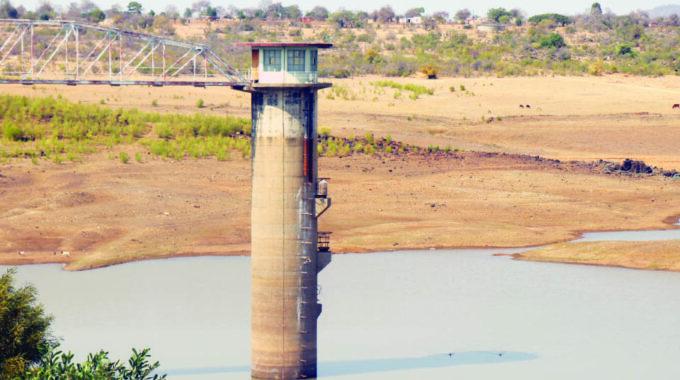
Bulawayo's water supply remains under severe strain as the city's supply dams continue to record critically low levels, all below 50 percent capacity, despite heavy rainfall across other parts of Zimbabwe. The dams supplying the city, including Mtshabezi, Umzingwane, Inyankuni, Upper Ncema, Lower Ncema, and Insiza, have failed to register significant inflows, putting the city's water security at risk.
According to the Zimbabwe National Water Authority (Zinwa), as of 14 January, Insiza Dam was the best-performing reservoir at 45,9 percent full, while Upper Ncema and Lower Ncema dams were at 35,2 percent and 31,9 percent, respectively. Umzingwane Dam was at 28,8 percent, and Inyankuni Dam was critically low at just 10,6 percent. The situation starkly contrasts with the national average dam level of 85,6 percent.
Authorities have long warned that Bulawayo's semi-arid climate, rising population, aging infrastructure, and increasing demand make the city particularly vulnerable to water shortages. Illegal gold panning has compounded the problem, with riverbeds in the catchment areas of Upper Ncema, Inyankuni, and Umzingwane dams reportedly destroyed by panners seeking alluvial gold. City patrols have arrested offenders and confiscated equipment, but the threat remains persistent.
The Bulawayo City Council (BCC) has identified three urgent interventions to alleviate the crisis: the construction of Glass Block Dam in Insiza District, the repair of the Ncema water treatment plant, and the rehabilitation of 22 boreholes at the Nyamandlovu Aquifer. However, funding remains a major obstacle, and the Glass Block Dam feasibility studies date back to 1988. The council believes that declaring Bulawayo a water crisis area could unlock funding opportunities.
Research presented at last year's Bulawayo Economic Development Conference highlighted the potential of innovative strategies to address the water shortage, including water recycling, rainwater harvesting, smart metering, and community participation. Presenters also emphasized the need to reduce non-revenue water, modernize outdated systems, and improve sewer management.
Historically, Bulawayo's dam levels have fluctuated, with a general downward trend in recent years. By the end of the rainy season in 2015, dams were 71 percent full, dropping to 35,27 percent in 2020. Levels slightly improved in subsequent years but remain far below what is needed for sustainable water supply. Records show the lowest dam levels in the past two decades occurred in 1995 when reservoirs were only 12 percent full.
With new suburbs and a growing population placing additional pressure on limited resources, authorities continue to urge residents and industries to practice water conservation as the municipality grapples with the ongoing crisis. Without significant investment and infrastructural upgrades, Bulawayo's water insecurity is expected to persist, threatening both households and economic activities in the city.
According to the Zimbabwe National Water Authority (Zinwa), as of 14 January, Insiza Dam was the best-performing reservoir at 45,9 percent full, while Upper Ncema and Lower Ncema dams were at 35,2 percent and 31,9 percent, respectively. Umzingwane Dam was at 28,8 percent, and Inyankuni Dam was critically low at just 10,6 percent. The situation starkly contrasts with the national average dam level of 85,6 percent.
Authorities have long warned that Bulawayo's semi-arid climate, rising population, aging infrastructure, and increasing demand make the city particularly vulnerable to water shortages. Illegal gold panning has compounded the problem, with riverbeds in the catchment areas of Upper Ncema, Inyankuni, and Umzingwane dams reportedly destroyed by panners seeking alluvial gold. City patrols have arrested offenders and confiscated equipment, but the threat remains persistent.
Research presented at last year's Bulawayo Economic Development Conference highlighted the potential of innovative strategies to address the water shortage, including water recycling, rainwater harvesting, smart metering, and community participation. Presenters also emphasized the need to reduce non-revenue water, modernize outdated systems, and improve sewer management.
Historically, Bulawayo's dam levels have fluctuated, with a general downward trend in recent years. By the end of the rainy season in 2015, dams were 71 percent full, dropping to 35,27 percent in 2020. Levels slightly improved in subsequent years but remain far below what is needed for sustainable water supply. Records show the lowest dam levels in the past two decades occurred in 1995 when reservoirs were only 12 percent full.
With new suburbs and a growing population placing additional pressure on limited resources, authorities continue to urge residents and industries to practice water conservation as the municipality grapples with the ongoing crisis. Without significant investment and infrastructural upgrades, Bulawayo's water insecurity is expected to persist, threatening both households and economic activities in the city.
Source - online
Join the discussion
Loading comments…




