News / National
US dollar remains dominant as ZiG struggles for relevance
20 Jan 2026 at 17:58hrs |
1360 Views
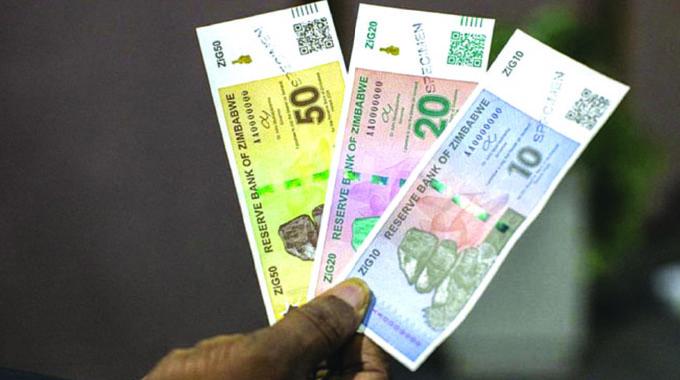
Despite government efforts to promote the gold-backed Zimbabwe Gold (ZiG) currency and claims that it has brought exchange rate stability, the United States dollar remains the most dominant currency in circulation and the real anchor of Zimbabwe's financial system.
By early 2026, about 80 percent of transactions are being conducted in US dollars, with only 20 percent done in local currency, highlighting the limited traction gained by ZiG nearly two years after its introduction.
Government has maintained that ZiG is part of a broader policy roadmap aimed at making it the sole legal tender by 2030, following lobbying from business and some captains of industry. At one point, officials had set an ambitious target to achieve full de-dollarisation by mid-2026.
However, continued heavy reliance on the US dollar reflects deep-seated public preference for the stable foreign currency, shaped by past experiences such as the 2008 economic meltdown, hyperinflation and the collapse of successive versions of the Zimbabwean dollar.
In its latest investment note, Imara Asset Management says the ZiG currency faces significant challenges, not from rapid devaluation, but from irrelevance and unsustainably low usage. The firm notes that most transactions continue to be conducted in US dollars despite initial stability in ZiG and some adoption within the formal sector.
Imara, which is run by John Legat and Shelton Sibanda, highlights weak public trust and policy-related factors as key obstacles, arguing that ZiG is struggling to gain traction as a transactional currency despite efforts by the Reserve Bank of Zimbabwe (RBZ).
"For the economy as a whole though, the real driver has been the US dollar, in which most wages are now paid and commodities are sold," Imara said.
"US dollar inflation has remained relatively low, implying that real incomes have been rising, and that usually results in higher consumption."
The investment firm noted that this trend is not uniform across society, with city dwellers facing higher rental and transport costs alongside modest wage increases.
Imara further observed that while corporate executives publicly applaud the stability of ZiG as beneficial to their businesses, it is in fact the US dollar that is providing the stability and enabling firms to procure inputs locally and internationally.
"The ZWG is barely used these days, but at least its stability implies less of a distraction for management who can instead focus on running their businesses," the note said.
According to Imara, apart from economic authorities, ZiG is rarely mentioned in everyday economic discourse, with the de-dollarisation debate seemingly taking a back seat and the 2030 deadline no longer being emphasised.
"The focus seems to be on meeting some clearly identifiable hurdles," Imara said. "Long may that last."
The analysis suggests that unless fundamental trust issues are resolved, ZiG's prospects of becoming the dominant transactional currency remain limited, with the US dollar firmly entrenched in Zimbabwe's economy for the foreseeable future.
By early 2026, about 80 percent of transactions are being conducted in US dollars, with only 20 percent done in local currency, highlighting the limited traction gained by ZiG nearly two years after its introduction.
Government has maintained that ZiG is part of a broader policy roadmap aimed at making it the sole legal tender by 2030, following lobbying from business and some captains of industry. At one point, officials had set an ambitious target to achieve full de-dollarisation by mid-2026.
However, continued heavy reliance on the US dollar reflects deep-seated public preference for the stable foreign currency, shaped by past experiences such as the 2008 economic meltdown, hyperinflation and the collapse of successive versions of the Zimbabwean dollar.
In its latest investment note, Imara Asset Management says the ZiG currency faces significant challenges, not from rapid devaluation, but from irrelevance and unsustainably low usage. The firm notes that most transactions continue to be conducted in US dollars despite initial stability in ZiG and some adoption within the formal sector.
Imara, which is run by John Legat and Shelton Sibanda, highlights weak public trust and policy-related factors as key obstacles, arguing that ZiG is struggling to gain traction as a transactional currency despite efforts by the Reserve Bank of Zimbabwe (RBZ).
"For the economy as a whole though, the real driver has been the US dollar, in which most wages are now paid and commodities are sold," Imara said.
"US dollar inflation has remained relatively low, implying that real incomes have been rising, and that usually results in higher consumption."
The investment firm noted that this trend is not uniform across society, with city dwellers facing higher rental and transport costs alongside modest wage increases.
Imara further observed that while corporate executives publicly applaud the stability of ZiG as beneficial to their businesses, it is in fact the US dollar that is providing the stability and enabling firms to procure inputs locally and internationally.
"The ZWG is barely used these days, but at least its stability implies less of a distraction for management who can instead focus on running their businesses," the note said.
According to Imara, apart from economic authorities, ZiG is rarely mentioned in everyday economic discourse, with the de-dollarisation debate seemingly taking a back seat and the 2030 deadline no longer being emphasised.
"The focus seems to be on meeting some clearly identifiable hurdles," Imara said. "Long may that last."
The analysis suggests that unless fundamental trust issues are resolved, ZiG's prospects of becoming the dominant transactional currency remain limited, with the US dollar firmly entrenched in Zimbabwe's economy for the foreseeable future.
Source - online
Join the discussion
Loading comments…




