News / National
Mthuli pushes technology-driven mineral industrialisation
22 Jan 2026 at 12:09hrs |
0 Views
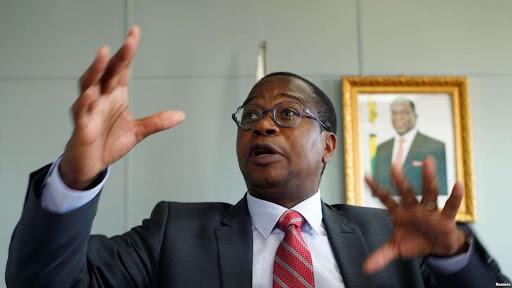
Minister of Finance, Economic Development and Investment Promotion Professor Mthulisi Ncube has urged African countries to urgently adopt modern technologies, including artificial intelligence, to add value to their mineral resources and maximise economic returns from the continent's vast natural wealth.
Prof Ncube made the remarks on the sidelines of the African Investment Promotion Conference held yesterday, which brought together policymakers, investors and development partners to explore strategies for attracting sustainable investment and accelerating industrialisation across Africa.
"Africa can no longer afford to remain a supplier of raw minerals to the rest of the world," said Prof Ncube. "If we are serious about transforming our economies, we must embrace modern technology and artificial intelligence to move up the value chain and extract maximum value from our mineral resources."
He said integrating advanced technologies into mining and mineral processing would enhance efficiency, transparency and competitiveness, while also supporting better environmental management.
"Artificial intelligence allows us to optimise exploration, improve beneficiation processes and reduce costs. This is how African countries can turn mineral wealth into inclusive economic growth," he said.
Prof Ncube noted that Africa's long-standing reliance on exporting raw minerals has significantly constrained development across the continent.
"For decades, Africa has exported minerals in their raw form and imported finished products at a much higher cost. That model does not serve our development aspirations," he said. "Technology gives us the opportunity to reverse this trend and build strong industrial bases anchored on our own resources."
Turning to Zimbabwe, Prof Ncube said the country is positioning itself to leverage technological innovation as part of its broader investment promotion and economic reform agenda.
"We are deliberately creating an enabling environment that supports investment in value addition, innovation and skills development. This includes aligning our policies to attract investors who bring technology, capital and expertise," he said.
He added that the adoption of digital solutions and artificial intelligence also boosts investor confidence.
"Modern technology improves data accuracy, governance and accountability. Investors want clarity, efficiency and predictability, and technology helps us deliver exactly that," said Prof Ncube.
The minister also called for greater collaboration among African countries, stressing the need to share knowledge and build regional value chains.
"No single country can do this alone. We must cooperate as a continent, pool our resources and harmonise our strategies so that Africa benefits collectively from its mineral endowment," he said.
Prof Ncube said platforms such as the African Investment Promotion Conference are vital for shaping a shared continental vision.
"These engagements allow us to align policy, capital and innovation. They are essential if Africa is to fully harness its natural resources for sustainable development," he said.
The conference has emerged as a key forum for discussions on how Africa can transition from exporting raw minerals to producing value-added industrial products that drive long-term economic growth.
Prof Ncube made the remarks on the sidelines of the African Investment Promotion Conference held yesterday, which brought together policymakers, investors and development partners to explore strategies for attracting sustainable investment and accelerating industrialisation across Africa.
"Africa can no longer afford to remain a supplier of raw minerals to the rest of the world," said Prof Ncube. "If we are serious about transforming our economies, we must embrace modern technology and artificial intelligence to move up the value chain and extract maximum value from our mineral resources."
He said integrating advanced technologies into mining and mineral processing would enhance efficiency, transparency and competitiveness, while also supporting better environmental management.
"Artificial intelligence allows us to optimise exploration, improve beneficiation processes and reduce costs. This is how African countries can turn mineral wealth into inclusive economic growth," he said.
Prof Ncube noted that Africa's long-standing reliance on exporting raw minerals has significantly constrained development across the continent.
"For decades, Africa has exported minerals in their raw form and imported finished products at a much higher cost. That model does not serve our development aspirations," he said. "Technology gives us the opportunity to reverse this trend and build strong industrial bases anchored on our own resources."
Turning to Zimbabwe, Prof Ncube said the country is positioning itself to leverage technological innovation as part of its broader investment promotion and economic reform agenda.
"We are deliberately creating an enabling environment that supports investment in value addition, innovation and skills development. This includes aligning our policies to attract investors who bring technology, capital and expertise," he said.
He added that the adoption of digital solutions and artificial intelligence also boosts investor confidence.
"Modern technology improves data accuracy, governance and accountability. Investors want clarity, efficiency and predictability, and technology helps us deliver exactly that," said Prof Ncube.
The minister also called for greater collaboration among African countries, stressing the need to share knowledge and build regional value chains.
"No single country can do this alone. We must cooperate as a continent, pool our resources and harmonise our strategies so that Africa benefits collectively from its mineral endowment," he said.
Prof Ncube said platforms such as the African Investment Promotion Conference are vital for shaping a shared continental vision.
"These engagements allow us to align policy, capital and innovation. They are essential if Africa is to fully harness its natural resources for sustainable development," he said.
The conference has emerged as a key forum for discussions on how Africa can transition from exporting raw minerals to producing value-added industrial products that drive long-term economic growth.
Source - online
Join the discussion
Loading comments…



