News / National
White farmer group seeks Trump's help to push Zimbabwe for compensation
22 Jan 2026 at 14:20hrs |
0 Views
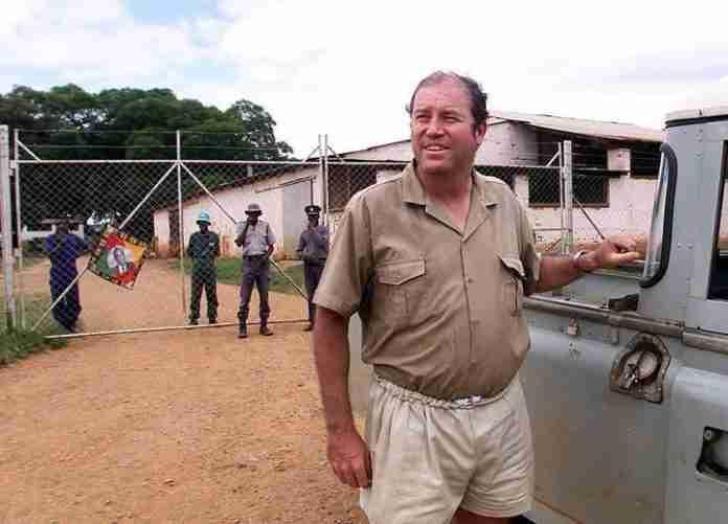
A group of white commercial farmers in Zimbabwe has enlisted the services of a United States lobbying firm with close ties to President Donald Trump in a renewed bid to secure billions of dollars in long-outstanding compensation linked to the country's land reform programme.
According to filings under the US Foreign Agents Registration Act (FARA), Mercury Public Affairs, a Washington-based lobbying firm, has agreed to advocate on behalf of the farmers' compensation claims without charging a fee. The move signals a strategic attempt by the farmers to leverage the political influence of figures aligned to the Trump administration.
Mercury partner Bryan Lanza, who is directly involved in the initiative, previously served as a senior campaign adviser to Trump and as communications director on the president's first transition team. Trump's current White House Chief of Staff, Susie Wiles, is also a former co-chair of Mercury, underscoring the firm's deep connections within Republican political circles.
In a letter dated December 2 and included in the FARA filing, Dror Besserglik, managing director of Johannesburg-based OB Projects Management, formally requested Mercury's assistance in lobbying US officials and members of Congress to push for payment of compensation to Zimbabwean farmers.
"The services you will provide include contacting appropriate officials in the current administration and Congress to promote paying the Zimbabwean farmers," Besserglik wrote.
Zimbabwe's land reform programme, launched in the early 2000s, led to the compulsory acquisition of white-owned commercial farms. In 2020, President Emmerson Mnangagwa's government agreed to compensate affected farmers to the tune of US$3.5 billion, covering improvements on the land but not the land itself. However, progress has been slow, with Treasury allocating just US$10 million in the 2026 national budget to compensate about 740 farmers.
Mercury's involvement is notable given that the firm previously represented the Zimbabwean government between 2019 and 2021, during which Harare paid a monthly retainer of US$90,000 as it sought relief from US sanctions imposed in 2001. Those sanctions were partly triggered by the land reform process and concerns over governance and human rights.
The farmers' decision to turn to Mercury also aligns with the Trump administration's broader narrative that white minorities in parts of southern Africa face discrimination under Black-majority governments. Trump has repeatedly promoted the widely discredited claim that white farmers in South Africa are victims of genocide and has even offered them refugee status in the United States.
The compensation issue has already gained traction among US Republicans. In September, Brian Mast, a Florida congressman and chair of the House Foreign Affairs Committee, introduced legislation seeking to block Zimbabwe from accessing new funding from the International Monetary Fund and the World Bank until it fully settles compensation claims. The bill has passed the committee stage but is yet to be debated by the full House.
OB Projects Management was contracted by the Property and Farm Compensation Association (Profca), which represents former Zimbabwean farmers. In his correspondence with Mercury, Besserglik said OB Projects was also acting on behalf of the Commercial Farmers Union (CFU), the Southern African Commercial Farmers Alliance, and Valuation Consortium Ltd.
However, the CFU has distanced itself from the initiative. CFU president Liam Philp said the organisation was unaware of the lobbying effort and only learned of it after being shown the FARA filing. He said Profca later told him the CFU's inclusion was a "mistake," adding that he was seeking clarity on the matter.
As part of the engagement, Mercury has been tasked with lobbying the US government to support Zimbabwe's debt clearance and the establishment of new financing arrangements that could unlock funds to meet compensation obligations.
The development adds a new international dimension to Zimbabwe's unresolved land compensation issue, which remains a key obstacle to re-engagement with Western lenders and to the country's efforts to normalise relations with the United States and other creditors.
According to filings under the US Foreign Agents Registration Act (FARA), Mercury Public Affairs, a Washington-based lobbying firm, has agreed to advocate on behalf of the farmers' compensation claims without charging a fee. The move signals a strategic attempt by the farmers to leverage the political influence of figures aligned to the Trump administration.
Mercury partner Bryan Lanza, who is directly involved in the initiative, previously served as a senior campaign adviser to Trump and as communications director on the president's first transition team. Trump's current White House Chief of Staff, Susie Wiles, is also a former co-chair of Mercury, underscoring the firm's deep connections within Republican political circles.
In a letter dated December 2 and included in the FARA filing, Dror Besserglik, managing director of Johannesburg-based OB Projects Management, formally requested Mercury's assistance in lobbying US officials and members of Congress to push for payment of compensation to Zimbabwean farmers.
"The services you will provide include contacting appropriate officials in the current administration and Congress to promote paying the Zimbabwean farmers," Besserglik wrote.
Zimbabwe's land reform programme, launched in the early 2000s, led to the compulsory acquisition of white-owned commercial farms. In 2020, President Emmerson Mnangagwa's government agreed to compensate affected farmers to the tune of US$3.5 billion, covering improvements on the land but not the land itself. However, progress has been slow, with Treasury allocating just US$10 million in the 2026 national budget to compensate about 740 farmers.
The farmers' decision to turn to Mercury also aligns with the Trump administration's broader narrative that white minorities in parts of southern Africa face discrimination under Black-majority governments. Trump has repeatedly promoted the widely discredited claim that white farmers in South Africa are victims of genocide and has even offered them refugee status in the United States.
The compensation issue has already gained traction among US Republicans. In September, Brian Mast, a Florida congressman and chair of the House Foreign Affairs Committee, introduced legislation seeking to block Zimbabwe from accessing new funding from the International Monetary Fund and the World Bank until it fully settles compensation claims. The bill has passed the committee stage but is yet to be debated by the full House.
OB Projects Management was contracted by the Property and Farm Compensation Association (Profca), which represents former Zimbabwean farmers. In his correspondence with Mercury, Besserglik said OB Projects was also acting on behalf of the Commercial Farmers Union (CFU), the Southern African Commercial Farmers Alliance, and Valuation Consortium Ltd.
However, the CFU has distanced itself from the initiative. CFU president Liam Philp said the organisation was unaware of the lobbying effort and only learned of it after being shown the FARA filing. He said Profca later told him the CFU's inclusion was a "mistake," adding that he was seeking clarity on the matter.
As part of the engagement, Mercury has been tasked with lobbying the US government to support Zimbabwe's debt clearance and the establishment of new financing arrangements that could unlock funds to meet compensation obligations.
The development adds a new international dimension to Zimbabwe's unresolved land compensation issue, which remains a key obstacle to re-engagement with Western lenders and to the country's efforts to normalise relations with the United States and other creditors.
Source - Bloomberg/additional reporting by newZWire
Join the discussion
Loading comments…





