News / National
RBZ to entrench stability in push to monocurrency
23 Jan 2026 at 07:57hrs |
489 Views
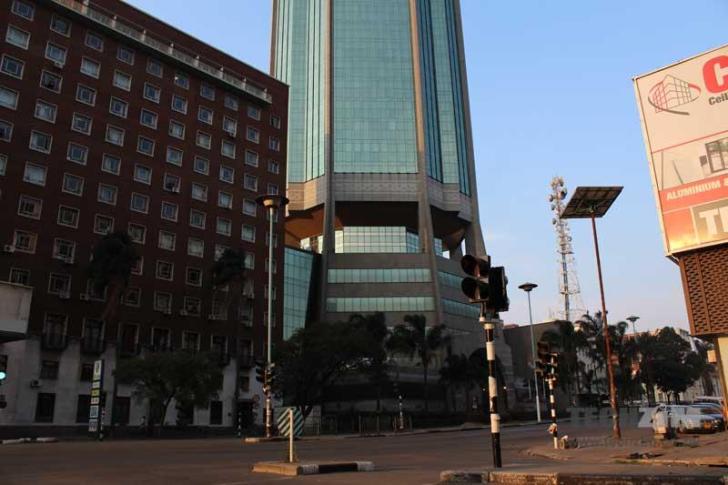
The Reserve Bank of Zimbabwe (RBZ) will sustain its push towards the adoption of a single domestic currency for all internal transactions, building on economic gains recorded in 2025, while emphasising that the transition will be gradual and guided by economic conditions rather than fixed timelines.
Speaking on behalf of RBZ Governor Dr John Mushayavanhu at the State of the Economy and 2026 Economic Outlook breakfast meeting in Harare yesterday, RBZ deputy governor Dr Innocent Matshe said a domestic currency remains a non-negotiable prerequisite for national competitiveness and long-term economic stability.
The breakfast meeting was organised by regional independent think-tank Africa Economic Development Strategies (AEDS) in partnership with Business Times.
Dr Matshe said the central bank's roadmap towards mono-currency adoption is anchored on the performance of the Zimbabwe Gold (ZiG), which was introduced on April 5, 2024 as a structured currency backed by gold and foreign currency reserves, underpinned by strengthened fiscal and monetary discipline.
Since its introduction, the ZiG has demonstrated resilience, with inflation contained and the exchange rate stabilised. The currency has strengthened by about 1,5 percent against the US dollar since the beginning of the year, trading at around ZiG25,59 to the US dollar.
"The adoption of mono-currency will not be driven by dates, but by the conditions in which the economy is rapidly transitioning," said Dr Matshe, adding that the process will be implemented in stages.
He said the transition would be guided by key macroeconomic milestones, including sustained low inflation and the accumulation of foreign currency reserves equivalent to at least 3,6 months of import cover. Zimbabwe, he noted, is moving towards this threshold as exports continue to outpace imports, resulting in a positive balance of trade.
To support the shift, the RBZ is prioritising a unified exchange rate system, stable currency dynamics and reforms to the tax framework to ensure that public services are paid for in local currency. The strategy is also underpinned by close policy coordination between the Treasury and the central bank to maintain sustainable budget deficits and rebuild public confidence.
Borrowing, Dr Matshe said, is now limited to capital projects with clear and immediate revenue streams to service the debt.
As part of efforts to strengthen confidence in the ZiG, the RBZ plans to release durable, modern and secure banknotes late in the first quarter or early in the second quarter of this year.
"Overall, the Reserve Bank will aim to entrench macroeconomic stability in support of the roadmap to mono-currency and the attainment of National Development Strategy 2 objectives of achieving an upper-middle-income society by 2030," he said.
Zimbabwe has legally extended the use of the multi-currency system until December 31, 2030, providing policy certainty after the previous 2025 deadline created uncertainty and constrained long-term US dollar lending by banks.
Dr Matshe said the central bank's strategy is supported by strong macroeconomic indicators recorded over the past year. Annual ZiG inflation fell sharply to 15 percent by early last year, beating the initial 30 percent target, while month-on-month inflation has averaged about 0,4 percent since February 2025.
He indicated that January inflation figures, expected next week, could fall into single digits, in line with the Southern African Development Community (SADC) benchmark range of 3 to 7 percent.
Foreign currency receipts rose to a record US$16,2 billion in 2025 from US$13,3 billion in 2024, largely driven by high gold prices. This export growth, coupled with modest import growth, resulted in a positive trade balance.
The interbank exchange rate has remained stable at around ZiG26 to the US dollar, while the parallel market premium has been contained below 20 percent.
For the first time in recent history, the RBZ recorded zero central bank financing of Government expenditure, a development Dr Matshe attributed to tight coordination with the Ministry of Finance, Economic Development and Investment Promotion.
Foreign currency reserves rose to US$1,2 billion by December 2025, providing about 1,5 months of import cover and covering local reserve money about six times.
"The Reserve Bank remains committed to keeping money supply growth in check to ensure durable, low and sustainable inflation," said Dr Matshe, noting that local currency money supply growth declined from 10 percent to an average of 2 percent in 2025.
Zimbabwe is projected to record a current account surplus of about US$1 billion in 2025, double the US$500 million recorded in 2024. Economic growth is forecast at a conservative 5 percent in 2026, following an estimated 6,6 percent expansion in 2025, though Dr Matshe said the outturn could be higher.
AEDS executive chairman Professor Gift Mugano said Zimbabwe has maintained exchange rate stability since September 2024, with premiums consistently below 20 percent.
"There is no longer daily panic around exchange rates or a rush to offload ZiG," said Prof Mugano.
He said while the ZiG is expected to gain traction in formal markets, the US dollar will likely remain dominant for savings in the near term. He cautioned, however, that fiscal slippage remains the biggest risk to stability and called for strict budget discipline, zero tolerance for quasi-fiscal activities and the maintenance of restrictive interest rates throughout 2026.
Prof Mugano also urged authorities to prepare for external shocks, including potential oil price increases linked to geopolitical tensions and climate-related risks such as flooding, while promoting real-sector competitiveness to ensure inclusive growth.
Treasury, he noted, is already pursuing a tight fiscal stance by cutting non-essential expenditure and controlling quasi-fiscal operations to safeguard price stability and sustain confidence in the ZiG.
Speaking on behalf of RBZ Governor Dr John Mushayavanhu at the State of the Economy and 2026 Economic Outlook breakfast meeting in Harare yesterday, RBZ deputy governor Dr Innocent Matshe said a domestic currency remains a non-negotiable prerequisite for national competitiveness and long-term economic stability.
The breakfast meeting was organised by regional independent think-tank Africa Economic Development Strategies (AEDS) in partnership with Business Times.
Dr Matshe said the central bank's roadmap towards mono-currency adoption is anchored on the performance of the Zimbabwe Gold (ZiG), which was introduced on April 5, 2024 as a structured currency backed by gold and foreign currency reserves, underpinned by strengthened fiscal and monetary discipline.
Since its introduction, the ZiG has demonstrated resilience, with inflation contained and the exchange rate stabilised. The currency has strengthened by about 1,5 percent against the US dollar since the beginning of the year, trading at around ZiG25,59 to the US dollar.
"The adoption of mono-currency will not be driven by dates, but by the conditions in which the economy is rapidly transitioning," said Dr Matshe, adding that the process will be implemented in stages.
He said the transition would be guided by key macroeconomic milestones, including sustained low inflation and the accumulation of foreign currency reserves equivalent to at least 3,6 months of import cover. Zimbabwe, he noted, is moving towards this threshold as exports continue to outpace imports, resulting in a positive balance of trade.
To support the shift, the RBZ is prioritising a unified exchange rate system, stable currency dynamics and reforms to the tax framework to ensure that public services are paid for in local currency. The strategy is also underpinned by close policy coordination between the Treasury and the central bank to maintain sustainable budget deficits and rebuild public confidence.
Borrowing, Dr Matshe said, is now limited to capital projects with clear and immediate revenue streams to service the debt.
As part of efforts to strengthen confidence in the ZiG, the RBZ plans to release durable, modern and secure banknotes late in the first quarter or early in the second quarter of this year.
"Overall, the Reserve Bank will aim to entrench macroeconomic stability in support of the roadmap to mono-currency and the attainment of National Development Strategy 2 objectives of achieving an upper-middle-income society by 2030," he said.
Zimbabwe has legally extended the use of the multi-currency system until December 31, 2030, providing policy certainty after the previous 2025 deadline created uncertainty and constrained long-term US dollar lending by banks.
He indicated that January inflation figures, expected next week, could fall into single digits, in line with the Southern African Development Community (SADC) benchmark range of 3 to 7 percent.
Foreign currency receipts rose to a record US$16,2 billion in 2025 from US$13,3 billion in 2024, largely driven by high gold prices. This export growth, coupled with modest import growth, resulted in a positive trade balance.
The interbank exchange rate has remained stable at around ZiG26 to the US dollar, while the parallel market premium has been contained below 20 percent.
For the first time in recent history, the RBZ recorded zero central bank financing of Government expenditure, a development Dr Matshe attributed to tight coordination with the Ministry of Finance, Economic Development and Investment Promotion.
Foreign currency reserves rose to US$1,2 billion by December 2025, providing about 1,5 months of import cover and covering local reserve money about six times.
"The Reserve Bank remains committed to keeping money supply growth in check to ensure durable, low and sustainable inflation," said Dr Matshe, noting that local currency money supply growth declined from 10 percent to an average of 2 percent in 2025.
Zimbabwe is projected to record a current account surplus of about US$1 billion in 2025, double the US$500 million recorded in 2024. Economic growth is forecast at a conservative 5 percent in 2026, following an estimated 6,6 percent expansion in 2025, though Dr Matshe said the outturn could be higher.
AEDS executive chairman Professor Gift Mugano said Zimbabwe has maintained exchange rate stability since September 2024, with premiums consistently below 20 percent.
"There is no longer daily panic around exchange rates or a rush to offload ZiG," said Prof Mugano.
He said while the ZiG is expected to gain traction in formal markets, the US dollar will likely remain dominant for savings in the near term. He cautioned, however, that fiscal slippage remains the biggest risk to stability and called for strict budget discipline, zero tolerance for quasi-fiscal activities and the maintenance of restrictive interest rates throughout 2026.
Prof Mugano also urged authorities to prepare for external shocks, including potential oil price increases linked to geopolitical tensions and climate-related risks such as flooding, while promoting real-sector competitiveness to ensure inclusive growth.
Treasury, he noted, is already pursuing a tight fiscal stance by cutting non-essential expenditure and controlling quasi-fiscal operations to safeguard price stability and sustain confidence in the ZiG.
Source - The Herald
Join the discussion
Loading comments…





