News / National
Controversy over Tungwarara's role in river rehab deal
23 Jan 2026 at 11:27hrs |
0 Views
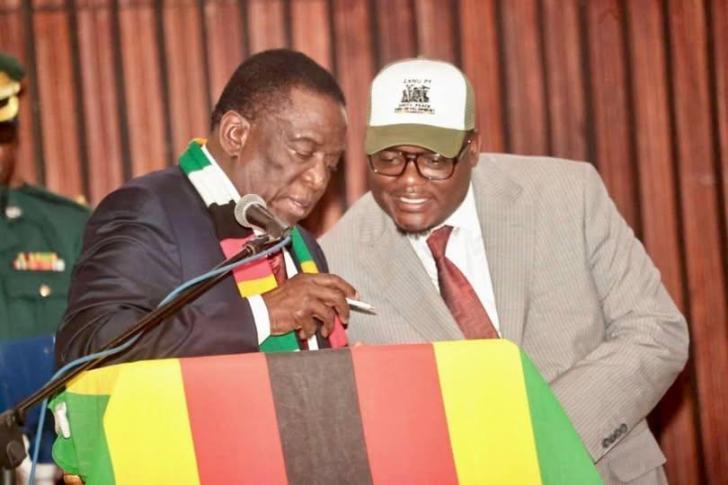
President Emmerson Mnangagwa's adviser, Paul Tungwarara, has moved to cement his company's involvement in Zimbabwe's river rehabilitation programme, seeking the participation of the Environmental Management Agency (EMA) amid mounting scrutiny over his growing influence and recent incendiary public remarks.
Correspondence reviewed by the reporters shows Tungwarara, writing as head of Prevail Group, requested EMA's technical guidance for a pilot river rehabilitation project, which he described as a nationwide initiative. This comes two weeks after the newspaper reported that the government had granted Prevail Group exclusive rights to rehabilitate the Muroodzi River in Mashonaland Central—a decision that sidelined competitors and raised concerns over monopoly power, procurement integrity, and regulatory capture.
A Cabinet directive authorising Prevail's work described the Muroodzi River project as a "prototype," pending national guidelines from the Ministry of Environment, Climate and Wildlife. All other river rehabilitation activities were suspended nationwide.
In a letter dated January 8 to EMA director-general, Tungwarara wrote that Mnangagwa "has expressed great satisfaction with the successful pilot river rehabilitation project at Muroodzi River" and that the initiative would now expand nationwide. He emphasised Prevail's intention to work closely with EMA to ensure compliance with environmental standards, describing measures such as mechanical clearing, desilting, and processing excavated material away from active river channels.
It remains unclear what formal role EMA will play in the project, including whether it will be contracted or funded for its involvement. EMA spokesperson Amkela Sidange said that river rehabilitation issues are handled by an inter-ministerial committee, not the agency.
The letter has intensified concerns over Prevail's monopoly in a potentially lucrative national environmental programme. Tungwarara's increasingly combative political profile has amplified scrutiny. Over the weekend, he drew backlash at a ZANU PF rally in Nyanga for controversial remarks made while overseeing the disbursement of the Presidential Constituency Empowerment Fund. He later defended similar comments from Marange as part of a "good fight," despite criticism from party members who interpreted his words as targeting Mnangagwa's allies.
Tungwarara doubled down on his loyalty to Mnangagwa, declaring he was "ready to die today" for party "order" and internal cohesion under Vision 2030. His statements prompted a public rebuke from ZANU PF Youth League deputy commissar Taurai Kandishaya, who questioned Tungwarara's official role and suggested he prioritised internal power struggles over investment mobilisation.
The dispute highlights unease within party structures about the influence of non-elected presidential advisers whose private business interests intersect with major State projects. Social media commentary has circulated allegations about wealth accumulation and management of empowerment funds linked to Tungwarara's office, though these remain unverified.
The Cabinet directive underpinning the river rehabilitation programme seeks to operationalise the Polluter Pays Principle, compelling miners responsible for environmental degradation to fund restoration. It stipulates that only Prevail Group is authorised to work on the Muroodzi River prototype, with all other river rehabilitation contracts suspended until further guidance is issued. Critics argue the arrangement locks out competitors and undermines transparency.
Prevail Group has a record of securing major State projects, including the refurbishment of Parirenyatwa Group of Hospitals, the Presidential Borehole Scheme, the US$500 million Mt Hampden Cyber City development, and construction work at State House and Zimbabwe House. In September 2025, a parliamentary committee found Prevail underperformed on borehole and village business unit projects in Chivi district.
Former finance minister Tendai Biti criticised the directive for lacking transparency and parliamentary oversight, noting that citizens face basic service shortfalls while politically connected companies dominate State contracts. Similarly, Vice-President Constantino Chiwenga has warned against economic capture by a small elite, calling for clean governance and accountability in managing public resources.
Analysts say the success and credibility of Zimbabwe's river rehabilitation programme will depend on open competition, transparency, and measurable environmental outcomes, rather than exclusive mandates to a single company.
Correspondence reviewed by the reporters shows Tungwarara, writing as head of Prevail Group, requested EMA's technical guidance for a pilot river rehabilitation project, which he described as a nationwide initiative. This comes two weeks after the newspaper reported that the government had granted Prevail Group exclusive rights to rehabilitate the Muroodzi River in Mashonaland Central—a decision that sidelined competitors and raised concerns over monopoly power, procurement integrity, and regulatory capture.
A Cabinet directive authorising Prevail's work described the Muroodzi River project as a "prototype," pending national guidelines from the Ministry of Environment, Climate and Wildlife. All other river rehabilitation activities were suspended nationwide.
In a letter dated January 8 to EMA director-general, Tungwarara wrote that Mnangagwa "has expressed great satisfaction with the successful pilot river rehabilitation project at Muroodzi River" and that the initiative would now expand nationwide. He emphasised Prevail's intention to work closely with EMA to ensure compliance with environmental standards, describing measures such as mechanical clearing, desilting, and processing excavated material away from active river channels.
It remains unclear what formal role EMA will play in the project, including whether it will be contracted or funded for its involvement. EMA spokesperson Amkela Sidange said that river rehabilitation issues are handled by an inter-ministerial committee, not the agency.
The letter has intensified concerns over Prevail's monopoly in a potentially lucrative national environmental programme. Tungwarara's increasingly combative political profile has amplified scrutiny. Over the weekend, he drew backlash at a ZANU PF rally in Nyanga for controversial remarks made while overseeing the disbursement of the Presidential Constituency Empowerment Fund. He later defended similar comments from Marange as part of a "good fight," despite criticism from party members who interpreted his words as targeting Mnangagwa's allies.
Tungwarara doubled down on his loyalty to Mnangagwa, declaring he was "ready to die today" for party "order" and internal cohesion under Vision 2030. His statements prompted a public rebuke from ZANU PF Youth League deputy commissar Taurai Kandishaya, who questioned Tungwarara's official role and suggested he prioritised internal power struggles over investment mobilisation.
The dispute highlights unease within party structures about the influence of non-elected presidential advisers whose private business interests intersect with major State projects. Social media commentary has circulated allegations about wealth accumulation and management of empowerment funds linked to Tungwarara's office, though these remain unverified.
The Cabinet directive underpinning the river rehabilitation programme seeks to operationalise the Polluter Pays Principle, compelling miners responsible for environmental degradation to fund restoration. It stipulates that only Prevail Group is authorised to work on the Muroodzi River prototype, with all other river rehabilitation contracts suspended until further guidance is issued. Critics argue the arrangement locks out competitors and undermines transparency.
Prevail Group has a record of securing major State projects, including the refurbishment of Parirenyatwa Group of Hospitals, the Presidential Borehole Scheme, the US$500 million Mt Hampden Cyber City development, and construction work at State House and Zimbabwe House. In September 2025, a parliamentary committee found Prevail underperformed on borehole and village business unit projects in Chivi district.
Former finance minister Tendai Biti criticised the directive for lacking transparency and parliamentary oversight, noting that citizens face basic service shortfalls while politically connected companies dominate State contracts. Similarly, Vice-President Constantino Chiwenga has warned against economic capture by a small elite, calling for clean governance and accountability in managing public resources.
Analysts say the success and credibility of Zimbabwe's river rehabilitation programme will depend on open competition, transparency, and measurable environmental outcomes, rather than exclusive mandates to a single company.
Source - The Independent
Join the discussion
Loading comments…



