News / National
Bosso's Benjani saga exposes a PR vacuum
24 Jan 2026 at 08:34hrs |
0 Views
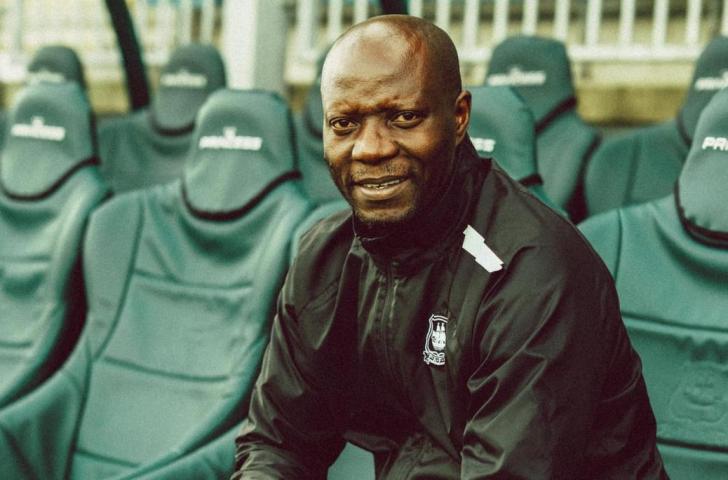
Highlanders did not merely appoint a new head coach this week; they inadvertently closed a chapter that laid bare the fragility and incoherence of their public relations machinery.
What should have been a triumphant, tightly managed story about bringing home one of Zimbabwe's most iconic football figures instead degenerated into a cautionary tale of mixed messages, hasty denials and an institution speaking in too many voices at once.
At the centre of the confusion is a vacuum that has persisted since the departure of Nozibelo Maphosa from the club's public relations office. Since then, Bosso have operated without a clear communications custodian — a single professional responsible for managing and protecting the club's public message. The consequences of that absence were on full display during the Benjani Mwaruwari saga.
A straightforward football decision quickly spiralled into a messy exchange of denials, counterclaims and leaked correspondence, none of which served the club's interests.
The saga was triggered when businessman and benefactor Wicknell Chivayo publicly offered to personally bankroll Benjani's salary and support Highlanders financially should the club appoint him as head coach. Instead of managing the overture quietly and strategically, Bosso reacted in public, issuing an open letter that came across as a lecture rather than a calculated institutional response.
That moment set the tone for what followed — a reactive, defensive communications posture that proved unsustainable.
Reports soon emerged that Highlanders executives had travelled to Harare to meet Chivayo, allegedly apologising for the tone of the open letter and discussing a pathway towards Benjani's appointment. The club denied these reports.
Rather than issuing a carefully worded response through a professional communications office, vice chairman Fiso Siziba stepped forward with a firm public denial, insisting the trip to Harare was solely for meetings with sponsors Sakunda and Betterbrands, owned by Kuda Tagwirei and Pedzisayi "Scott" Sakupwanya.
The denial went beyond clarification. It appeared confrontational, implicitly questioning the credibility of veteran journalist Sikhumbuzo Moyo, who had reported the meeting. In doing so, Bosso committed themselves to a version of events that needed to be airtight.
It was not.
Benjani was eventually appointed head coach, but confirmation did not come via a structured press release or a formal media briefing. Instead, it emerged through a private letter written by chief executive officer Denzil Mnkandla to Chivayo. That letter — formal, explicit and unambiguous — leaked to the public via a screenshot, collapsing Highlanders' entire communications position in a single moment.
The leak immediately raised questions about authenticity, forcing Chivayo himself to publish the letter on his social media platforms to prove it was genuine. A benefactor should never be placed in a position where he must validate a club's internal correspondence. That this happened speaks volumes about the absence of strategic communication at Bosso.
More damagingly, the letter implicitly confirmed the very reports that had been dismissed days earlier. The earlier denials were rendered hollow, making the club appear evasive rather than principled, reactive rather than strategic.
This was not a minor public relations embarrassment. It was a failure of institutional discipline.
Modern football clubs operate under relentless scrutiny. Information moves instantly. Screenshots travel faster than press statements. In this environment, communication strategy is not optional; it is foundational.
Highlanders' experience underscores a critical lesson: administrators, however well intentioned, cannot function as ad hoc spokespersons. Governance and communication are distinct competencies. When they blur, inconsistency and contradiction follow.
Throughout the Benjani saga, too many voices appeared empowered — formally or informally — to speak on behalf of the club. Instead of one coherent message, Bosso offered several. Instead of protecting confidentiality, internal correspondence leaked. Instead of controlling timing, the club reacted to external pressure.
Most troubling is that all of this overshadowed what should have been a universally positive development. Benjani Mwaruwari is a national icon — a former English Premier League striker and a figure capable of inspiring both players and supporters. His appointment should have dominated headlines for the right reasons. Instead, it became the final act in an avoidable communications drama.
Highlanders remain one of Zimbabwe's most emotive sporting institutions, sustained as much by symbolic weight as by results on the pitch. But emotional capital is not infinite. Fans notice. Sponsors notice. Journalists notice. Repeated lapses in professionalism steadily erode trust.
The remedy is neither radical nor complicated. Bosso need an urgent overhaul of their public relations function and the appointment of a single, qualified spokesperson empowered to speak for the club. One voice. One message. One clear chain of accountability.
That office must manage crises, co-ordinate announcements, brief executives and engage the media with professionalism rather than defensiveness.
Equally important, the club must recognise that journalism is not antagonism. Reporters simply reflect what unfolds behind closed doors, and when institutions fail to manage information, disorder becomes the story.
The Benjani saga is over. Highlanders ultimately made the right football decision.
Now they must make the right communication decisions too. Until they do, every major move will remain vulnerable to the same cycle of confusion, denial and exposure — a cycle that distracts from the club's real business: football.
What should have been a triumphant, tightly managed story about bringing home one of Zimbabwe's most iconic football figures instead degenerated into a cautionary tale of mixed messages, hasty denials and an institution speaking in too many voices at once.
At the centre of the confusion is a vacuum that has persisted since the departure of Nozibelo Maphosa from the club's public relations office. Since then, Bosso have operated without a clear communications custodian — a single professional responsible for managing and protecting the club's public message. The consequences of that absence were on full display during the Benjani Mwaruwari saga.
A straightforward football decision quickly spiralled into a messy exchange of denials, counterclaims and leaked correspondence, none of which served the club's interests.
The saga was triggered when businessman and benefactor Wicknell Chivayo publicly offered to personally bankroll Benjani's salary and support Highlanders financially should the club appoint him as head coach. Instead of managing the overture quietly and strategically, Bosso reacted in public, issuing an open letter that came across as a lecture rather than a calculated institutional response.
That moment set the tone for what followed — a reactive, defensive communications posture that proved unsustainable.
Reports soon emerged that Highlanders executives had travelled to Harare to meet Chivayo, allegedly apologising for the tone of the open letter and discussing a pathway towards Benjani's appointment. The club denied these reports.
Rather than issuing a carefully worded response through a professional communications office, vice chairman Fiso Siziba stepped forward with a firm public denial, insisting the trip to Harare was solely for meetings with sponsors Sakunda and Betterbrands, owned by Kuda Tagwirei and Pedzisayi "Scott" Sakupwanya.
The denial went beyond clarification. It appeared confrontational, implicitly questioning the credibility of veteran journalist Sikhumbuzo Moyo, who had reported the meeting. In doing so, Bosso committed themselves to a version of events that needed to be airtight.
It was not.
Benjani was eventually appointed head coach, but confirmation did not come via a structured press release or a formal media briefing. Instead, it emerged through a private letter written by chief executive officer Denzil Mnkandla to Chivayo. That letter — formal, explicit and unambiguous — leaked to the public via a screenshot, collapsing Highlanders' entire communications position in a single moment.
The leak immediately raised questions about authenticity, forcing Chivayo himself to publish the letter on his social media platforms to prove it was genuine. A benefactor should never be placed in a position where he must validate a club's internal correspondence. That this happened speaks volumes about the absence of strategic communication at Bosso.
More damagingly, the letter implicitly confirmed the very reports that had been dismissed days earlier. The earlier denials were rendered hollow, making the club appear evasive rather than principled, reactive rather than strategic.
This was not a minor public relations embarrassment. It was a failure of institutional discipline.
Modern football clubs operate under relentless scrutiny. Information moves instantly. Screenshots travel faster than press statements. In this environment, communication strategy is not optional; it is foundational.
Highlanders' experience underscores a critical lesson: administrators, however well intentioned, cannot function as ad hoc spokespersons. Governance and communication are distinct competencies. When they blur, inconsistency and contradiction follow.
Throughout the Benjani saga, too many voices appeared empowered — formally or informally — to speak on behalf of the club. Instead of one coherent message, Bosso offered several. Instead of protecting confidentiality, internal correspondence leaked. Instead of controlling timing, the club reacted to external pressure.
Most troubling is that all of this overshadowed what should have been a universally positive development. Benjani Mwaruwari is a national icon — a former English Premier League striker and a figure capable of inspiring both players and supporters. His appointment should have dominated headlines for the right reasons. Instead, it became the final act in an avoidable communications drama.
Highlanders remain one of Zimbabwe's most emotive sporting institutions, sustained as much by symbolic weight as by results on the pitch. But emotional capital is not infinite. Fans notice. Sponsors notice. Journalists notice. Repeated lapses in professionalism steadily erode trust.
The remedy is neither radical nor complicated. Bosso need an urgent overhaul of their public relations function and the appointment of a single, qualified spokesperson empowered to speak for the club. One voice. One message. One clear chain of accountability.
That office must manage crises, co-ordinate announcements, brief executives and engage the media with professionalism rather than defensiveness.
Equally important, the club must recognise that journalism is not antagonism. Reporters simply reflect what unfolds behind closed doors, and when institutions fail to manage information, disorder becomes the story.
The Benjani saga is over. Highlanders ultimately made the right football decision.
Now they must make the right communication decisions too. Until they do, every major move will remain vulnerable to the same cycle of confusion, denial and exposure — a cycle that distracts from the club's real business: football.
Source - The Chronicle
Join the discussion
Loading comments…


