News / National
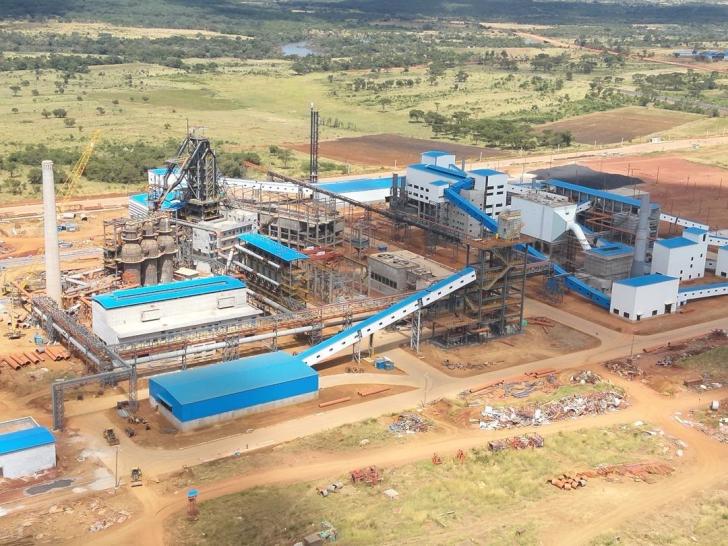
Manhize steelworks set to transform regional industry
25 Jan 2026 at 09:43hrs |
538 Views
Zimbabwe is steadily reclaiming its status as a regional iron and steel-making powerhouse following the expansion of Dinson Iron and Steel Company (Disco), which has begun manufacturing hot wire rods and mill steel balls — key inputs for the manufacturing and mining sectors.
The development is already yielding dividends for the economy, with the country saving an estimated US$500 000 annually on steel imports since the company became operational, signalling positive momentum in Zimbabwe's industrialisation drive.
Disco's growing product portfolio now includes pig iron, steel billets, deformed bars, hot wire rods and mining mill balls, positioning the Manhize-based plant as a major supplier to downstream industries. Once fully operational, the company is expected to become one of the largest steel producers in sub-Saharan Africa.
Speaking during a tour of the Manhize Steel Plant by Chinese Ambassador to Zimbabwe, Zhou Ding, Disco project manager Mr Wilfred Motsi said the expansion underscores the company's commitment to value addition and import substitution.
"I am glad to announce that we have started the production of hot wire rods, which are used to produce other small wires such as mesh wire and nails. We are also now producing mining mill balls, which are used for grinding in the mining industry," said Mr Motsi.
He said the new products add to an existing catalogue that includes pig iron, steel billets and deformed bars, with mass production playing a critical role in fulfilling the objectives of the National Development Strategy 2 (NDS2).
Mr Motsi revealed that the plant has reached 100 percent capacity utilisation for phase one products and is targeting an annual output of 600 000 tonnes of steel.
"We are now producing the set products for phase one as we aim to achieve 600 000 tonnes of steel per year," he said.
Production has already exceeded local demand, with exports to Zambia, South Africa and Malawi underway, further strengthening Zimbabwe's regional trade footprint.
Minister of Women's Affairs, Community, Small and Medium Enterprises Development, Monica Mutsvangwa, said Government was encouraged by the scale of production at the plant, noting that local manufacturers and small businesses were among the biggest beneficiaries.
"The level we have reached in cutting imports is quite substantial. What this means is that our small to medium entrepreneurs are some of the biggest beneficiaries. They used to get some of these deformed bars from abroad, and now they are sourcing them locally at a cheaper price," she said.
Chairman of the Parliamentary Portfolio Committee on Foreign Affairs and International Trade, Webster Shamu, who is also head of the Zimbabwe–China Friendship Association, said the visit provided valuable insight into Disco's contribution to national development.
"We would like to see learners also coming to witness what is being done so that they grow up knowing what it means to grow the country. We commend the Second Republic under the leadership of President Mnangagwa for putting in place measures that saw Disco investing in the country," he said.
Shamu added that there are hopes to see Bulawayo evolve into a steel processing hub using raw materials from Manhize.
The delegation also toured corporate social responsibility projects implemented by Disco, including the construction of schools, clinics and roads, which are benefiting surrounding communities.
The Manhize Steel Plant is set to become one of Africa's largest integrated steelworks. Disco is a subsidiary of Tsingshan Holding Group, a global stainless-steel giant headquartered in China. Tsingshan also operates Dinson Colliery in Hwange and Afrochine Smelting in Selous.
Under its phased expansion plan, Disco is expected to produce 600 000 tonnes of steel in phase one, rising to 1.2 million tonnes in phase two, 3.2 million tonnes in phase three, and ultimately five million tonnes annually in the final phase. The project is projected to earn Zimbabwe hundreds of millions of dollars in foreign currency, stimulate economic growth and create thousands of jobs.
The development is already yielding dividends for the economy, with the country saving an estimated US$500 000 annually on steel imports since the company became operational, signalling positive momentum in Zimbabwe's industrialisation drive.
Disco's growing product portfolio now includes pig iron, steel billets, deformed bars, hot wire rods and mining mill balls, positioning the Manhize-based plant as a major supplier to downstream industries. Once fully operational, the company is expected to become one of the largest steel producers in sub-Saharan Africa.
Speaking during a tour of the Manhize Steel Plant by Chinese Ambassador to Zimbabwe, Zhou Ding, Disco project manager Mr Wilfred Motsi said the expansion underscores the company's commitment to value addition and import substitution.
"I am glad to announce that we have started the production of hot wire rods, which are used to produce other small wires such as mesh wire and nails. We are also now producing mining mill balls, which are used for grinding in the mining industry," said Mr Motsi.
He said the new products add to an existing catalogue that includes pig iron, steel billets and deformed bars, with mass production playing a critical role in fulfilling the objectives of the National Development Strategy 2 (NDS2).
Mr Motsi revealed that the plant has reached 100 percent capacity utilisation for phase one products and is targeting an annual output of 600 000 tonnes of steel.
"We are now producing the set products for phase one as we aim to achieve 600 000 tonnes of steel per year," he said.
Minister of Women's Affairs, Community, Small and Medium Enterprises Development, Monica Mutsvangwa, said Government was encouraged by the scale of production at the plant, noting that local manufacturers and small businesses were among the biggest beneficiaries.
"The level we have reached in cutting imports is quite substantial. What this means is that our small to medium entrepreneurs are some of the biggest beneficiaries. They used to get some of these deformed bars from abroad, and now they are sourcing them locally at a cheaper price," she said.
Chairman of the Parliamentary Portfolio Committee on Foreign Affairs and International Trade, Webster Shamu, who is also head of the Zimbabwe–China Friendship Association, said the visit provided valuable insight into Disco's contribution to national development.
"We would like to see learners also coming to witness what is being done so that they grow up knowing what it means to grow the country. We commend the Second Republic under the leadership of President Mnangagwa for putting in place measures that saw Disco investing in the country," he said.
Shamu added that there are hopes to see Bulawayo evolve into a steel processing hub using raw materials from Manhize.
The delegation also toured corporate social responsibility projects implemented by Disco, including the construction of schools, clinics and roads, which are benefiting surrounding communities.
The Manhize Steel Plant is set to become one of Africa's largest integrated steelworks. Disco is a subsidiary of Tsingshan Holding Group, a global stainless-steel giant headquartered in China. Tsingshan also operates Dinson Colliery in Hwange and Afrochine Smelting in Selous.
Under its phased expansion plan, Disco is expected to produce 600 000 tonnes of steel in phase one, rising to 1.2 million tonnes in phase two, 3.2 million tonnes in phase three, and ultimately five million tonnes annually in the final phase. The project is projected to earn Zimbabwe hundreds of millions of dollars in foreign currency, stimulate economic growth and create thousands of jobs.
Source - The Herald
Join the discussion
Loading comments…


