News / National
Tungwarara hits alluvial mining jackpot
27 Jan 2026 at 18:17hrs |
0 Views
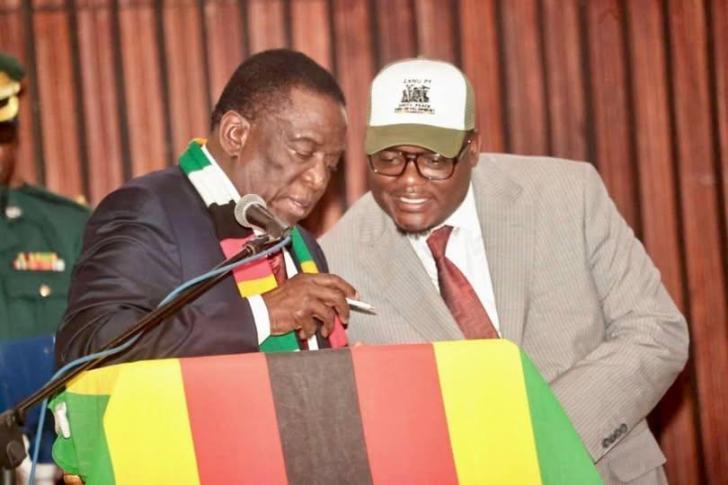
As Zimbabwe's ruling Zanu-PF grapples with intensifying internal succession battles, controversy has erupted over a lucrative national mandate granted to President Emmerson Mnangagwa's Special Presidential Investment Adviser, Mr Paul Tungwarara, giving him exclusive rights to rehabilitate river ecosystems across the country.
Critics and industry insiders allege the move effectively hands Tungwarara control over alluvial gold mining nationwide, under the guise of environmental rehabilitation, in what has been described as a "grand alluvial mining heist".
Through his company, Prevail Group of Companies, Tungwarara was initially awarded a pilot project to rehabilitate the Muroodzi River in Concession, Mashonaland Central Province. However, documents obtained by the media show that this mandate has since been expanded to cover all rivers in all provinces, giving Prevail unprecedented national reach.
In a letter dated January 8, 2026, addressed to the Environmental Management Agency (EMA), Tungwarara states that President Mnangagwa approved the expansion of the river rehabilitation programme into "a nationwide project across all provinces".
EMA is the statutory body responsible for environmental protection and sustainable natural resource management.
The deal has drawn sharp criticism from artisanal and small-scale miners, who accuse government of crony capitalism, arguing that there was no public tender, competitive bidding, or transparent process before the exclusive rights were granted.
Under Statutory Instrument 188 of 2024, alluvial riverbed mining was banned due to widespread environmental degradation, siltation, and mercury pollution of water sources. Government has repeatedly insisted the ban allows no exceptions, yet Cabinet approved what officials describe as a "prototype" rehabilitation project - granted solely to Tungwarara.
Industry players argue the arrangement creates a monopoly, allowing Prevail to mine gold undisturbed while excluding thousands of artisanal miners from their primary source of livelihood.
"This deal smacks of corruption," an artisanal mining representative told The NewsHawks.
"There was no tender, no transparency, no accountability. Tungwarara is the President's right-hand man, and he was simply handed the entire country's river systems."
While the project is officially framed as river desilting and environmental restoration, critics say it provides a convenient workaround to the alluvial mining ban, enabling large-scale gold extraction under the cover of rehabilitation.
"Alluvial mining is banned for everyone else, but Tungwarara is allowed to operate nationwide," said the miners' representative.
"How do we know he will only rehabilitate rivers and not mine gold? It is obvious to us that gold extraction will happen - secretly and without oversight."
Sources claim foreign-owned mining operations are now being forced to operate under Prevail Group's umbrella, paying royalties of between 10% and 15% to continue operations in affected areas.
The artisanal and small-scale mining sector produces an estimated 60% of Zimbabwe's gold, much of it historically extracted through riverbed mining. The ban, combined with the exclusive Tungwarara deal, has triggered anger across mining communities - and reportedly even within sections of the state security apparatus.
"This is seen as a case of politically connected self-enrichment," a source said, warning that tensions in mining areas could escalate.
Tungwarara's sudden accumulation of state contracts has also drawn public scrutiny, amplified by social media posts by his children showcasing an opulent lifestyle - private jets, luxury vehicles and mansions - in a country grappling with widespread poverty and unemployment.
While government maintains the ban on alluvial mining is necessary to protect rivers from destruction and chemical contamination, critics argue that the policy has ignored the economic reality faced by hundreds of thousands of Zimbabweans who depend on artisanal mining for survival.
Alluvial mining, though environmentally damaging when unregulated, remains a critical livelihood strategy and a major contributor to national gold output.
Analysts warn that unless the government addresses transparency concerns and balances environmental protection with inclusive economic policy, the Tungwarara deal risks deepening mistrust, fuelling unrest, and reinforcing perceptions of elite capture of national resources.
As pressure mounts, calls are growing for the revocation of the exclusive mandate and the introduction of a transparent, competitive framework for river rehabilitation - one that does not double as a gateway to unchecked gold extraction.
Critics and industry insiders allege the move effectively hands Tungwarara control over alluvial gold mining nationwide, under the guise of environmental rehabilitation, in what has been described as a "grand alluvial mining heist".
Through his company, Prevail Group of Companies, Tungwarara was initially awarded a pilot project to rehabilitate the Muroodzi River in Concession, Mashonaland Central Province. However, documents obtained by the media show that this mandate has since been expanded to cover all rivers in all provinces, giving Prevail unprecedented national reach.
In a letter dated January 8, 2026, addressed to the Environmental Management Agency (EMA), Tungwarara states that President Mnangagwa approved the expansion of the river rehabilitation programme into "a nationwide project across all provinces".
EMA is the statutory body responsible for environmental protection and sustainable natural resource management.
The deal has drawn sharp criticism from artisanal and small-scale miners, who accuse government of crony capitalism, arguing that there was no public tender, competitive bidding, or transparent process before the exclusive rights were granted.
Under Statutory Instrument 188 of 2024, alluvial riverbed mining was banned due to widespread environmental degradation, siltation, and mercury pollution of water sources. Government has repeatedly insisted the ban allows no exceptions, yet Cabinet approved what officials describe as a "prototype" rehabilitation project - granted solely to Tungwarara.
Industry players argue the arrangement creates a monopoly, allowing Prevail to mine gold undisturbed while excluding thousands of artisanal miners from their primary source of livelihood.
"This deal smacks of corruption," an artisanal mining representative told The NewsHawks.
"There was no tender, no transparency, no accountability. Tungwarara is the President's right-hand man, and he was simply handed the entire country's river systems."
"Alluvial mining is banned for everyone else, but Tungwarara is allowed to operate nationwide," said the miners' representative.
"How do we know he will only rehabilitate rivers and not mine gold? It is obvious to us that gold extraction will happen - secretly and without oversight."
Sources claim foreign-owned mining operations are now being forced to operate under Prevail Group's umbrella, paying royalties of between 10% and 15% to continue operations in affected areas.
The artisanal and small-scale mining sector produces an estimated 60% of Zimbabwe's gold, much of it historically extracted through riverbed mining. The ban, combined with the exclusive Tungwarara deal, has triggered anger across mining communities - and reportedly even within sections of the state security apparatus.
"This is seen as a case of politically connected self-enrichment," a source said, warning that tensions in mining areas could escalate.
Tungwarara's sudden accumulation of state contracts has also drawn public scrutiny, amplified by social media posts by his children showcasing an opulent lifestyle - private jets, luxury vehicles and mansions - in a country grappling with widespread poverty and unemployment.
While government maintains the ban on alluvial mining is necessary to protect rivers from destruction and chemical contamination, critics argue that the policy has ignored the economic reality faced by hundreds of thousands of Zimbabweans who depend on artisanal mining for survival.
Alluvial mining, though environmentally damaging when unregulated, remains a critical livelihood strategy and a major contributor to national gold output.
Analysts warn that unless the government addresses transparency concerns and balances environmental protection with inclusive economic policy, the Tungwarara deal risks deepening mistrust, fuelling unrest, and reinforcing perceptions of elite capture of national resources.
As pressure mounts, calls are growing for the revocation of the exclusive mandate and the introduction of a transparent, competitive framework for river rehabilitation - one that does not double as a gateway to unchecked gold extraction.
Source - online
Join the discussion
Loading comments…





