News / National
Mbare flats squalor condition exposed
03 Feb 2026 at 04:54hrs |
0 Views
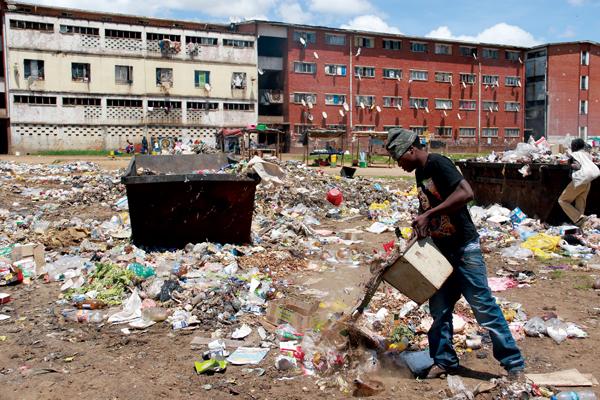
Residents of Mbare on Friday resisted attempts by Harare City Council officials to sanitise conditions during a visit by the Zimbabwe Human Rights Commission (ZHRC), insisting that the delegation witness what they described as years of neglect and chronic service delivery failure.
The commission toured the Matapi flats following concerns raised by commissioners who had passed through the area and were alerted by images and videos circulating on social media, showing residents living in squalor. The inspection exposed severe deficiencies in urban governance in Harare's oldest high-density suburb, highlighting a stark contrast between residents' lived realities and the council's explanations citing resource constraints, poor revenue collection, and vandalism. ZHRC warned that the conditions amounted to serious human rights violations.
The delegation was led by ZHRC chairperson Jessie Majome, with Harare City Council represented by housing development officer Edgar Dzehonye and acting Region One manager Farai Mtawa. Council officials largely assumed an observer role as residents guided commissioners through the flats, pointing out areas that illustrated crumbling infrastructure, poor sanitation, and chronic service failures.
At times, commissioners struggled to move freely amid crowds of residents competing for attention to highlight the hardships they face daily. The visit revealed raw sewage flowing through sections of the flats, uncollected rubbish, cracked walls, leaking roofs, blocked drainage, electricity blackouts, and persistent water shortages. Residents also pointed out open pits used for domestic water collection, citing prolonged municipal water disruptions and serious health risks associated with this practice.
Overcrowding was another major issue. Rooms designed for one or two occupants now house up to 13 residents, and in some cases, two families share a single room. The population of the flats has swelled to roughly 12,800, far exceeding the intended capacity of around 3,000.
"What we observed here is no longer merely alarming; it has been normalised, and that in itself is deeply troubling," Majome said. "It's not in Mbare alone. If the capital is in this state, then you can imagine what is happening in other towns and cities." She added that the conditions violated residents' right to dignity, citing a lack of running water in hostels, bathrooms, and sculleries. Some residents reported not having reliable water supply for over a decade.
Harare City Council officials disputed some of the residents' claims, noting that laundry activities suggested the availability of water. They also blamed residents for failing to pay rates, citing inadequate revenue as a reason for poor maintenance, and accused them of neglect and vandalism.
Mtawa said the city had launched a long-term urban renewal master plan, which includes Mbare, aiming to provide new flats with proper ablution facilities and move towards a "world-class city." Short-term measures include a maintenance budget for existing hostels, though performance is tied to revenue collection. "These hostels have the lowest collections, sometimes only 4%," Mtawa said.
Dzehonye added that efforts to improve Mbare's housing situation had been ongoing, including plans to construct new blocks between existing ones, moving residents into new units before demolishing old structures. However, securing partners with the capacity to implement these plans remained a challenge.
The ZHRC visit brought renewed attention to the deep-seated infrastructure and service delivery challenges in Mbare, underscoring the urgent need for both immediate interventions and long-term solutions to protect residents' human rights.
The commission toured the Matapi flats following concerns raised by commissioners who had passed through the area and were alerted by images and videos circulating on social media, showing residents living in squalor. The inspection exposed severe deficiencies in urban governance in Harare's oldest high-density suburb, highlighting a stark contrast between residents' lived realities and the council's explanations citing resource constraints, poor revenue collection, and vandalism. ZHRC warned that the conditions amounted to serious human rights violations.
The delegation was led by ZHRC chairperson Jessie Majome, with Harare City Council represented by housing development officer Edgar Dzehonye and acting Region One manager Farai Mtawa. Council officials largely assumed an observer role as residents guided commissioners through the flats, pointing out areas that illustrated crumbling infrastructure, poor sanitation, and chronic service failures.
At times, commissioners struggled to move freely amid crowds of residents competing for attention to highlight the hardships they face daily. The visit revealed raw sewage flowing through sections of the flats, uncollected rubbish, cracked walls, leaking roofs, blocked drainage, electricity blackouts, and persistent water shortages. Residents also pointed out open pits used for domestic water collection, citing prolonged municipal water disruptions and serious health risks associated with this practice.
Overcrowding was another major issue. Rooms designed for one or two occupants now house up to 13 residents, and in some cases, two families share a single room. The population of the flats has swelled to roughly 12,800, far exceeding the intended capacity of around 3,000.
"What we observed here is no longer merely alarming; it has been normalised, and that in itself is deeply troubling," Majome said. "It's not in Mbare alone. If the capital is in this state, then you can imagine what is happening in other towns and cities." She added that the conditions violated residents' right to dignity, citing a lack of running water in hostels, bathrooms, and sculleries. Some residents reported not having reliable water supply for over a decade.
Harare City Council officials disputed some of the residents' claims, noting that laundry activities suggested the availability of water. They also blamed residents for failing to pay rates, citing inadequate revenue as a reason for poor maintenance, and accused them of neglect and vandalism.
Mtawa said the city had launched a long-term urban renewal master plan, which includes Mbare, aiming to provide new flats with proper ablution facilities and move towards a "world-class city." Short-term measures include a maintenance budget for existing hostels, though performance is tied to revenue collection. "These hostels have the lowest collections, sometimes only 4%," Mtawa said.
Dzehonye added that efforts to improve Mbare's housing situation had been ongoing, including plans to construct new blocks between existing ones, moving residents into new units before demolishing old structures. However, securing partners with the capacity to implement these plans remained a challenge.
The ZHRC visit brought renewed attention to the deep-seated infrastructure and service delivery challenges in Mbare, underscoring the urgent need for both immediate interventions and long-term solutions to protect residents' human rights.
Source - Newsday
Join the discussion
Loading comments…





