News / National
Jonathan Moyo tears apart Muchena in debate
15 Mar 2026 at 17:43hrs |
0 Views
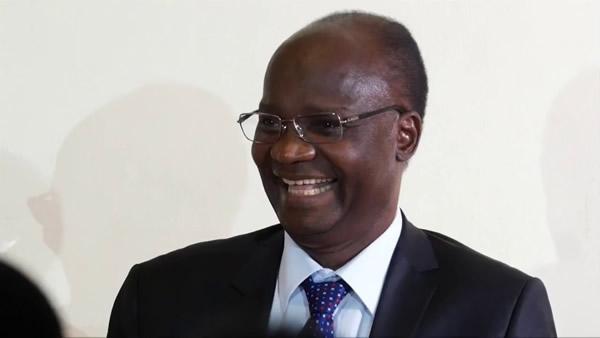
Jonathan Moyo, a prominent Zimbabwean politics professor and former cabinet minister, has sharply criticised retired Air Vice-Marshal Henry Muchena, accusing him of misleading the public on universal adult suffrage, the executive presidency, and the proposed constitutional changes.
The dispute comes amid heated debate over the Constitution (Amendment No. 3) Bill, 2026, which seeks to extend President Emmerson Mnangagwa's rule to 2030, shift the presidential election to parliament, change presidential term lengths from five to seven years, and overhaul electoral systems.
Government officials maintain that the bill strengthens stability, continuity, and socioeconomic progress, and argue that no referendum is needed since the amendments do not alter Chapters 4, 16, or section 328 of the constitution. Analysts, however, describe the changes as unlawful, potentially authoritarian, or a constitutional coup.
Moyo challenged Muchena's claims, stating that they are "misleading, false, uninformed, ignorant and illiterate." He emphasised that universal adult suffrage guarantees the right to vote without discrimination based on race, class, gender, property, or other qualifications—not the method of electing the president.
"The liberation struggle focused on land ownership and ensuring universal adult suffrage—the ability of citizens to vote without discrimination—not on whether the president is elected directly or indirectly," Moyo said.
Muchena had written to parliament on behalf of unnamed retired generals and senior civil servants, opposing the constitutional amendments, claiming they undermine the people's electoral rights and dismantle the imperial executive presidency.
Moyo countered that the amendments do not disenfranchise citizens; in fact, they extend voting rights to millions of Zimbabweans in the diaspora. He argued that defending the imperial presidency—a system introduced in 1987 under former President Robert Mugabe—either shows ignorance of its history or a desire to preserve a relic of a failed one-party authoritarian state.
He highlighted that Zimbabwe's imperial executive presidency historically concentrated power, weakened parliament and judiciary oversight, enabled authoritarianism, corruption, and violent elections, and caused political and economic dysfunction.
Moyo also noted that indirect election of heads of state is a common practice in leading democracies, citing Britain, the United States, and India as examples, and argued that such systems can coexist with democratic governance.
"The strong executive presidency was a product of Mugabe's one-party agenda, consolidating power and facilitating abuses," Moyo said. "It is incomprehensible how pro-democracy activists would reject reform that dismantles this authoritarian structure while defending what they have long opposed."
He concluded that the proposed constitutional overhaul strengthens democracy, protects citizens' voting rights, and addresses the excesses of a centralized, imperial presidency.
The dispute comes amid heated debate over the Constitution (Amendment No. 3) Bill, 2026, which seeks to extend President Emmerson Mnangagwa's rule to 2030, shift the presidential election to parliament, change presidential term lengths from five to seven years, and overhaul electoral systems.
Government officials maintain that the bill strengthens stability, continuity, and socioeconomic progress, and argue that no referendum is needed since the amendments do not alter Chapters 4, 16, or section 328 of the constitution. Analysts, however, describe the changes as unlawful, potentially authoritarian, or a constitutional coup.
Moyo challenged Muchena's claims, stating that they are "misleading, false, uninformed, ignorant and illiterate." He emphasised that universal adult suffrage guarantees the right to vote without discrimination based on race, class, gender, property, or other qualifications—not the method of electing the president.
"The liberation struggle focused on land ownership and ensuring universal adult suffrage—the ability of citizens to vote without discrimination—not on whether the president is elected directly or indirectly," Moyo said.
Moyo countered that the amendments do not disenfranchise citizens; in fact, they extend voting rights to millions of Zimbabweans in the diaspora. He argued that defending the imperial presidency—a system introduced in 1987 under former President Robert Mugabe—either shows ignorance of its history or a desire to preserve a relic of a failed one-party authoritarian state.
He highlighted that Zimbabwe's imperial executive presidency historically concentrated power, weakened parliament and judiciary oversight, enabled authoritarianism, corruption, and violent elections, and caused political and economic dysfunction.
Moyo also noted that indirect election of heads of state is a common practice in leading democracies, citing Britain, the United States, and India as examples, and argued that such systems can coexist with democratic governance.
"The strong executive presidency was a product of Mugabe's one-party agenda, consolidating power and facilitating abuses," Moyo said. "It is incomprehensible how pro-democracy activists would reject reform that dismantles this authoritarian structure while defending what they have long opposed."
He concluded that the proposed constitutional overhaul strengthens democracy, protects citizens' voting rights, and addresses the excesses of a centralized, imperial presidency.
Source - online
Join the discussion
Loading comments…


