Opinion / Columnist
Muchena's use of lies is neither revolutionary nor constitutional
15 Mar 2026 at 17:32hrs |
0 Views
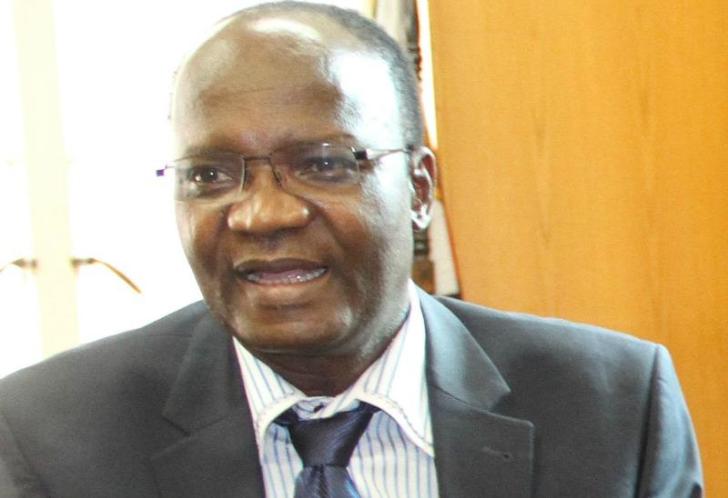
Air Marshal (Retired) Henry Muchena - and the unnamed co-authors, alleged retired generals and senior civil servants said to be ex-combatants who cowardly remain incognito behind his 15 March 2026 letter - are correct that the liberation struggle rested on two fundamental, non-negotiable pillars: land and universal adult suffrage ("one man, one vote"). These principles remain sacred.
They are, however, blatantly lying in claiming that "universal adult suffrage" or "one man one vote" ever meant the direct election of the head of state or government, during the liberation struggle or since independence in 1980. Nowhere under the sun has universal adult suffrage equated to direct election of the executive.
Muchena's claim - and that of his incognito retinue - is neither revolutionary nor constitutional; it is embarrassingly ignorant, illiterate, uninformed and dangerously misinforming. It is irresponsible and dangerous to elevate illiteracy to the level of political noise for purposes of conflict-mongering.
Universal adult suffrage simply means the right of every adult citizen to vote without discrimination based on race, sex, property or similar qualifications. It concerns who is entitled to cast votes, not the voting system used to cast them. This right applies equally to direct and indirect voting systems alike.
The heroic armed struggle under PF-Zapu and Zanu-PF delivered universal adult suffrage in 1980. But this triumph did not confer direct "one man one vote" elections for President Canaan Banana or Prime Minister Robert Mugabe in the 1980 and 1985 polls.
Rather, the triumph restored the right to vote for every adult Zimbabwean under the voting system that prevailed. Both Banana and Mugabe were creatures of indirect election in 1980 and 1985: Banana chosen by Parliament sitting jointly as an electoral college; Mugabe appointed by the President as the leader commanding a majority in the House of Assembly. Muchena's lie betrays both the liberation legacy and constitutional truth.
Far from an aberration, this truth is powerfully affirmed by notable global examples.
The United Kingdom has upheld full universal adult suffrage since 1928—extending the vote to all women—yet its citizens have never directly elected their Prime Minister. Voters choose Members of Parliament; the leader of the party commanding a majority in the House of Commons becomes Prime Minister through parliamentary confidence.
India, the world's largest democracy, constitutionally entrenched universal adult suffrage in 1950 (Article 326 of the Constitution) for direct elections to the Lok Sabha (Parliament), yet the Prime Minister is indirectly elected by the parliamentary majority.
Even the United States, the world's oldest democracy, having perfected near-universal suffrage through the 15th, 19th, 24th and 26th Amendments, deliberately rejects a nationwide "one person, one vote" for its President, electing the executive instead through 538 members of the Electoral College.
These examples demonstrate conclusively that "one man, one vote" secures the right to participate—it does not dictate the mechanism for voting to choose the executive. To claim otherwise is not merely historically false; it is intellectually bankrupt.
Direct Presidential Election: A Relic of the Failed 1987 One Party One-Man Rule Socialist State
Retired Air Marshal Henry Muchena and the political interests he fronts peddle a blatant lie that Zimbabwe's current direct presidential election is rooted in the liberation struggle's galvanising mantra for "one man, one vote." Nothing could be further from historical truth and constitutional reality.
As pointed out above, universal adult suffrage was secured in 1980. The direct election system for the Executive Presidency was deliberately engineered—not to express that suffrage—but to entrench a legislated one-party, one-man-rule socialist state anchored squarely in the 1987 Unity Accord between PF-Zapu and Zanu-PF.
The Accord itself (see attachment), signed at State House on 22 December 1987, is unambiguous about this.
1987 Unity Accord Agreement: Zimbabwe's Model for the current Directly Elected Executive President
1. That Zanu (PF) and (PF) Zapu have irrevocably committed themselves to unite under one political party.
2. That the unity of the two political parties shall be achieved under the name Zimbabwe African National Union (Patriotic Front), in short Zanu (PF).
3. That Comrade Robert Gabriel Mugabe shall be the First Secretary and President of Zanu (PF).
4. That Zanu (PF) shall have two Second Secretaries and Vice-Presidents who shall be appointed by the First Secretary and President of the Party.
5. That Zanu (PF) shall seek to establish a socialist society in Zimbabwe on the guidance of Marxist-Leninist principles.
6. That Zanu (PF) shall seek to establish a one party state in Zimbabwe.
7. That the leadership of Zanu (PF) shall abide by the Leadership Code.
8. That the existing structures of Zanu (PF) and (PF) Zapu shall be merged in accordance with the letter and spirit of this Agreement.
9. That both parties shall, in the interim, take immediate vigorous steps to eliminate and end the insecurity and violence prevalent in Matabeleland.
10. That Zanu (PF) and (PF) Zapu shall convene their respective congresses to give effect to this Agreement within the shortest possible time.
11. That in the interim, Comrade Robert Gabriel Mugabe is vested with full powers to prepare for the implementation of this Agreement and to act in the name and authority of Zanu (PF).
Signed at State House this 22nd day of December 1987.
Joshua Mqabuko Nkomo, President, (PF) Zapu.
Robert Gabriel Mugabe, First Secretary and President of Zanu (PF).
Paragraphs 5 and 6 expose the Accord's twin objectives. Pursuant to this vision, the Constitution of Zimbabwe Amendment (No. 7) Act, 1987 fused Head of State, Head of Government and Commander-in-Chief into an imperial Executive Presidency.
On 30 December 1987 Mugabe was installed as Zimbabwe's first Executive President—after he was elected not by direct popular vote—but indirectly by Parliament sitting jointly as an electoral college.
Where were Muchena, his retired generals and senior civil servants who are ex-combatants when this happened in 1987?
The direct election introduced in March 1990 was designed as a mere formality under an anticipated monolithic political project for a de jure one party state. The current system is therefore no liberation dividend at all; it is the constitutional offspring of a failed ‘Marxist Leninist' project for one party one man-rule which was rejected by history itself.
It is ironic and laughable that self-anointed guardians of democracy and citizen empowerment now scramble as defenders of the Constitution to salvage the directly elected Executive Presidency—a tarnished vestige of a botched de jure one-party, one-man-rule socialist state. Its very persistence defies the 2013 Constitution's sacred cornerstone: a multi-party democratic system enshrined in section 3(2)(a) as the bedrock of good governance.
How the Directly Elected Executive President Agenda to Legislate for a One Party One-Man Rule Failed
In 1987, armed with the Unity Accord and the Constitution of Zimbabwe Amendment (No. 7) Act, Zanu-PF meticulously constructed the framework for a one-party, one-man-rule socialist state. The vision was unambiguous: by 1990, prevailing social, economic and political conditions would enable the direct election of an unchallenged President Robert Mugabe as an imperial Executive President, while Zanu-PF—legislated as the sole lawful party—would confront no opposition whatsoever. This ideological and constitutional template gave birth to Zimbabwe's current voting system of direct presidential elections.
Yet history unfolded with radical, irresistible force to torpedo this agenda.
Scarcely 10 months after the 22 December 1987 Unity Accord, Edgar Tekere's expulsion from Zanu-PF in October 1988—ignited by his blistering public denunciation of corruption and the one-party state push—produced the first fatal fracture. Tekere promptly launched the Zimbabwe Unity Movement (ZUM) in April 1989: the inaugural credible urban opposition party championing multiparty democracy, free-market reforms and an end to nepotism.
Compounding this internal rupture, the fall of the Berlin Wall in November 1989—just weeks before the PF-Zapu and Zanu-PF Unity Congress—and the subsequent implosion of the Soviet Union demolished the global ideological scaffolding that sustained one party one-man rule.
Simultaneously, the World Bank's seminal November 1989 report, Sub-Saharan Africa: From Crisis to Sustainable Growth, proclaimed "good governance" under multiparty democracy as the indispensable precondition for development—demanding accountable institutions, judicial integrity, reduced corruption, free press and citizen empowerment—thereby directly assaulting the legitimacy of legislated one-party regimes across Africa.
Zimbabwe's 1990 election campaign itself laid bare the fragility of the one party state project. Widespread irregularities, harassment in ZUM strongholds and brazen violence—including a daylight assassination attempt on candidate Patrick Kombayi and multiple ZUM-linked killings—inaugurated the pattern of what has become the scourge of disputed elections.
Although Zanu-PF achieved a parliamentary landslide, ZUM's two seats, ZANU-Ndonga's one and Tekere's commanding 20% presidential vote obliterated any legal argument for legislating a de jure one-party state. By late 1990 the agenda lay dead within Zanu-PF itself.
The July 1990 adoption of the World Bank/IMF-sponsored Economic Structural Adjustment Programme (ESAP)—with its sweeping neoliberal reforms of liberalisation, subsidy removal and privatisation—delivered the decisive ideological coup de grâce, and accelerated the irreversible retreat from a legislated one-party state.
These six epochal developments transformed the 1987 constitutional design of an imperial Executive Presidency from a triumphant formality into a perpetual source of intractable national contestation.
All told, the adoption of ESAP delivered the decisive blow to Zanu-PF's ambition to entrench the imperial Executive Presidency of 1987. By aligning with the World Bank's 1989 governance framework—articulated in its seminal study Sub-Saharan Africa: From Crisis to Sustainable Growth—ESAP mandated multiparty democracy and good governance as prerequisites for sustainable development. This dismantled the legislative path to a de jure one-party socialist state, despite the de facto political dominance secured through the PF-ZAPU and Zanu-PF Unity Accord.
This hybrid ESAP-inspired model proved irreconcilably incompatible with the Constitution of Zimbabwe Amendment (No. 7) Act of 1987. That transformative legislation fused Head of State and Government, abolished the Prime Ministership, and designed direct presidential elections from 1990 as mere formalities to cement an unchallenged vanguard party and its leader after an anticipated one-party triumph.
Over the ensuing 36 years, this constitutional dislocation has unleashed a relentless cycle of disputed elections, political violence, societal polarisation, corruption, policy paralysis, inefficient service delivery, infrastructural decay, and toxic governance—severely undermining national development and social progress.
In the immediate wake of ESAP, retrenchments and subsidy cuts sparked urban unrest, exposing the 1987 framework's structural obsolescence as an instrument of one party one-man rule. The failure to enact a de jure one-party state, coupled with retention of an imperial Executive Presidency in a nominal multiparty system, spawned early fissures: plummeting voter turnout, protests, and simmering social discord. A subsequent attempt to reform the presidency via a new constitution collapsed in 2000.
Even the 2013 Constitution, forged as a compromise between Zanu-PF and the MDC formations and enshrining multiparty democracy as a foundational principle, failed to rectify the core incompatibility by retaining the 1987 directly elected Executive President.
The military coup in 2017, followed by the fiercely contested 2018 and 2023 elections and ensuing governance crises, crystallised an unassailable reality: the 1987 fusion of powers, engineered for a one party one-man rule state, had become a dangerous anomaly in a multiparty environment, perpetuating an obsessive focus on a single office and trapping the nation in perpetual electoral contestation that undermines peace, development, unity, stability and national security.
The consequences have been catastrophic.
Since 2000, the mismatch between the 1987 Executive Presidency and a multi-party democratic political system has erected five toxic barriers to progress: a short five-year electoral cycle that consigns governance to perpetual electioneering, privileging populism and political survival over effective service delivery, while igniting disputed polls, policy paralysis, rampant corruption, inefficiency, and deepening polarisation.
Muchena's Referendum Call a Constitutional Fraud
Retired Air Marshal Henry Muchena's 12 March 2026 letter compounds his falsehoods about universal adult suffrage by brazenly demanding that the Constitution (Amendment No. 3) Bill be subjected to a national referendum. He declares that if the amendments are in the national interest, they must be put to the people—yet he cites no constitutional provision or law to support his claim.
Instead, he cynically invokes the year 2000, falsely claiming Zanu-PF "championed" a referendum. The decision to hold that referendum on the 2000 Draft Constitution was taken independently by the Constitutional Commission, not by Zanu-PF. Such mendacity is not revolutionary discourse; it is naked conflict-mongering calculated to sow discord and undermine national stability.
The constitutional position is unequivocal. Section 328(6) reserves the ultimate democratic veto—the national referendum—solely for the most sacred provisions: amendments to Chapter 4 (Declaration of Rights), Chapter 16 (Agricultural Land), or section 328 itself. Section 328(9) extends this protection to the clause. Only in these exceptional cases must a Bill, even after securing a two-thirds parliamentary majority, be submitted to the people within three months and approved by a majority of participating voters.
All other provisions—including all those in the Amendment No. 3 Bill, 2026—require nothing more than a two-thirds majority in Parliament. No referendum is required or permitted. Any demand to extend the limit beyond this scope is illegal, unconstitutional, and amounts to conflict mongering disguised as democratic zeal.
Section 117(2)(a) of the Constitution expressly empowers the Tenth Parliament to amend the Constitution in accordance with section 328(5). This Parliament is sovereign and not bound by its predecessors. As the United States Supreme Court held in Fletcher v. Peck (1810), one legislature cannot abridge the powers of a succeeding legislature.
The Tenth Parliament therefore possesses full constitutional legitimacy to enact the Amendment No. 3 Bill without a referendum. Muchena's referendum call is not only baseless but is also dangerous psychodrama.
Conclusion
The Constitution (Amendment No. 3) Bill of 2026 delivers a bold antidote to Zimbabwe's enduring constitutional malaise dating back to 1987. By shifting presidential selection to Parliament, lengthening the electoral cycle from five to seven years, and embedding electoral safeguards, the Bill dismantles the falsehood that the directly elected Executive Presidency is a legacy of the liberation struggle—when in fact it was specifically crafted in 1987 to entrench a legislated one party one-man rule state—and when it has crippled the nation since the Mach 1990 general election.
Muchena and his veiled allies are outrageously mistaken in claiming the Bill strips anyone's voting rights; the claim is not an argument or debate it is a blatant lie. Far from diminishing suffrage, the Bill expands it profoundly. As the Minister of Justice, Legal and Parliamentary Affairs Hon Ziyambi Ziyambi has announced, a pivotal outcome of the Bill will be granting Zimbabweans in the Diaspora their long-denied right to vote, under the Electoral Act—finally fulfilling universal adult suffrage for all.
Equally erroneous is their call for a referendum on the Bill. Under section 328, a referendum is not a political weapon but a strictly legal tool reserved only for any amendment to Chapters 4, 16 and section 328; and no other part of the Constitution. Weaponizing the referendum is reckless conflict-mongering that imperils national harmony.
Far from regression or disenfranchisement, the Bill forges a visionary recalibration: fostering stability, continuity, cohesion, and socioeconomic advancement. It redeems the Constitution from the 1987 imperial presidency's grip meant for a legislated one party one-man rule state, fulfilling history's urgent call since the Unity Accord.
President Mnangagwa and his Cabinet deserve commendation for coming up with the ground-breaking Bill. Its reforms, including taming the 1987 executive behemoth, are progressive and unprecedented. In championing the Bill, which truly offers something for everyone, they herald a transformative era, bridging Zimbabwe's turbulent history with a prosperous horizon beyond self-interest and beyond 2030.
Significantly, the Bill reforms the electoral system, not individuals who can only be reformed by God!
They are, however, blatantly lying in claiming that "universal adult suffrage" or "one man one vote" ever meant the direct election of the head of state or government, during the liberation struggle or since independence in 1980. Nowhere under the sun has universal adult suffrage equated to direct election of the executive.
Muchena's claim - and that of his incognito retinue - is neither revolutionary nor constitutional; it is embarrassingly ignorant, illiterate, uninformed and dangerously misinforming. It is irresponsible and dangerous to elevate illiteracy to the level of political noise for purposes of conflict-mongering.
Universal adult suffrage simply means the right of every adult citizen to vote without discrimination based on race, sex, property or similar qualifications. It concerns who is entitled to cast votes, not the voting system used to cast them. This right applies equally to direct and indirect voting systems alike.
The heroic armed struggle under PF-Zapu and Zanu-PF delivered universal adult suffrage in 1980. But this triumph did not confer direct "one man one vote" elections for President Canaan Banana or Prime Minister Robert Mugabe in the 1980 and 1985 polls.
Rather, the triumph restored the right to vote for every adult Zimbabwean under the voting system that prevailed. Both Banana and Mugabe were creatures of indirect election in 1980 and 1985: Banana chosen by Parliament sitting jointly as an electoral college; Mugabe appointed by the President as the leader commanding a majority in the House of Assembly. Muchena's lie betrays both the liberation legacy and constitutional truth.
Far from an aberration, this truth is powerfully affirmed by notable global examples.
The United Kingdom has upheld full universal adult suffrage since 1928—extending the vote to all women—yet its citizens have never directly elected their Prime Minister. Voters choose Members of Parliament; the leader of the party commanding a majority in the House of Commons becomes Prime Minister through parliamentary confidence.
India, the world's largest democracy, constitutionally entrenched universal adult suffrage in 1950 (Article 326 of the Constitution) for direct elections to the Lok Sabha (Parliament), yet the Prime Minister is indirectly elected by the parliamentary majority.
Even the United States, the world's oldest democracy, having perfected near-universal suffrage through the 15th, 19th, 24th and 26th Amendments, deliberately rejects a nationwide "one person, one vote" for its President, electing the executive instead through 538 members of the Electoral College.
These examples demonstrate conclusively that "one man, one vote" secures the right to participate—it does not dictate the mechanism for voting to choose the executive. To claim otherwise is not merely historically false; it is intellectually bankrupt.
Direct Presidential Election: A Relic of the Failed 1987 One Party One-Man Rule Socialist State
Retired Air Marshal Henry Muchena and the political interests he fronts peddle a blatant lie that Zimbabwe's current direct presidential election is rooted in the liberation struggle's galvanising mantra for "one man, one vote." Nothing could be further from historical truth and constitutional reality.
As pointed out above, universal adult suffrage was secured in 1980. The direct election system for the Executive Presidency was deliberately engineered—not to express that suffrage—but to entrench a legislated one-party, one-man-rule socialist state anchored squarely in the 1987 Unity Accord between PF-Zapu and Zanu-PF.
The Accord itself (see attachment), signed at State House on 22 December 1987, is unambiguous about this.
1987 Unity Accord Agreement: Zimbabwe's Model for the current Directly Elected Executive President
1. That Zanu (PF) and (PF) Zapu have irrevocably committed themselves to unite under one political party.
2. That the unity of the two political parties shall be achieved under the name Zimbabwe African National Union (Patriotic Front), in short Zanu (PF).
3. That Comrade Robert Gabriel Mugabe shall be the First Secretary and President of Zanu (PF).
4. That Zanu (PF) shall have two Second Secretaries and Vice-Presidents who shall be appointed by the First Secretary and President of the Party.
5. That Zanu (PF) shall seek to establish a socialist society in Zimbabwe on the guidance of Marxist-Leninist principles.
6. That Zanu (PF) shall seek to establish a one party state in Zimbabwe.
7. That the leadership of Zanu (PF) shall abide by the Leadership Code.
8. That the existing structures of Zanu (PF) and (PF) Zapu shall be merged in accordance with the letter and spirit of this Agreement.
9. That both parties shall, in the interim, take immediate vigorous steps to eliminate and end the insecurity and violence prevalent in Matabeleland.
10. That Zanu (PF) and (PF) Zapu shall convene their respective congresses to give effect to this Agreement within the shortest possible time.
11. That in the interim, Comrade Robert Gabriel Mugabe is vested with full powers to prepare for the implementation of this Agreement and to act in the name and authority of Zanu (PF).
Signed at State House this 22nd day of December 1987.
Joshua Mqabuko Nkomo, President, (PF) Zapu.
Robert Gabriel Mugabe, First Secretary and President of Zanu (PF).
Paragraphs 5 and 6 expose the Accord's twin objectives. Pursuant to this vision, the Constitution of Zimbabwe Amendment (No. 7) Act, 1987 fused Head of State, Head of Government and Commander-in-Chief into an imperial Executive Presidency.
On 30 December 1987 Mugabe was installed as Zimbabwe's first Executive President—after he was elected not by direct popular vote—but indirectly by Parliament sitting jointly as an electoral college.
Where were Muchena, his retired generals and senior civil servants who are ex-combatants when this happened in 1987?
The direct election introduced in March 1990 was designed as a mere formality under an anticipated monolithic political project for a de jure one party state. The current system is therefore no liberation dividend at all; it is the constitutional offspring of a failed ‘Marxist Leninist' project for one party one man-rule which was rejected by history itself.
It is ironic and laughable that self-anointed guardians of democracy and citizen empowerment now scramble as defenders of the Constitution to salvage the directly elected Executive Presidency—a tarnished vestige of a botched de jure one-party, one-man-rule socialist state. Its very persistence defies the 2013 Constitution's sacred cornerstone: a multi-party democratic system enshrined in section 3(2)(a) as the bedrock of good governance.
How the Directly Elected Executive President Agenda to Legislate for a One Party One-Man Rule Failed
In 1987, armed with the Unity Accord and the Constitution of Zimbabwe Amendment (No. 7) Act, Zanu-PF meticulously constructed the framework for a one-party, one-man-rule socialist state. The vision was unambiguous: by 1990, prevailing social, economic and political conditions would enable the direct election of an unchallenged President Robert Mugabe as an imperial Executive President, while Zanu-PF—legislated as the sole lawful party—would confront no opposition whatsoever. This ideological and constitutional template gave birth to Zimbabwe's current voting system of direct presidential elections.
Yet history unfolded with radical, irresistible force to torpedo this agenda.
Scarcely 10 months after the 22 December 1987 Unity Accord, Edgar Tekere's expulsion from Zanu-PF in October 1988—ignited by his blistering public denunciation of corruption and the one-party state push—produced the first fatal fracture. Tekere promptly launched the Zimbabwe Unity Movement (ZUM) in April 1989: the inaugural credible urban opposition party championing multiparty democracy, free-market reforms and an end to nepotism.
Compounding this internal rupture, the fall of the Berlin Wall in November 1989—just weeks before the PF-Zapu and Zanu-PF Unity Congress—and the subsequent implosion of the Soviet Union demolished the global ideological scaffolding that sustained one party one-man rule.
Simultaneously, the World Bank's seminal November 1989 report, Sub-Saharan Africa: From Crisis to Sustainable Growth, proclaimed "good governance" under multiparty democracy as the indispensable precondition for development—demanding accountable institutions, judicial integrity, reduced corruption, free press and citizen empowerment—thereby directly assaulting the legitimacy of legislated one-party regimes across Africa.
Zimbabwe's 1990 election campaign itself laid bare the fragility of the one party state project. Widespread irregularities, harassment in ZUM strongholds and brazen violence—including a daylight assassination attempt on candidate Patrick Kombayi and multiple ZUM-linked killings—inaugurated the pattern of what has become the scourge of disputed elections.
Although Zanu-PF achieved a parliamentary landslide, ZUM's two seats, ZANU-Ndonga's one and Tekere's commanding 20% presidential vote obliterated any legal argument for legislating a de jure one-party state. By late 1990 the agenda lay dead within Zanu-PF itself.
The July 1990 adoption of the World Bank/IMF-sponsored Economic Structural Adjustment Programme (ESAP)—with its sweeping neoliberal reforms of liberalisation, subsidy removal and privatisation—delivered the decisive ideological coup de grâce, and accelerated the irreversible retreat from a legislated one-party state.
These six epochal developments transformed the 1987 constitutional design of an imperial Executive Presidency from a triumphant formality into a perpetual source of intractable national contestation.
All told, the adoption of ESAP delivered the decisive blow to Zanu-PF's ambition to entrench the imperial Executive Presidency of 1987. By aligning with the World Bank's 1989 governance framework—articulated in its seminal study Sub-Saharan Africa: From Crisis to Sustainable Growth—ESAP mandated multiparty democracy and good governance as prerequisites for sustainable development. This dismantled the legislative path to a de jure one-party socialist state, despite the de facto political dominance secured through the PF-ZAPU and Zanu-PF Unity Accord.
This hybrid ESAP-inspired model proved irreconcilably incompatible with the Constitution of Zimbabwe Amendment (No. 7) Act of 1987. That transformative legislation fused Head of State and Government, abolished the Prime Ministership, and designed direct presidential elections from 1990 as mere formalities to cement an unchallenged vanguard party and its leader after an anticipated one-party triumph.
Over the ensuing 36 years, this constitutional dislocation has unleashed a relentless cycle of disputed elections, political violence, societal polarisation, corruption, policy paralysis, inefficient service delivery, infrastructural decay, and toxic governance—severely undermining national development and social progress.
In the immediate wake of ESAP, retrenchments and subsidy cuts sparked urban unrest, exposing the 1987 framework's structural obsolescence as an instrument of one party one-man rule. The failure to enact a de jure one-party state, coupled with retention of an imperial Executive Presidency in a nominal multiparty system, spawned early fissures: plummeting voter turnout, protests, and simmering social discord. A subsequent attempt to reform the presidency via a new constitution collapsed in 2000.
Even the 2013 Constitution, forged as a compromise between Zanu-PF and the MDC formations and enshrining multiparty democracy as a foundational principle, failed to rectify the core incompatibility by retaining the 1987 directly elected Executive President.
The military coup in 2017, followed by the fiercely contested 2018 and 2023 elections and ensuing governance crises, crystallised an unassailable reality: the 1987 fusion of powers, engineered for a one party one-man rule state, had become a dangerous anomaly in a multiparty environment, perpetuating an obsessive focus on a single office and trapping the nation in perpetual electoral contestation that undermines peace, development, unity, stability and national security.
The consequences have been catastrophic.
Since 2000, the mismatch between the 1987 Executive Presidency and a multi-party democratic political system has erected five toxic barriers to progress: a short five-year electoral cycle that consigns governance to perpetual electioneering, privileging populism and political survival over effective service delivery, while igniting disputed polls, policy paralysis, rampant corruption, inefficiency, and deepening polarisation.
Muchena's Referendum Call a Constitutional Fraud
Retired Air Marshal Henry Muchena's 12 March 2026 letter compounds his falsehoods about universal adult suffrage by brazenly demanding that the Constitution (Amendment No. 3) Bill be subjected to a national referendum. He declares that if the amendments are in the national interest, they must be put to the people—yet he cites no constitutional provision or law to support his claim.
Instead, he cynically invokes the year 2000, falsely claiming Zanu-PF "championed" a referendum. The decision to hold that referendum on the 2000 Draft Constitution was taken independently by the Constitutional Commission, not by Zanu-PF. Such mendacity is not revolutionary discourse; it is naked conflict-mongering calculated to sow discord and undermine national stability.
The constitutional position is unequivocal. Section 328(6) reserves the ultimate democratic veto—the national referendum—solely for the most sacred provisions: amendments to Chapter 4 (Declaration of Rights), Chapter 16 (Agricultural Land), or section 328 itself. Section 328(9) extends this protection to the clause. Only in these exceptional cases must a Bill, even after securing a two-thirds parliamentary majority, be submitted to the people within three months and approved by a majority of participating voters.
All other provisions—including all those in the Amendment No. 3 Bill, 2026—require nothing more than a two-thirds majority in Parliament. No referendum is required or permitted. Any demand to extend the limit beyond this scope is illegal, unconstitutional, and amounts to conflict mongering disguised as democratic zeal.
Section 117(2)(a) of the Constitution expressly empowers the Tenth Parliament to amend the Constitution in accordance with section 328(5). This Parliament is sovereign and not bound by its predecessors. As the United States Supreme Court held in Fletcher v. Peck (1810), one legislature cannot abridge the powers of a succeeding legislature.
The Tenth Parliament therefore possesses full constitutional legitimacy to enact the Amendment No. 3 Bill without a referendum. Muchena's referendum call is not only baseless but is also dangerous psychodrama.
Conclusion
The Constitution (Amendment No. 3) Bill of 2026 delivers a bold antidote to Zimbabwe's enduring constitutional malaise dating back to 1987. By shifting presidential selection to Parliament, lengthening the electoral cycle from five to seven years, and embedding electoral safeguards, the Bill dismantles the falsehood that the directly elected Executive Presidency is a legacy of the liberation struggle—when in fact it was specifically crafted in 1987 to entrench a legislated one party one-man rule state—and when it has crippled the nation since the Mach 1990 general election.
Muchena and his veiled allies are outrageously mistaken in claiming the Bill strips anyone's voting rights; the claim is not an argument or debate it is a blatant lie. Far from diminishing suffrage, the Bill expands it profoundly. As the Minister of Justice, Legal and Parliamentary Affairs Hon Ziyambi Ziyambi has announced, a pivotal outcome of the Bill will be granting Zimbabweans in the Diaspora their long-denied right to vote, under the Electoral Act—finally fulfilling universal adult suffrage for all.
Equally erroneous is their call for a referendum on the Bill. Under section 328, a referendum is not a political weapon but a strictly legal tool reserved only for any amendment to Chapters 4, 16 and section 328; and no other part of the Constitution. Weaponizing the referendum is reckless conflict-mongering that imperils national harmony.
Far from regression or disenfranchisement, the Bill forges a visionary recalibration: fostering stability, continuity, cohesion, and socioeconomic advancement. It redeems the Constitution from the 1987 imperial presidency's grip meant for a legislated one party one-man rule state, fulfilling history's urgent call since the Unity Accord.
President Mnangagwa and his Cabinet deserve commendation for coming up with the ground-breaking Bill. Its reforms, including taming the 1987 executive behemoth, are progressive and unprecedented. In championing the Bill, which truly offers something for everyone, they herald a transformative era, bridging Zimbabwe's turbulent history with a prosperous horizon beyond self-interest and beyond 2030.
Significantly, the Bill reforms the electoral system, not individuals who can only be reformed by God!
Source - X
All articles and letters published on Bulawayo24 have been independently written by members of Bulawayo24's community. The views of users published on Bulawayo24 are therefore their own and do not necessarily represent the views of Bulawayo24. Bulawayo24 editors also reserve the right to edit or delete any and all comments received.
Join the discussion
Loading comments…


