News / National
Chivayo fuels Highlanders' centenary
04 Feb 2026 at 05:00hrs |
0 Views
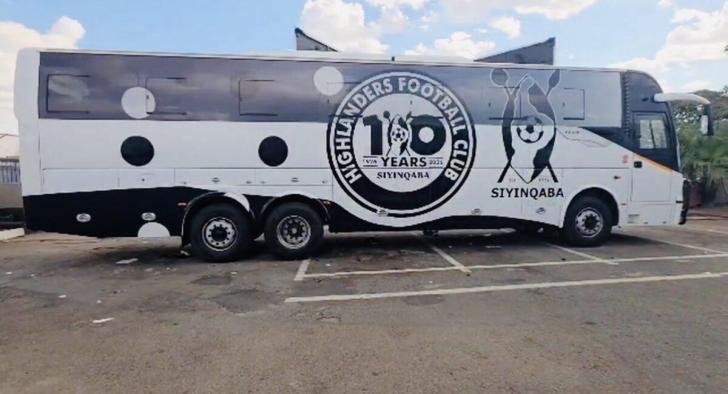
Zimbabwean football giants Highlanders Football Club have marked a major milestone in their centenary celebrations with the delivery of a new US$285 000 luxury team bus, donated by prominent businessman, club supporter and funder Wicknell Chivayo.
The handover, which took place in Bulawayo yesterday and was officiated by Vice-President Kembo Mohadi, comes amid both excitement and unease among sections of the club's vast support base, with some fans expressing concern about the growing political connotations around Bosso and fears of what they term the club's "Zanufication".
The 75-seater bus, branded in Highlanders' iconic black-and-white colours and adorned with special 100th-anniversary markings, is designed to provide high-end comfort for the squad during away fixtures. It features a full leather interior, reclining seats, air conditioning, Wi-Fi, television screens and an onboard toilet.
The bus forms part of a wider US$1.3 million sponsorship package from Chivayo, which also signals the dawn of a new era under recently appointed head coach Benjani Mwaruwari. About US$300 000 of the package has been earmarked for Mwaruwari's remuneration, player recruitment and the settlement of outstanding club debts.
Mwaruwari, a former Manchester City striker who enjoyed a distinguished playing career in Zimbabwe, South Africa, France and England, was reportedly suggested for the role by Chivayo. His appointment followed the replacement of South African coach Thabo Senong, who had initially been entrusted with the job.
Highlanders, the oldest club to have continuously played in Zimbabwe's top-flight league, will celebrate 100 years of existence in 2026. The club is hoping to turn the landmark year into an annus mirabilis - a year of extraordinary achievement - after enduring a disappointing campaign last season.
Apart from Chivayo, the other major sponsor backing Bosso is multi-millionaire businessman Kudakwashe Tagwirei through Sakunda Holdings.
Founded in 1926 in Makokoba, Bulawayo's oldest township, the club was originally known as Lions Football Club before becoming Matabeleland Highlanders. It was established by Albert and Rhodes Khumalo, grandsons of King Lobengula, the last monarch of the Ndebele nation. The two were sons of Prince Njube, who was exiled by Cecil John Rhodes following the Anglo-Ndebele War of 1893 to prevent a revival of Ndebele resistance.
Lobengula himself disappeared after the Battle of Pupu - also known as the Wilson Patrol - on December 4, 1893, when Ndebele warriors annihilated a British pursuit unit after the king had burnt his capital, Bulawayo, and fled northwest to avoid capture.
The club's black-and-white colours are derived from the Imbizo regiment, the elite fighting unit of the Ndebele nation during Lobengula's reign, led by General Mtshana Khumalo. These colours and symbols continue to anchor Highlanders' deep cultural significance.
In 1975, the club dropped the prefix "Matabeleland" to become simply Highlanders Football Club, partly following political pressure from late nationalist leader Joshua Nkomo to move away from overtly tribal names. The decision helped Bosso build a truly national support base, transcending its royal Ndebele origins.
Today, Highlanders is often described by its supporters as "Ithumu yezwe lonke" - the Team of the Nation - playing a role in Zimbabwean society that is as cultural and symbolic as it is sporting, much like Barcelona in Spain.
The club has nurtured some of Zimbabwe's greatest footballing talents, including Liverpool legend Bruce Grobbelaar, Josiah Nxumalo, the Ndlovu brothers - Madinda, Adam and Peter - Willard Khumalo, Rahman Gumbo, Tapuwa Kapini, Richard Choruma, Zenzo Moyo and Mwaruwari himself, who rose through the club's junior ranks.
Known affectionately as Bosso, Highlanders also go by several evocative nicknames, including Tshilamoya (the big upsetters), Amahlolanyama (helmetshrike), Mantengwane or uThekwane (the lightning bird), and Bosso - the Boss. Its enduring motto, "Siyinqaba" (We are a fortress), traces its roots to the Imbizo regiment's reputation for strength and invincibility.
While the club has enjoyed significant domestic success - including a famous run of four consecutive league titles - it has historically struggled to translate that dominance onto the continental stage.
Chivayo has stated that his donation was made in honour of his late uncle, former Vice-President John Landa Nkomo, a revered political figure and a lifelong Highlanders supporter. He has also sought to allay fears about his intentions, stressing that he has no plans to take over ownership or control of the club.
As Highlanders look ahead to their centenary season under Mwaruwari, optimism and skepticism coexist in equal measure. Supporters are hopeful that the combination of fresh investment, new leadership and a proud legacy can deliver success worthy of the club's historic stature.
Whether Chivayo and Mwaruwari can help turn 2026 into a truly golden year - or whether political associations will overshadow the football - remains an open question. For now, as Bosso turns 100, the spotlight is firmly on whether the fortress can once again prove unconquerable.
The handover, which took place in Bulawayo yesterday and was officiated by Vice-President Kembo Mohadi, comes amid both excitement and unease among sections of the club's vast support base, with some fans expressing concern about the growing political connotations around Bosso and fears of what they term the club's "Zanufication".
The 75-seater bus, branded in Highlanders' iconic black-and-white colours and adorned with special 100th-anniversary markings, is designed to provide high-end comfort for the squad during away fixtures. It features a full leather interior, reclining seats, air conditioning, Wi-Fi, television screens and an onboard toilet.
The bus forms part of a wider US$1.3 million sponsorship package from Chivayo, which also signals the dawn of a new era under recently appointed head coach Benjani Mwaruwari. About US$300 000 of the package has been earmarked for Mwaruwari's remuneration, player recruitment and the settlement of outstanding club debts.
Mwaruwari, a former Manchester City striker who enjoyed a distinguished playing career in Zimbabwe, South Africa, France and England, was reportedly suggested for the role by Chivayo. His appointment followed the replacement of South African coach Thabo Senong, who had initially been entrusted with the job.
Highlanders, the oldest club to have continuously played in Zimbabwe's top-flight league, will celebrate 100 years of existence in 2026. The club is hoping to turn the landmark year into an annus mirabilis - a year of extraordinary achievement - after enduring a disappointing campaign last season.
Apart from Chivayo, the other major sponsor backing Bosso is multi-millionaire businessman Kudakwashe Tagwirei through Sakunda Holdings.
Founded in 1926 in Makokoba, Bulawayo's oldest township, the club was originally known as Lions Football Club before becoming Matabeleland Highlanders. It was established by Albert and Rhodes Khumalo, grandsons of King Lobengula, the last monarch of the Ndebele nation. The two were sons of Prince Njube, who was exiled by Cecil John Rhodes following the Anglo-Ndebele War of 1893 to prevent a revival of Ndebele resistance.
Lobengula himself disappeared after the Battle of Pupu - also known as the Wilson Patrol - on December 4, 1893, when Ndebele warriors annihilated a British pursuit unit after the king had burnt his capital, Bulawayo, and fled northwest to avoid capture.
The club's black-and-white colours are derived from the Imbizo regiment, the elite fighting unit of the Ndebele nation during Lobengula's reign, led by General Mtshana Khumalo. These colours and symbols continue to anchor Highlanders' deep cultural significance.
In 1975, the club dropped the prefix "Matabeleland" to become simply Highlanders Football Club, partly following political pressure from late nationalist leader Joshua Nkomo to move away from overtly tribal names. The decision helped Bosso build a truly national support base, transcending its royal Ndebele origins.
Today, Highlanders is often described by its supporters as "Ithumu yezwe lonke" - the Team of the Nation - playing a role in Zimbabwean society that is as cultural and symbolic as it is sporting, much like Barcelona in Spain.
The club has nurtured some of Zimbabwe's greatest footballing talents, including Liverpool legend Bruce Grobbelaar, Josiah Nxumalo, the Ndlovu brothers - Madinda, Adam and Peter - Willard Khumalo, Rahman Gumbo, Tapuwa Kapini, Richard Choruma, Zenzo Moyo and Mwaruwari himself, who rose through the club's junior ranks.
Known affectionately as Bosso, Highlanders also go by several evocative nicknames, including Tshilamoya (the big upsetters), Amahlolanyama (helmetshrike), Mantengwane or uThekwane (the lightning bird), and Bosso - the Boss. Its enduring motto, "Siyinqaba" (We are a fortress), traces its roots to the Imbizo regiment's reputation for strength and invincibility.
While the club has enjoyed significant domestic success - including a famous run of four consecutive league titles - it has historically struggled to translate that dominance onto the continental stage.
Chivayo has stated that his donation was made in honour of his late uncle, former Vice-President John Landa Nkomo, a revered political figure and a lifelong Highlanders supporter. He has also sought to allay fears about his intentions, stressing that he has no plans to take over ownership or control of the club.
As Highlanders look ahead to their centenary season under Mwaruwari, optimism and skepticism coexist in equal measure. Supporters are hopeful that the combination of fresh investment, new leadership and a proud legacy can deliver success worthy of the club's historic stature.
Whether Chivayo and Mwaruwari can help turn 2026 into a truly golden year - or whether political associations will overshadow the football - remains an open question. For now, as Bosso turns 100, the spotlight is firmly on whether the fortress can once again prove unconquerable.
Source - online
Join the discussion
Loading comments…





