News / National
Zimbabwe Constitution will be amended for Mnangagwa's term extension
04 Feb 2026 at 06:42hrs |
1796 Views
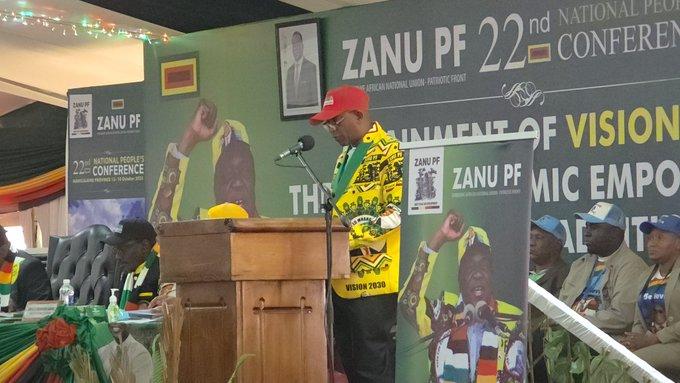
Justice, Legal and Parliamentary Affairs Minister Ziyambi Ziyambi has openly declared that Zimbabwe's Constitution is not immutable and can be amended to accommodate President Emmerson Mnangagwa's bid to remain in power beyond the constitutionally prescribed two-term limit, potentially until 2030.
Speaking at the official launch of a Zanu PF council by-election campaign in Chegutu's Ward 1, Ziyambi argued that constitutions are not sacred documents and can be altered to serve political objectives.
"The 10 Commandments were written on stone by God; they are the only laws that cannot be changed. Everything else can," Ziyambi said. "Our Constitution can be fixed, and that is what we will be doing to ensure our inheritance."
His remarks come amid intensifying internal debate within the ruling Zanu PF over proposals to extend Mnangagwa's tenure. A faction within the party—described by Vice-President Constantino Chiwenga as Zvigananda—is reportedly pushing for constitutional changes to allow the president to stay in office beyond the two-term limit enshrined in the 2013 Constitution.
The term Zvigananda has increasingly been used in political discourse to describe politicians and business figures accused of accumulating unexplained wealth and conspicuously displaying it in a country grappling with widespread poverty.
According to political analysts and reports circulating within Zanu PF, members of this faction fear that Chiwenga—who until recently was widely viewed as Mnangagwa's likely successor—could move against them should he assume the presidency. The concerns are said to centre on possible investigations into the origins of their wealth, some of which allegedly lacks clear documentation.
Ziyambi's comments also appear to confirm reports that Zanu PF has already given him the political green light to explore legal pathways for amending the Constitution to align with Mnangagwa's ambitions.
However, constitutional law experts have cast doubt on the feasibility of such changes. Professor Lovemore Madhuku, among others, has argued that amending the 2013 Constitution to either extend the lifespan of Zimbabwe's 10th Parliament or remove presidential term limits would be extremely difficult to achieve within the available timeframes, given the procedural and legal requirements involved.
The controversy has reignited national debate over constitutionalism, rule of law and the future of democratic governance in Zimbabwe, as pressure mounts from civil society and opposition groups warning against what they describe as an erosion of constitutional safeguards.
Speaking at the official launch of a Zanu PF council by-election campaign in Chegutu's Ward 1, Ziyambi argued that constitutions are not sacred documents and can be altered to serve political objectives.
"The 10 Commandments were written on stone by God; they are the only laws that cannot be changed. Everything else can," Ziyambi said. "Our Constitution can be fixed, and that is what we will be doing to ensure our inheritance."
His remarks come amid intensifying internal debate within the ruling Zanu PF over proposals to extend Mnangagwa's tenure. A faction within the party—described by Vice-President Constantino Chiwenga as Zvigananda—is reportedly pushing for constitutional changes to allow the president to stay in office beyond the two-term limit enshrined in the 2013 Constitution.
According to political analysts and reports circulating within Zanu PF, members of this faction fear that Chiwenga—who until recently was widely viewed as Mnangagwa's likely successor—could move against them should he assume the presidency. The concerns are said to centre on possible investigations into the origins of their wealth, some of which allegedly lacks clear documentation.
Ziyambi's comments also appear to confirm reports that Zanu PF has already given him the political green light to explore legal pathways for amending the Constitution to align with Mnangagwa's ambitions.
However, constitutional law experts have cast doubt on the feasibility of such changes. Professor Lovemore Madhuku, among others, has argued that amending the 2013 Constitution to either extend the lifespan of Zimbabwe's 10th Parliament or remove presidential term limits would be extremely difficult to achieve within the available timeframes, given the procedural and legal requirements involved.
The controversy has reignited national debate over constitutionalism, rule of law and the future of democratic governance in Zimbabwe, as pressure mounts from civil society and opposition groups warning against what they describe as an erosion of constitutional safeguards.
Source - newzimbabwe
Join the discussion
Loading comments…





