News / National
Mnangagwa dodges Maduro question
05 Feb 2026 at 19:09hrs |
0 Views
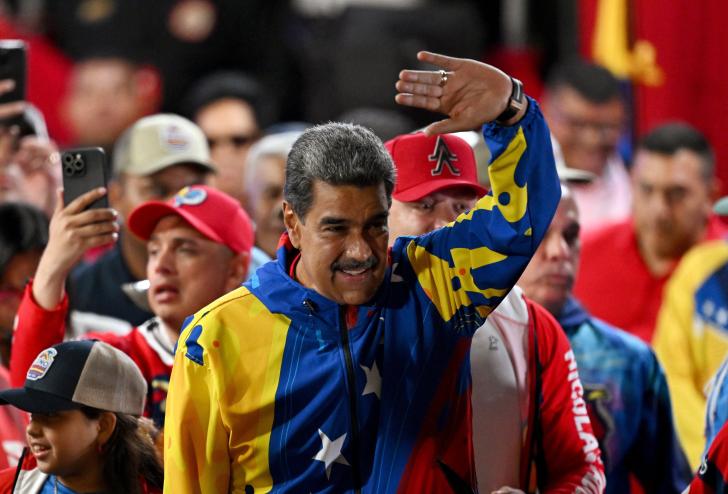
President Emmerson Mnangagwa has drawn criticism for sidestepping a major geopolitical and international law question following the recent seizure of former Venezuelan leader Nicolás Maduro by the administration of United States President Donald Trump, a move that has ignited intense global debate.
Mnangagwa's reluctance to express a clear position has been viewed by analysts as a reflection of Zimbabwe's long-standing foreign policy mantra of being a "friend to all and enemy to none," a stance also referred to as universalism or active neutrality. While the policy is often defended as pragmatic and self-preserving for smaller or developing nations, critics argue that it risks projecting indecision and diplomatic weakness at moments of profound international consequence.
The reported seizure of Maduro has raised fundamental questions about state sovereignty, international law and the limits of unilateral action by powerful nations. Against this backdrop, Mnangagwa's silence has stood out, particularly as several governments across Africa, Latin America and beyond have issued statements either condemning or cautiously questioning the legality of the move.
Zimbabwe's foreign policy approach is rooted in non-alignment, a strategy designed to navigate an increasingly polarised global order while maximising economic and diplomatic engagement with competing power blocs. Supporters of the policy argue that it allows Harare to avoid entanglement in superpower rivalries and shields the country from punitive measures that can follow overt alignment.
International relations experts note that for smaller states, taking sides in global disputes can invite retaliation from opposing powers, a lesson Zimbabwe learned during the latter years of former president Robert Mugabe's rule, when confrontational diplomacy coincided with sanctions and international isolation. In this context, neutrality is often presented as a survival mechanism rather than an expression of fear or moral ambiguity.
However, analysts also warn that excessive caution carries its own risks. By avoiding firm positions on major international issues, a country may dilute its moral authority, limit its influence in regional and global forums, and struggle to forge deep strategic partnerships. Neutrality, if not carefully managed, can result in shallow diplomatic relationships that prioritise short-term engagement over long-term alignment.
Comparisons have been drawn between Zimbabwe's approach and that of countries such as Oman, Papua New Guinea and the Philippines, which have historically sought to balance relations among rival global powers. While this strategy has enabled such states to extract economic and diplomatic benefits from multiple partners, it has also exposed them to pressure and influence from stronger nations that are sceptical of neutrality.
Critics argue that Mnangagwa's handling of the Maduro issue illustrates the broader challenge facing Zimbabwe's foreign policy: how to reconcile pragmatic non-alignment with the need to articulate clear principles on international law, sovereignty and global governance. They contend that silence on such matters may be interpreted not as realism, but as diplomatic frailty.
Supporters of the President, however, maintain that restraint is deliberate and calculated, aimed at preserving Zimbabwe's room for manoeuvre in a volatile international system. They argue that the policy prioritises economic cooperation over ideological alignment and avoids unnecessary confrontation in an era of heightened global tensions.
As debates over the legality and implications of Maduro's seizure continue to reverberate worldwide, Zimbabwe's muted response has reignited domestic and regional discussions about the costs and benefits of its "friend to all and enemy to none" doctrine, and whether neutrality remains sustainable in an increasingly divided global order.
Mnangagwa's reluctance to express a clear position has been viewed by analysts as a reflection of Zimbabwe's long-standing foreign policy mantra of being a "friend to all and enemy to none," a stance also referred to as universalism or active neutrality. While the policy is often defended as pragmatic and self-preserving for smaller or developing nations, critics argue that it risks projecting indecision and diplomatic weakness at moments of profound international consequence.
The reported seizure of Maduro has raised fundamental questions about state sovereignty, international law and the limits of unilateral action by powerful nations. Against this backdrop, Mnangagwa's silence has stood out, particularly as several governments across Africa, Latin America and beyond have issued statements either condemning or cautiously questioning the legality of the move.
Zimbabwe's foreign policy approach is rooted in non-alignment, a strategy designed to navigate an increasingly polarised global order while maximising economic and diplomatic engagement with competing power blocs. Supporters of the policy argue that it allows Harare to avoid entanglement in superpower rivalries and shields the country from punitive measures that can follow overt alignment.
International relations experts note that for smaller states, taking sides in global disputes can invite retaliation from opposing powers, a lesson Zimbabwe learned during the latter years of former president Robert Mugabe's rule, when confrontational diplomacy coincided with sanctions and international isolation. In this context, neutrality is often presented as a survival mechanism rather than an expression of fear or moral ambiguity.
Comparisons have been drawn between Zimbabwe's approach and that of countries such as Oman, Papua New Guinea and the Philippines, which have historically sought to balance relations among rival global powers. While this strategy has enabled such states to extract economic and diplomatic benefits from multiple partners, it has also exposed them to pressure and influence from stronger nations that are sceptical of neutrality.
Critics argue that Mnangagwa's handling of the Maduro issue illustrates the broader challenge facing Zimbabwe's foreign policy: how to reconcile pragmatic non-alignment with the need to articulate clear principles on international law, sovereignty and global governance. They contend that silence on such matters may be interpreted not as realism, but as diplomatic frailty.
Supporters of the President, however, maintain that restraint is deliberate and calculated, aimed at preserving Zimbabwe's room for manoeuvre in a volatile international system. They argue that the policy prioritises economic cooperation over ideological alignment and avoids unnecessary confrontation in an era of heightened global tensions.
As debates over the legality and implications of Maduro's seizure continue to reverberate worldwide, Zimbabwe's muted response has reignited domestic and regional discussions about the costs and benefits of its "friend to all and enemy to none" doctrine, and whether neutrality remains sustainable in an increasingly divided global order.
Source - online
Join the discussion
Loading comments…



